How Does Uv Light Kill Bacteria

Ever wonder why some water bottles or phone sanitizers boast about using UV light? It sounds like something out of a sci-fi movie, right? But trust me, the science behind it i...

Ever wonder why some water bottles or phone sanitizers boast about using UV light? It sounds like something out of a sci-fi movie, right? But trust me, the science behind it is way cooler than fiction.
So, how does a simple beam of light actually murder a germ? It’s not the heat, and it’s not a laser blast. It’s all about a very specific, invisible wavelength that messes with a bacteria’s soul—or, you know, its DNA.
The Sun’s Secret Superpower
Think of UV light as the sun’s built-in disinfectant. When you hang laundry outside on a sunny day, that faint “fresh” smell? You’re actually smelling sunlight breaking down dirt and germs. Pretty wild, huh?
Must Read
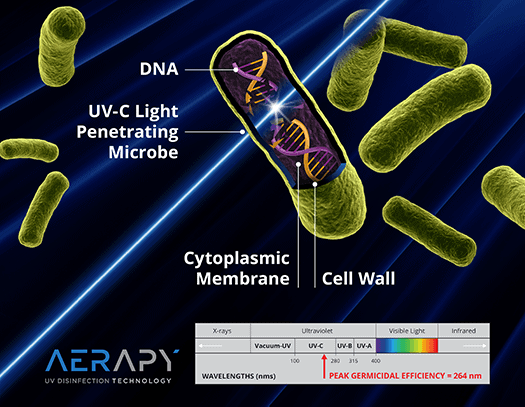
But we’re not talking about the same UV that gives you a tan. We’re talking about UVC, a specific type with the perfect energy to wreck a microbe’s day. It’s the invisible bully of the light spectrum.
The Germ’s Worst Headache
Here’s the simple version: bacteria are just tiny bags of genetic instructions. They need that genetic code to eat, reproduce, and cause trouble. UV light acts like a cosmic erasure beam for those instructions.
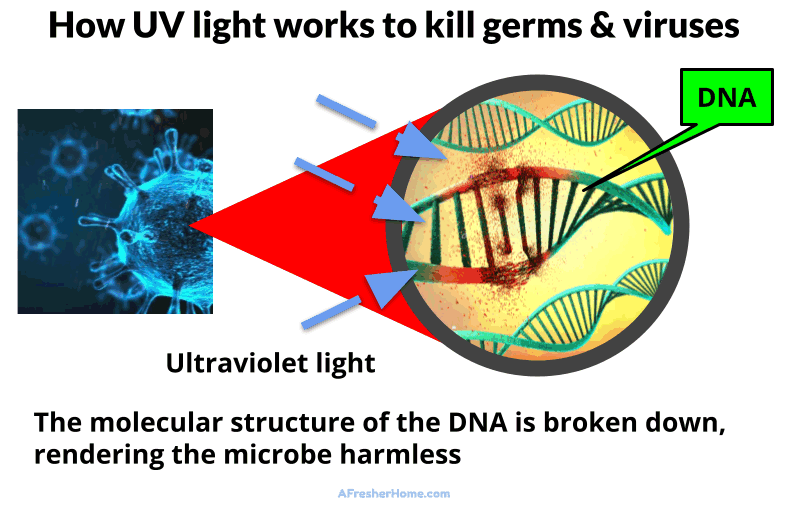
Imagine a wire coat hanger. That’s a bacterium’s DNA. Now imagine a tiny, super-fast photon—a particle of light—smacking into that hanger and snapping it in two. That’s what UVC does, billions of times per second.
Once the DNA is broken, the bacterium is basically a zombie. It can’t copy itself, it can’t fix itself, and it dies within minutes. It’s not a violent explosion—it’s a silent, technical knockout.
Why Don’t They Just Mutate Into Superbugs?
You might be thinking: “If it breaks DNA, won’t some germs just evolve to resist it?” Great question! And the answer is gloriously simple. UV light doesn’t just damage one part of the germ; it causes a very specific type of damage called a dimer.
 How Does Uv Light Kill Bacteria | Gas Furnace
Think of DNA like a long ladder with special rungs. UV light forces two of those rungs to glue together. That’s like trying to read a book where two words have been melded into one. A bacterium can’t just “fix” that easily.
While some bacteria can repair minor UV damage, germicidal lamps are designed to deliver so much light so fast that it’s like a flash flood of destruction—no time to grab a life raft.
The Coolest Part: It’s Dumb and Powerful
This is what I find amazing: UV light doesn’t care. It doesn’t judge. It kills E. coli, it kills mold spores, it even kills the flu virus. To a UV photon, a deadly superbug and a harmless skin cell are just targets made of genetic material.
It’s like a firehose on the cellular level. No chemical smells, no toxic residue. ZAP. Clean. This is why hospitals use it to disinfect empty operating rooms—it reaches the shadows that bleach can’t.
But Wait—Is It Safe For Me?
Ah, the big catch. That same UVC light that kills bacteria is extremely good at damaging your skin and eyes too. You don’t want to sit under a germicidal lamp. It’s the same mechanism, but with bigger cells.
 How Does Uv Light Kill Bacteria | Gas Furnace
That’s why your water bottle’s UV light is usually enclosed inside a cup or a tube. It’s a contained zap zone. You get the clean water, and your skin avoids the sunburn from space that UVC can cause.
Manufacturers are getting smarter. Some new devices use Far-UVC light, which is a special wavelength that can’t penetrate human skin but still shreds bacteria. It’s like having a force field made of light.
The Future is Lit (Literally)
We’re now seeing UV lights in air ducts, in robot cleaners, and even in some fancy chopstick holders. The idea is simple: use the quiet, invisible power of physics to keep things fresh.
It’s one of those rare cases where technology mimics nature in a brutally efficient way. The same light that powers a forest also deletes a germ. Makes you look at a lightbulb a little differently, doesn’t it?
So next time you see a “UV sanitizer,” think of it as a tiny, contained storm of subatomic wrecking balls. It’s one of the cleanest, most fascinating ways we’ve figured out to fight the invisible world. Pretty cool for something you can’t even see on, right?
