When Does Bottled Water Expire

Let’s be real: you’ve definitely stared at a bottle of water that’s been hiding in your car’s cup holder for three months. You’ve hovered over the expiration date, caught in a...
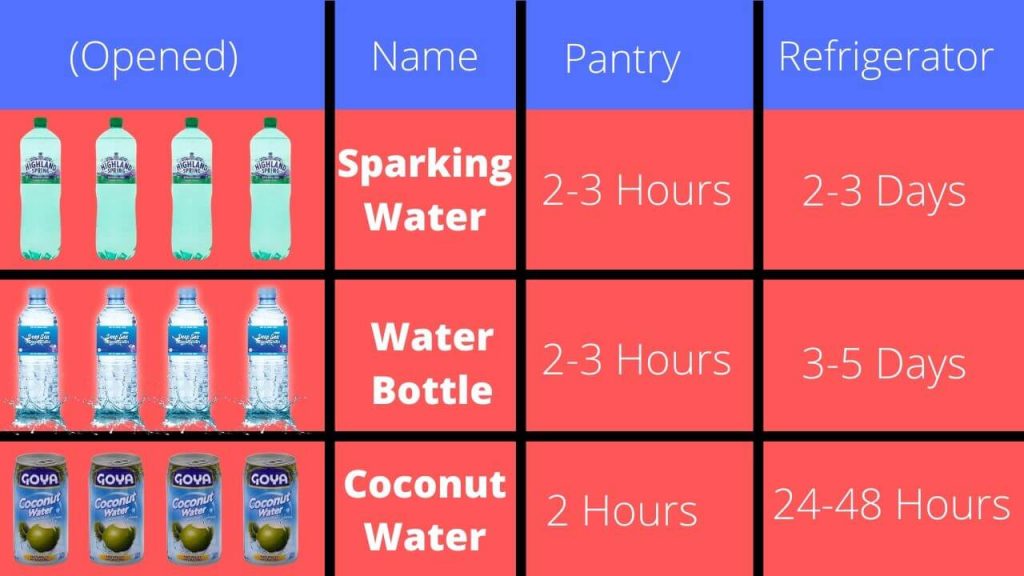
Let’s be real: you’ve definitely stared at a bottle of water that’s been hiding in your car’s cup holder for three months. You’ve hovered over the expiration date, caught in a weird little existential crisis. Can water actually go bad? It’s just H2O, right? Well, grab that dusty bottle, because we’re about to dive into the surprisingly cool world of water expiration.
The shelf life mystery
First things first: the water itself doesn’t really expire. Water molecules don’t suddenly turn into something else after a year on a shelf—they’re still water. So why does that bottle even have a date stamped on it? It’s not for the water, folks. It’s for the bottle.
Plastic bottles are the real ticking clock here. Over time, the material can start to leach tiny amounts of chemicals into the water. Think of it like a plastic tea bag—except you probably don’t want to drink that tea. The expiration date is basically the manufacturer’s polite way of saying, “Hey, this bottle’s integrity is peaking now. Drink up.”
Must Read
What actually happens to old water?
If you’ve ever cracked open a forgotten bottle and thought, “Huh, that tastes a little… cave-like,” you’re not imagining things. That stale flavor comes from the water absorbing carbon dioxide from the air, making it slightly more acidic. It’s like your water did a tiny, sad impression of seltzer without the bubbles.
But here’s where it gets interesting: the biggest risk isn’t really the water itself. Bacteria love a warm, wet environment. If you’ve left that bottle in a hot car, you might be giving microbes a cozy little spa day. Ever taken a sip and felt a weird, slimy texture on your lips? Yeah, that’s biofilm—bacteria’s version of a housewarming party.
The weird science behind the date
So, why do bottled water companies bother with an expiration date at all? It’s partly regulation and partly common sense. In many places, food and drink labels require a “best by” date, even for water. It’s less about safety and more about quality control—like telling you that your potato chips might be a little limp after six months.
 Can Water Really Expire at Justin Beveridge blog
Here’s a fun comparison: think of bottled water like a box of crackers. The crackers are fine, but if the box gets crushed or damp, the crackers get gross. Same with water—the H2O is fine, but the bottle is the weak link. Sunlight is the real enemy, by the way. UV rays can degrade plastic faster and even grow algae inside the bottle. Ever seen green water? That’s a hard pass.
Should you panic about an expired bottle?
Honestly? Probably not. If you find a bottle that’s a year past its date, and it’s been stored in a cool, dark pantry, you’re likely fine. The worst that’ll happen is a little weird taste. But if that bottle has been baking in your car’s dashboard for a summer? Toss it. Heat speeds up chemical leaching and bacterial fun times.
Think of it like a forgotten sandwich in your backpack. The bread might look okay, but do you really want to risk it? Probably not. Bottled water is the same—trust your senses. Smell it. If it smells like plastic or just “off,” pour it into your plants. They won’t judge.
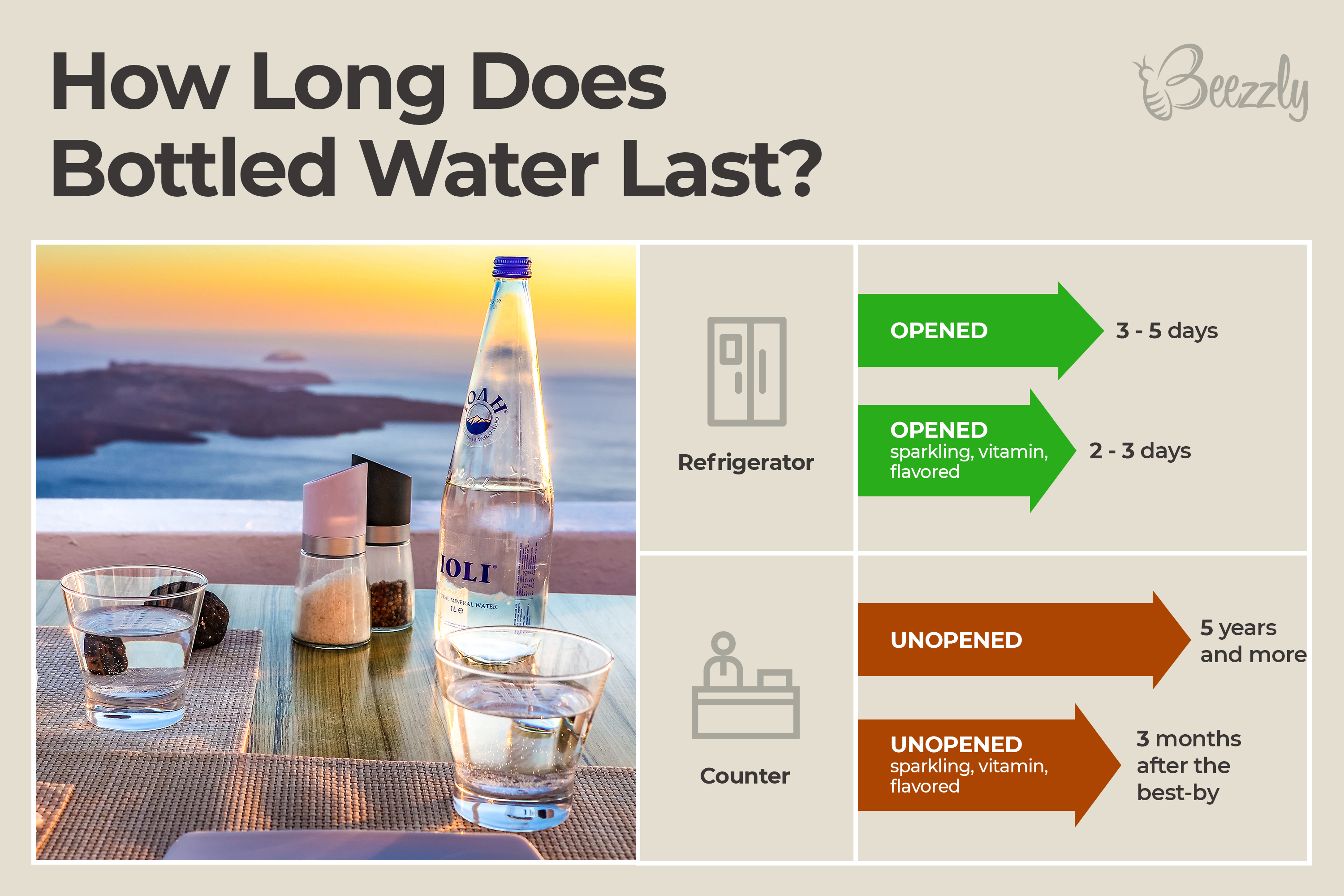 How Long Does Bottled Water Last? | Detailed Guide - Beezzly
A glass alternative? (Or not)
Here’s a pro tip to feel super fancy: water stored in glass bottles pretty much never expires. Glass doesn’t leach, doesn’t degrade, and doesn’t care about heat. You could theoretically find a glass bottle of water from the 1990s and it would still taste fresh. But since most of us buy plastic for convenience, just keep your stash in a cool, dark spot.
And if you’re really worried? Just drink tap water. It’s constantly circulating through pipes and treatment plants, so it’s always “fresh.” Plus, you avoid the whole bottle expiration drama altogether. Boom—problem solved.
The takeaway (with a wink)
So, does bottled water expire? Technically no, but practically yes. The water stays water, but the bottle gets tired, the taste shifts, and bacteria might crash the party. If you’re staring at a bottle with a date from two years ago, ask yourself: is it worth the weird sip? Probably not.
Just remember: your water isn’t going to turn into vinegar or something wild. It’s just going to taste like a plastic hug that lasted too long. So go ahead, check your car’s cup holders—and maybe treat yourself to a fresh one. Your taste buds will thank you.
