Does Hard Water Cause Dry Skin

Ever stepped out of a shower feeling like your skin just had a fight with a cheese grater? You’re not alone, and you might be blaming your soap. But what if the real culprit...
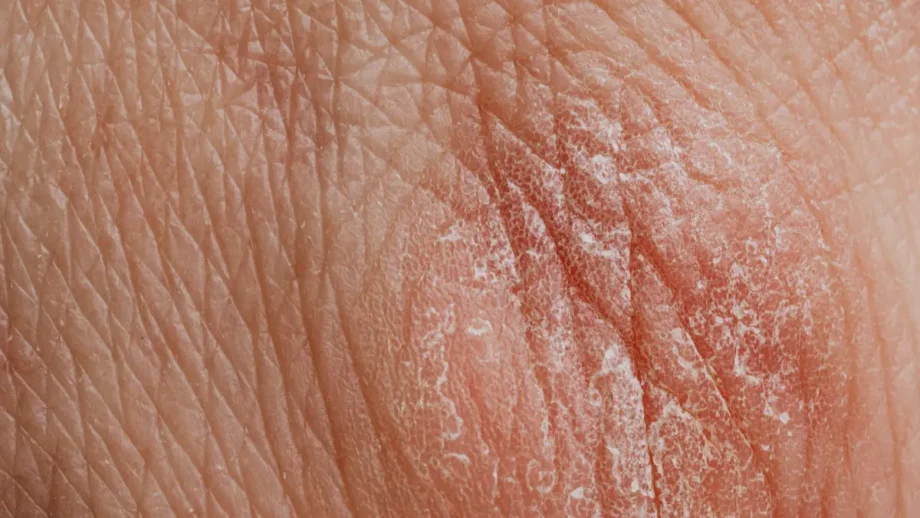
Ever stepped out of a shower feeling like your skin just had a fight with a cheese grater? You’re not alone, and you might be blaming your soap.
But what if the real culprit is something that comes right out of your tap? We’re talking about hard water, and it’s time we gave it a proper, chill look.
So, does hard water actually cause dry skin? Let’s dive into the science without all the jargon, like we’re chatting over coffee.
Must Read
What Even Is Hard Water?
Imagine your water is a busy highway, and hard water is just that highway packed with mineral trucks—specifically calcium and magnesium. It’s not bad for you to drink, by the way.
But here’s where it gets interesting: those minerals don’t like to play nice with your soap. Instead of lathering up into a fluffy cloud, soap mixes with hard water and creates a sticky residue called soap scum.
Think of it like trying to wash your hands with a mix of sand and grease. Not exactly the spa treatment you were hoping for, right?
Your Skin: The Unintended Victim
Now, that soap scum isn’t just a gross ring around your bathtub. It can actually cling to your skin after you rinse. Crazy, huh?
This leftover layer acts like a clingy, unwelcome blanket that blocks your skin’s natural oils from doing their job. Those oils are your skin’s built-in moisturizer, and when they’re blocked, your skin panics.
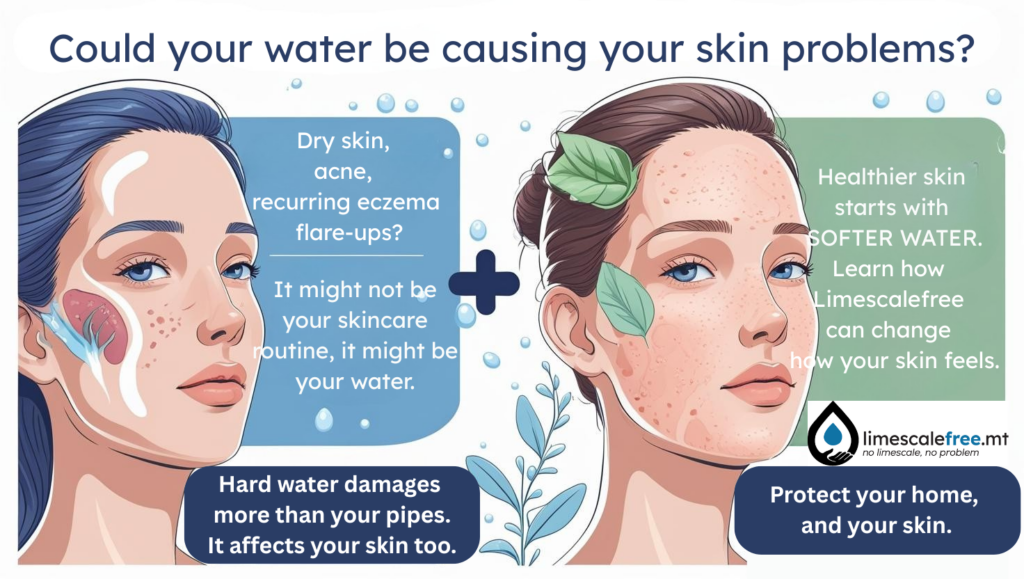 Hard Water & Skin Problems: What Science Says
The result? That tight, itchy, dry feeling that makes you reach for the lotion before you’ve even dried off. It’s like your skin is saying, “Hey, you washed away my armor!”
The Acid Test (Literally)
Here’s another cool twist: hard water is often more alkaline than your skin. Your skin naturally likes to be slightly acidic—it’s its happy place.
When you shower in alkaline water, it can disrupt your skin’s pH balance, that delicate little ecosystem on the surface. It’s like inviting a rock band into a library—things get chaotic.
This disruption can weaken your skin’s protective barrier, making it easier for moisture to escape and for irritants to get in. So yeah, it’s a double whammy of dryness and potential sensitivity.
But Wait—Is It the Water or Your Wash?
Let’s be real: it’s not always 100% the water’s fault. If you have a super harsh body wash with sulfates, that’s a whole other problem.
But hard water amplifies the issue. It makes drying ingredients hit harder and last longer. Think of it as salty fries making your soda taste even sweeter—but in a bad way.
 Does Hard Water Cause Dry Skin? The Science Explained - Moore Water & Air
If you’ve noticed your skin is drier in a new city or after moving to a new house, check your water hardness. It might be the missing puzzle piece.
How to Spot Hard Water’s Handiwork
Look for these little clues next time you shower. Does your soap or shampoo feel like it barely lathers, almost like it’s lazy?
Do you see white, crusty spots on your glass shower door or faucets? That’s mineral buildup, and it’s a dead giveaway.
Also, if your hair feels straw-like and your skin feels squeaky clean but tight (squeaky is not a good sign!), you’re probably dealing with hard water.
The Easy Fixes (No Science Degree Required)
Don’t worry—you don’t have to move to a rainforest. There are super simple, chill ways to outsmart the minerals.
First, try a chelating or
