How Does A Water Softener Work

You know that chalky white crust on your faucet? That’s hard water throwing a little tantrum. It’s basically water that’s packed with calcium and magnesium minerals—like a min...
You know that chalky white crust on your faucet? That’s hard water throwing a little tantrum. It’s basically water that’s packed with calcium and magnesium minerals—like a mineral smoothie nobody asked for. And your poor pipes, dishes, and skin are paying the price.
Enter the water softener: a gloriously simple machine that acts like a bouncer for your home’s plumbing. It kicks those unwanted minerals to the curb. The best part? It does all this without you lifting a finger—unless you count pouring salt into a tank once a month.
So, How Does It Actually Work?
Imagine you’ve got a giant sponge full of tiny, sticky beads. Those beads are coated in sodium ions—basically salt particles with a positive charge. When hard water flows through, the calcium and magnesium ions scream “Dibs!” and hop onto the beads, swapping places with the sodium.
Must Read
It’s like a microscopic game of musical chairs. The calcium and magnesium get stuck, while the harmless sodium ions ride away with the water. And that’s it—the water comes out soft, silky, and friendly to your soap.
This process is called ion exchange. Fancy name, right? It’s just chemistry doing its little dance. And trust me, your shampoo will send you a thank-you note.
The Star of the Show: The Resin Beads
Those tiny beads I mentioned? They’re called resin beads, and they’re the real heroes here. They’re basically microscopic magnets for hardness minerals. They hold onto them tight, like a toddler clutching a teddy bear.
But here’s the kicker: the beads have a limited capacity. Think of them as a parking lot. Once every spot is filled with calcium and magnesium, your softener needs to take a break. That’s where the regeneration cycle comes in—the softener’s pit crew.
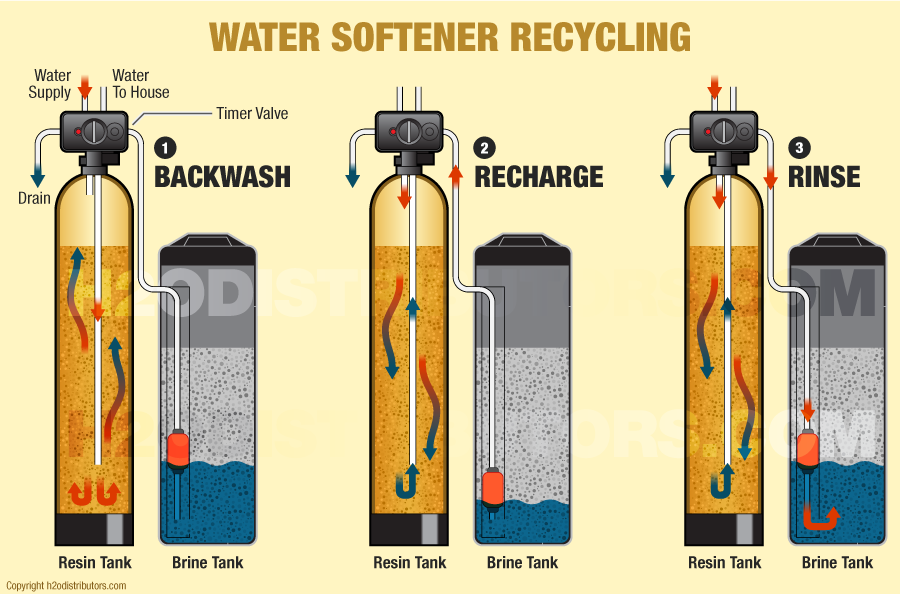
During regeneration, the system flushes a super-concentrated saltwater solution—called brine—over the beads. That saltwater is like a bully that says, “Move over, calcium! I’m coming through!” And the sodium ions push the clingy minerals off the beads.
The Regeneration Cycle: Party Time for the Softener
This happens automatically, usually in the middle of the night when you’re dreaming of fluffy towels. The softener takes itself offline for about an hour. It backwashes, rinses, and reloads the beads with fresh sodium.
 How Does A Water Softener Work – Water Softener Diagram – CZUSA
All that nasty calcium and magnesium—plus the used saltwater—gets flushed down the drain. Poof! Gone. Then the softener goes back to work, ready to handle another round of hard water.
You might be thinking, “That seems like a lot of salt.” And you’re not wrong! But modern softeners are super efficient. Some even use metered regeneration, meaning they only clean themselves when they actually need to. It’s like your car’s oil-change sensor—no wasted effort.
But Wait—Is the Water Salty?
No way! The amount of sodium left in softened water is tiny—about the same as a slice of bread. Unless you’re on a strict no-sodium diet for medical reasons, it’s perfectly safe. Your taste buds won’t even notice.
In fact, most people find that soft water makes their tea taste better (no scum floating on top!). And your coffee machine will stop looking like it’s growing stalactites. Win-win.
What About “Salt-Free” Softeners?
Ah, the buzzkill! Some gadgets claim to soften water without salt. Spoiler alert: they’re not actually softeners. They’re conditioners—they change the structure of the minerals so they don’t stick as easily.
They don’t remove anything. Think of it like gently asking the minerals to behave, rather than kicking them out of the party. It works for some folks, but it’s not the real deal if you’ve got seriously hard water.
 Water softener system how does it work – Artofit
If you want that velvety, scale-free goodness, a classic ion-exchange softener is your best buddy. Plus, you get to play with big bags of salt—very satisfying for a Saturday afternoon chore.
What About the Environment?
Good question! The brine that gets flushed does end up in wastewater systems, which has some downsides. But modern softeners use a lot less salt and water than older models. Some even recycle the brine for multiple cycles.
And hey, think of all the soap and energy you’ll save when your water heater doesn’t have to fight scale buildup. It’s a trade-off that often balances out—especially if you’re in a hard-water zone.
Plus, your skin will thank you. No more that squeaky-clean-but-actually-dry feeling after a shower. Soft water leaves you feeling smooth, like you’ve been pampered at a spa.
The Uplifting Conclusion (I Promised, Right?)
So there you have it: a water softener is a humble, hardworking machine that uses science, salt, and a little bit of magic to save your home from mineral tyranny. It’s like having a tiny, invisible superhero living in your basement—one that fights scale, conserves your energy bill, and makes your soap suds like a champ.
And here’s the real secret: When you have soft water, life just feels a little easier. Your glasses sparkle. Your laundry feels fluffier. Your hair isn’t a frizzy mess. And every time you run your dishwasher, you can practically hear your pipes whisper, “Thank you.”
So go ahead—give your water a softener. It’s a small step that turns your home into a place where everything feels better. And isn’t that what we all want? A little more comfort, a little less crust, and a whole lot of happy bubbles. Cheers to that!
