How To Remove Rust From Fabric

There you are, mid-sprint out the door, when you spot it: a tiny orange bloom on your favorite white linen shirt. Rust. It’s the uninvited guest that shows up after a forgotte...

There you are, mid-sprint out the door, when you spot it: a tiny orange bloom on your favorite white linen shirt. Rust. It’s the uninvited guest that shows up after a forgotten paperclip in the wash or a damp metal button. Before you declare a state of mourning for your wardrobe, take a breath. We’re about to turn this stain into a mere anecdote.
Rust isn’t like your average ketchup spill. It’s a chemical bond, a miniature little science experiment gone rogue on your cotton. The good news? Unlike that mystery stain from last Tuesday, rust announces itself with a clear origin story—metal plus moisture. That’s your first advantage.
The cardinal rule of rust removal is patience, or maybe a touch of stubborn optimism. You cannot scrub rust away with brute force; that only grinds the stain deeper into the fibers. Instead, we must dissolve it, like a polite negotiation with a very stubborn guest.
Must Read
The Pantry Heroes
You likely have your savior sitting in the fridge or under the sink. Lemon juice and table salt form a dynamic duo straight out of a medieval alchemist’s notebook. The citric acid loosens the iron oxide, while the salt acts as a gentle abrasive.
Here’s the technique: lay the stained fabric flat, squeeze fresh lemon juice directly onto the rust spot, and heap a generous pile of salt on top. Let it sit in direct sunlight for about three hours. The sun’s UV rays amplify the reaction, doing the heavy lifting while you scroll through your feed.
Fun fact: The ancient Romans used lemon juice to clean bronze and iron tools. They didn’t have Instagram to document it, but they understood the chemistry of “acid beats oxide” long before we did.
When Lemon Isn’t Enough: The Vinegar Protocol
For older or deeper rust stains, you need to upgrade to white distilled vinegar. Place the fabric over a bowl, stretch it taut, and pour vinegar directly through the stain. Let it soak for up to 30 minutes—don’t leave it overnight unless you want a faint vinegar-scented souvenir.
After soaking, rinse with cold water and immediately launder as usual. This works like a charm on denim, cotton, and linen. But never use vinegar on silk or wool; it’s like inviting a bull into a china shop for those delicate fibers.
Think of it as a spa day for your garment—acidic soak, cool rinse, restful spin cycle. Your jeans will thank you with a new lease on life.
 How To Remove Rust Stains From White & Coloured Clothes | Natural To
The Big Guns: Commercial Rust Removers
If your fabric is white or colorfast, a commercial rust remover like Whink or Iron Out is the nuclear option. These contain hydrofluoric acid (handle with care and wear gloves). Always test an inconspicuous spot first—your favorite band tee is not the place for a chemistry experiment.
Follow the bottle instructions to the letter. Most work in minutes, rinsing away with water like they were never there. It’s satisfying in the same way that unclogging a drain feels—immediate, powerful, and faintly dangerous.
Podcast recommendation while you wait: Science Vs. It’s the perfect soundtrack for your impromptu laundry lab.
A Note on the Dreaded “Rust Ring”
Ever notice a faint shadow around a rust spot after you’ve treated it? That’s the rust ring, a ghost of the stain past. It happens when the rust spreads outward before you catch it. The fix is simple: work from the outside inward when applying any solution.
Use a cotton ball or a soft brush, and start at the edge of the stain, slowly moving toward the center. This squishes the rust particles inward where they can be lifted away, rather than pushing them into fresh fibers like a fugitive on the run.
Cultural reference: think of it like a crime scene investigation. You’re the CSI team, and you must approach the evidence without contaminating the surrounding area.
What Not To Do (The Tragedy Chapter)
Do not, under any circumstances, use chlorine bleach. Bleach doesn’t remove rust; it reacts with iron to create even more stubborn stains. You’ll transform a small orange spot into a permanent amber halo. It’s like adding lighter fluid to a campfire.
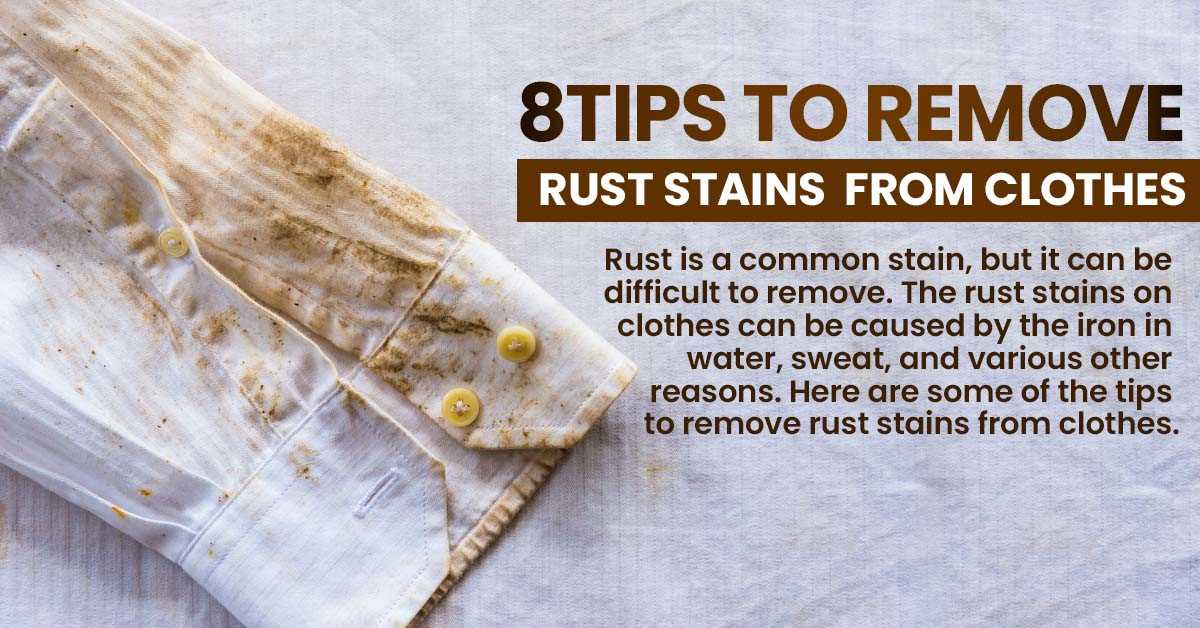 Effective Tips to Remove Rust Stains from Clothes - Your Ultimate Rust
Avoid heat at all costs. Never put a rust-stained garment in the dryer until you are certain the stain is gone. Heat sets rust into fabric like a tattoo by a very bad artist. Once baked in, it’s there for life—or until you throw the shirt away and start a new hobby.
Last resort: If all else fails, consider the stain part of the garment’s story. Japanese boro techniques mend fabric with visible patches; you could add a decorative iron-on patch over the spot. Call it “upcycled art.” No one has to know it was a lazily discarded paperclip.
Gardening Jeans, Meet Your Second Chance
Rust happens most often on work clothes, gardening jeans, and that one pair of white pants you wore on a date. If you treat the stain quickly—within a day—the success rate hovers near 90%. That’s better odds than your phone surviving a drop on pavement.
Keep a small spray bottle of lemon juice in your laundry room for emergencies. When you see a rust spot, spritz it immediately, even if you can’t wash until later. It buys you time and prevents the stain from becoming a permanent resident.
Quick tip: Old buttons, zippers, and bra underwires are the usual suspects. Magnets in your washing machine might seem like a conspiracy theory, but some people swear by magnetic laundry discs. I’m still on the fence, but I respect the commitment.
A Reflection on Daily Life
Rust, in a broader sense, is a metaphor for the small, creeping things we ignore until they become problems. A forgotten email, a tiny rip in a seam, a dinner invitation you meant to send. They start as nothing, then they set in. Removing rust from fabric is a gentle reminder that most stains are temporary, if you have the right tools and a little focus.
So next time you find that orange bloom, don’t panic. Pour some lemon juice, bask in the sunlight, and think of it as a little victory over entropy. You didn’t just save a shirt; you practiced a small act of preservation in a world that loves disposable things. And that, my friend, is worth wearing with pride.
