How Much Is A Water Dispenser

Last Tuesday, I watched my friend Mark wrestle a 5-gallon water jug onto the cooler in his kitchen. He grunted, the thing slipped, and suddenly we were both soaked, laughing l...

Last Tuesday, I watched my friend Mark wrestle a 5-gallon water jug onto the cooler in his kitchen. He grunted, the thing slipped, and suddenly we were both soaked, laughing like idiots on a slip-n-slide. As he mopped up the puddle, he looked at me and sighed, “Okay, how much is a water dispenser? Because I am done with this dinosaur.”
That’s the moment, right? The moment you realize you’re paying for your landlord’s old, crusty water cooler with your sanity. So, let’s cut the chit-chat: how much is a water dispenser going to cost you, from the bare-bones budget option to the fancy-pants model?
The Bottom Feeder: Under $80
You can snag a basic top-loading dispenser for around $40 to $80. These are the plastic, “hot and cold” models you see in office break rooms that look like they survived the 90s. They work perfectly fine, but they’re loud. Like, “is that a jet engine or my water heater?” loud.
Must Read
Side note: These cheap ones are also notorious for leaking if you bump them. You’ve been warned. But if you’re on a shoestring budget and just want cold water without another fridge trip, this is your guy.
The Mid-Range Workhorse: $100 to $250
This is the sweet spot, my friends. For about $120 to $200, you get a stainless steel or sleek black model that actually looks like it belongs in your home. They usually have a child safety lock on the hot water spigot, which is great if you have kids—or clumsy friends like Mark.
These often include a small refrigerator compartment underneath for snacks or soda. Is the fridge big? No. Can it chill a six-pack of Coke and a yogurt? Yes. That’s the kind of win we need. Pro tip: check reviews for the “drip tray” quality. Some are flimsy and crack in two months.
The Fancy Touchless Models: $250 to $600+
Now we’re talking science fiction. These are the touchless, self-cleaning dispensers that look like a spaceship landed on your countertop. Prices start around $250 for a decent unit, but the big names (like Primo or Avalon) can hit $500 or $600.
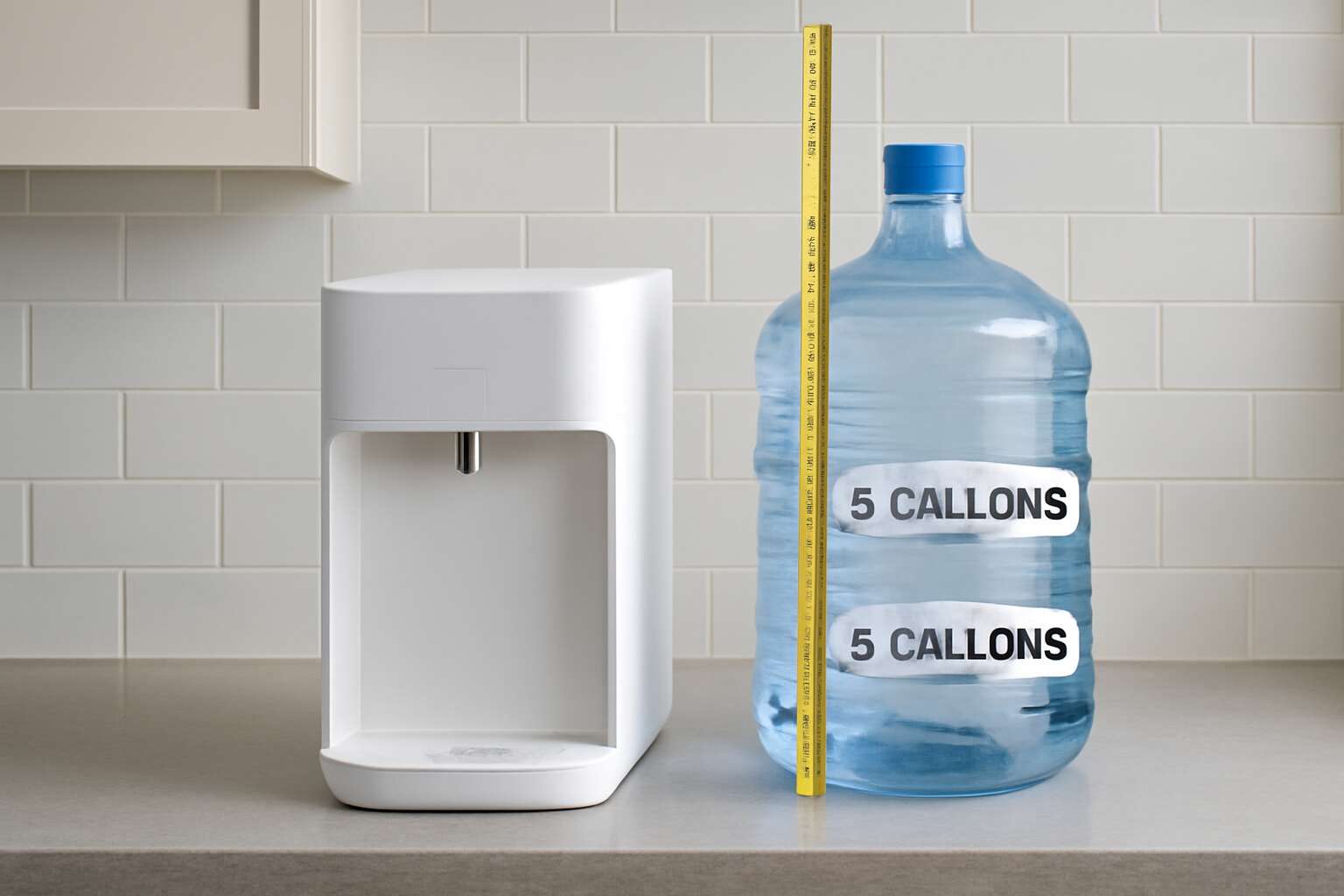 Choosing the Right water dispenser size: A Quick Guide to Perfect
Why the big price? They often connect directly to your plumbing line, so you never haul a jug again. Some even have UV sterilization to kill bacteria. Fancy, right? Except—and this is a big except—installation can cost another $100 to $200 unless you’re handy with a wrench. Don’t forget that.
The “Bottleless” (Reverse Osmosis) Option: $800 to $1,500
Let’s be honest: this isn’t really a “dispenser” anymore; it’s a water purification system with a fancy tap. These go for $800 to $1,500, and they filter your tap water through reverse osmosis, then dispense it hot and cold.
You’ll get incredible taste and zero plastic waste. But the filter cartridges need replacing every 6-12 months, costing around $50 to $100 a pop. Calculate that cost before you buy, okay? You don’t want a $1,500 paperweight because the filters are “too expensive.”
Don’t Forget the Hidden Costs!
Here’s where most people get burned. That $50 dispenser? The water delivery service for those big jugs can run you $30 to $50 per month depending on how much you drink. Over two years, that’s $720 to $1,200—way more than the machine!
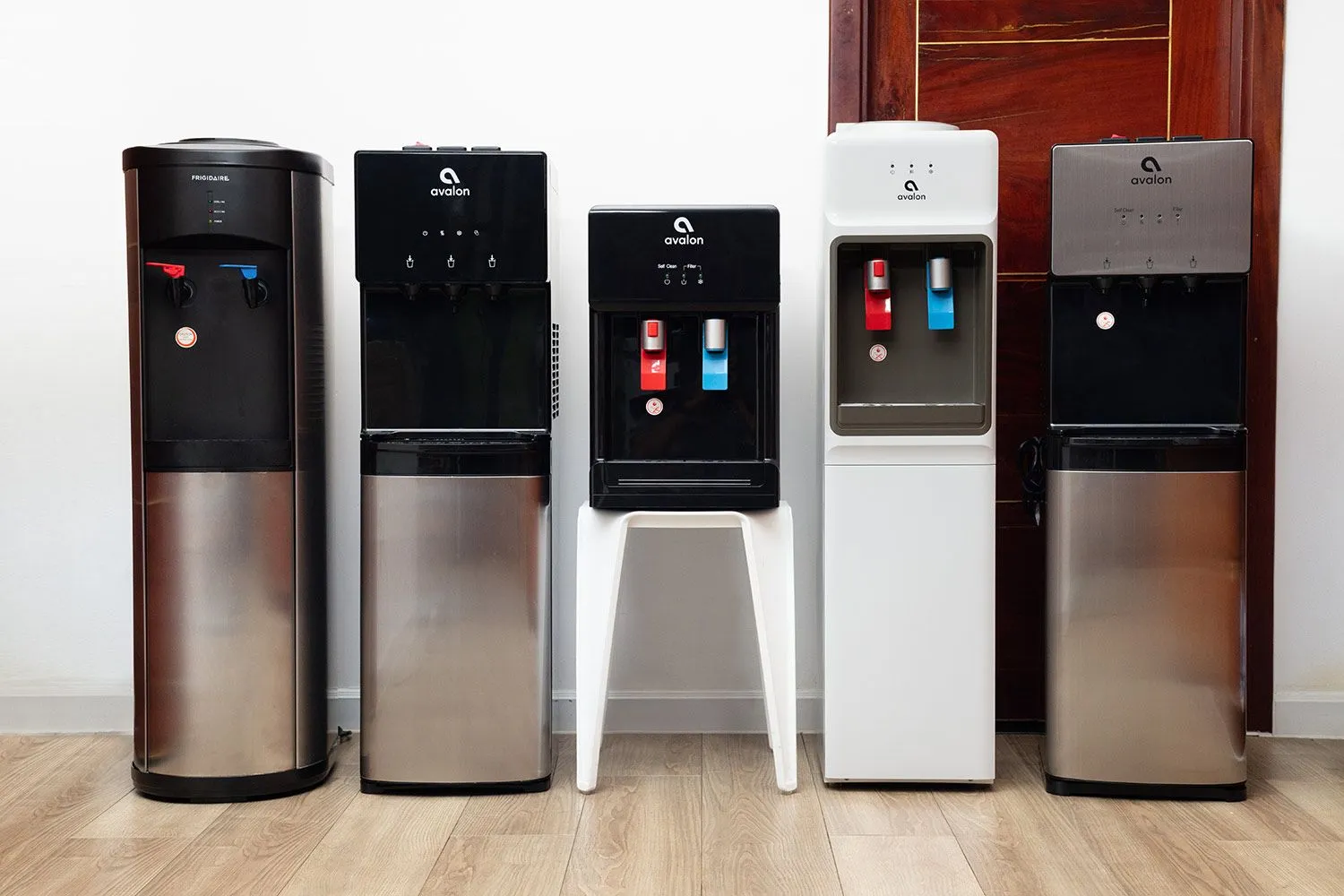 Water Dispenser
And electricity? A hot/cold dispenser that runs 24/7 uses about $5 to $15 in electricity per year. Not a dealbreaker, but it adds up. My personal favorite hidden cost: the “husband trip” to refill the jug at the grocery store gas station. Gas money, time, back pain—priceless, honestly.
So, How Much Should You Actually Pay?
I’d say: skip the $40 model unless you are truly desperate or living in a dorm room. Aim for $100 to $150 for a decent, durable unit. That gets you the safety lock, a small fridge, and a machine that won’t hum like a demon at night.
If you own your home and hate single-use plastic, invest in a $400 to $600 plumbed-in model. It pays for itself in two years versus buying jugs. But if you’re renting? Stick with the $130 mid-ranger and call it a day.
Last piece of advice: measure your space! I know a guy who bought a brand new stainless steel dispenser, only to discover it was three inches too tall for his counter. He now uses it as an expensive paperweight. Don’t be that guy.
