How To Remove Pfoa From Water

Look, I get it. You’re standing in your kitchen, staring at a glass of water and wondering if you’re basically sipping Teflon-flavored soup. That’s PFOA for you—a chemical tha...

Look, I get it. You’re standing in your kitchen, staring at a glass of water and wondering if you’re basically sipping Teflon-flavored soup. That’s PFOA for you—a chemical that sounds like a sneeze but acts like a clingy ex on your health. It’s the same stuff that made non-stick pans so slick, and now it’s floating around in our tap water like an uninvited party guest. But don’t worry; we’re going to kick it out without starting a brawl.
First, a quick reality check
PFOA (perfluorooctanoic acid) is a man-made chemical that’s been around since the 1940s, used to make things stain-resistant and non-stick. Think of it as the world’s most durable bad habit—it doesn’t break down easily. It’s been linked to weird things like thyroid issues and even some cancers, which is why you don’t want it chilling in your drinking glass. But hey, knowledge is power, and now you know why your water might taste like a chemistry textbook.
Here’s the good news: getting rid of it is totally doable, and no, you don’t need a lab coat or a PhD. You just need some basic tools and a sense of humor—because let’s be real, life is already weird enough without obsessing over invisible chemicals. So, let’s break it down into steps that won’t make you feel like you’re performing open-heart surgery on your faucet.
Must Read
Step one: The carbon filter hustle
Your simplest BFF in this battle is an activated carbon filter. Think of it as a sponge that’s been through anger management—it grabs PFOA molecules and holds them tight while letting the good stuff through. You can get a pitcher filter, a faucet-mounted one, or even a whole-house filter, but my favorite is the basic Brita-looking thing. I once left mine for three months without changing it, and it started whispering, “I’m tired, boss.” Moral of the story: change the cartridge regularly or your filter gets grumpy.
These aren’t perfect, though—standard carbon filters can reduce PFOA by about 80-90%, which is like a well-meaning bouncer at a club. They’ll catch most of the troublemakers, but a few might slip past if you’re not paying attention. For peace of mind, look for filters labeled “NSF/ANSI Standard 53” for PFOA removal—it’s the little gold star that says, “Yes, this actually works.”
Step two: Go full rebel with reverse osmosis
If you really want to get serious, reverse osmosis (RO) is your nuclear option. Imagine a bouncer who does background checks, frisks everyone, and checks IDs twice—that’s RO. It forces water through a semipermeable membrane that’s so tight, PFOA molecules bounce off like a kid rejected from a roller coaster. It’s crazy effective, often removing 99% or more of the nasties.
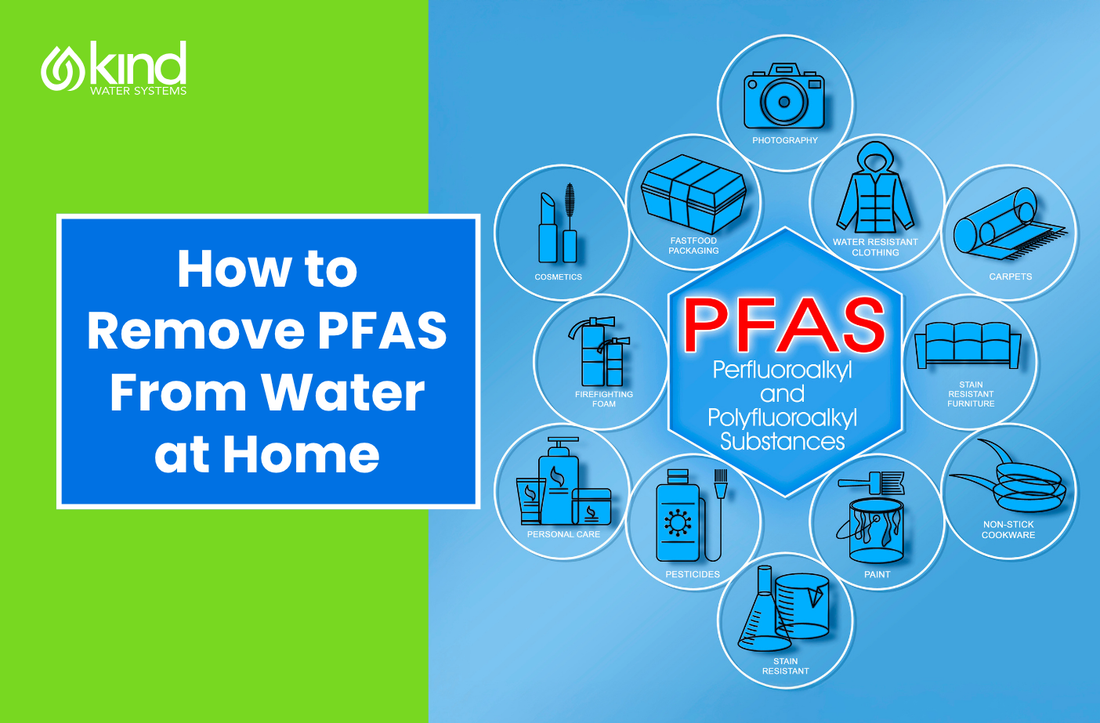 How to Remove PFAS From Water at Home | Kind Water – Kind Water Systems
The catch? RO systems are a bit like having a high-maintenance houseplant. They cost more, need annual filter swaps, and they waste some water during the process—like three gallons of waste for every good gallon you get. But honestly, if you’re paranoid about PFOA after reading your local water report, this is the big guns. Plus, the water tastes so clean it’s almost boring, which is the best kind of boring.
Step three: The bargain-hunter’s choice—distillation
Now, if you’re a DIY type who likes watching water boil, distillation is your jam. You boil water, catch the steam, and let it condense back into liquid while the PFOA stays behind like a stubborn stain. It’s essentially the same process nature uses to make rain, except you get to play meteorologist on your countertop. A countertop distiller costs about as much as a fancy dinner for two, but it runs on electricity and takes about four hours to make a gallon. Perfect for when you’re binge-watching a series and need a slow, satisfying win.
One thing to know: distillation strips out minerals too, which is like having a spa day for your water—clean, but a little flat. You can add a pinch of sea salt or a mineral drop to jazz it up. I once tried it without, and my tea tasted like it was embarrassed to be alive. Lesson learned.
 PFAS, PFOA and PFOS in Water | Kinetico Resource Center
Step four: The placebo—letting it sit (don’t laugh)
Online, you’ll see folks say, “Just let your water sit overnight, and the PFOA evaporates.” That’s a lie, cute as it sounds. PFOA isn’t like chlorine—it doesn’t wave goodbye and float away. So don’t fall for the “sunlight and patience” method unless you enjoy sipping false hope. Your life is complex enough without believing in magic water.
But here’s a funny truth: if you have a whole-house carbon filter and you run your shower through it, you’ll also avoid inhaling PFOA steam. Yes, you can absorb it through your skin! So if your goal is truly being PFOA-free, think beyond the glass. I once spent a month filtering only my drinking water, then took a hot shower and felt like a human teabag soaking in regret.
The bottom line (and a glass-half-full moment)
You don’t have to be perfect to be effective. A decent carbon filter will handle the daily drill, and if you’re really worried, a small RO system under your sink is like hiring a chemical bodyguard. Start simple, laugh at the absurdity of fighting a ghost chemical, and remember that you’re already winning just by caring. The world is full of stuff we can’t control, but your tap water? That’s your domain. Go kick PFOA out—and pour yourself a clean, cold glass of victory.
