How To Hook Up Water Softener

So, you’ve got hard water, huh? You know the signs: cloudy glasses, a weird film on your skin, and that annoying white crust on your faucets. You’ve heard a water softener can...
So, you’ve got hard water, huh? You know the signs: cloudy glasses, a weird film on your skin, and that annoying white crust on your faucets. You’ve heard a water softener can fix all that, and now you’re wondering if you can actually install one yourself. It sounds like plumbing wizardry, but I promise, it’s more like assembling a fancy LEGO set for your pipes.
Why Bother? The Cool Part of Soft Water
First, let’s geek out on why this is worth your weekend. Hard water is basically liquid with extra calcium and magnesium—like a mineral bath that never ends. A softener swaps those minerals for sodium, making your water feel silky and your soap lather like a dream. Think of it as the ultimate water spa treatment for your whole house.
Your hair will stop feeling like straw. Your dishes will sparkle without spots. And your water heater? It’ll live years longer because it won’t be choking on scale. Isn’t that kind of amazing?
Must Read
Before You Start: The Gear Checklist
You’ll need the softener unit itself, a bypass valve, some copper or flexible tubing, and a drain line. Oh, and a bucket, because drips happen. Don’t forget a sharp utility knife and a screwdriver—nothing fancy. Most of this stuff is sold in a kit, so you don’t have to hunt down odd parts like a treasure map.
Also, check your local water hardness level (google your city’s water report). That number tells you how to set the softener’s timer later. It’s like reading a recipe before you bake—saves you from a salty mess.
Step 1: Pick Your Spot Like a Pro
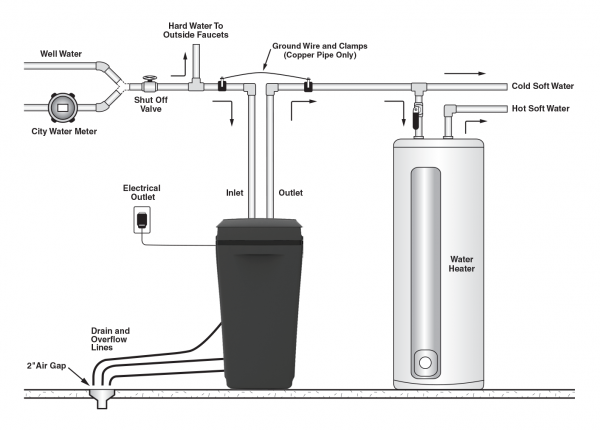
You’ll install the softener before your water heater, not after. Think of it as the gatekeeper: all incoming water passes through first. Find a spot near your main water shut-off valve, usually in the basement or garage. You need room for the tank and a nearby floor drain for regeneration waste.
If you don’t have a floor drain, you can run a skinny tube to a utility sink or even outside. Doesn’t that feel more like a puzzle than plumbing?
 Water Softener Installation Diagram Ao Smith Water Softener
Step 2: Cut and Connect (The Brave Part)
Turn off the main water supply. Open a faucet to relieve pressure—watch out for that last gush. Now, cut into your main water line. Use a pipe cutter for copper or a simple hacksaw for PVC. You’ll insert the bypass valve, which lets you isolate the softener later for refills or repairs.
Attach the inlet and outlet hoses from the softener to those valves. Most units use push-fit connectors or compression fittings—no soldering required. It’s like snapping together a garden hose, only shinier.
Step 3: Drain and Brine Lines (The Messy Bits)
Run a small tube from the softener’s drain port to your floor drain. Secure it with a zip tie so it stays put. Then, connect the brine line—the thin tube that goes to the brine tank (where the salt lives). This line must be air-gap approved to prevent back-siphoning. Read the manual, seriously, because messing this up turns your softener into a salty fountain.
Pour a bag of softener salt into the brine tank. Add a few gallons of water to dissolve it initially. It’s like feeding a pet rock—except this one cleans your water.
:max_bytes(150000):strip_icc()/installing-a-water-softener-2718669-FINAL-1-ee8de137dcf84b5db1e28f84a7dec11b.png) Step-by-Step Guide to Replacing Your Water Softener: Tips for a Smooth
Step-by-Step Guide to Replacing Your Water Softener: Tips for a Smooth
Step 4: The Big Flush and Test
Turn the water back on slowly. Check every connection for leaks—a tissue works great to spot tiny drips. Then, set the softener’s timer or electronic control to regenerate immediately. Let it run through a cycle (this takes about an hour). You’ll hear it gurgle and hiss; that’s normal. Think of it as the machine waking up.
After the cycle, run a cold water tap. If a glass of water isn’t cloudy and your soap suds up instantly, you did it. You just turned your home into a hydration paradise.
The Weirdest Thing You’ll Notice
Your skin will feel slippery after a shower—that’s the soap rinsing off completely, not leaving a gray film. And your laundry? It’ll smell clean without a ton of detergent. You’ll start looking for things to wash just to feel that soft water again. Is that weird? Maybe. But it’s your new normal.
Welcome to the club. Now go pour yourself a glass of lemonade—and admire those ice cubes that are actually clear.
