What Does A Carbon Filter Do

So, you’ve heard of a carbon filter, right? Maybe it’s lurking in your kitchen sink, your fancy water bottle, or that fish tank you bought on a whim and now regret. It’s basic...
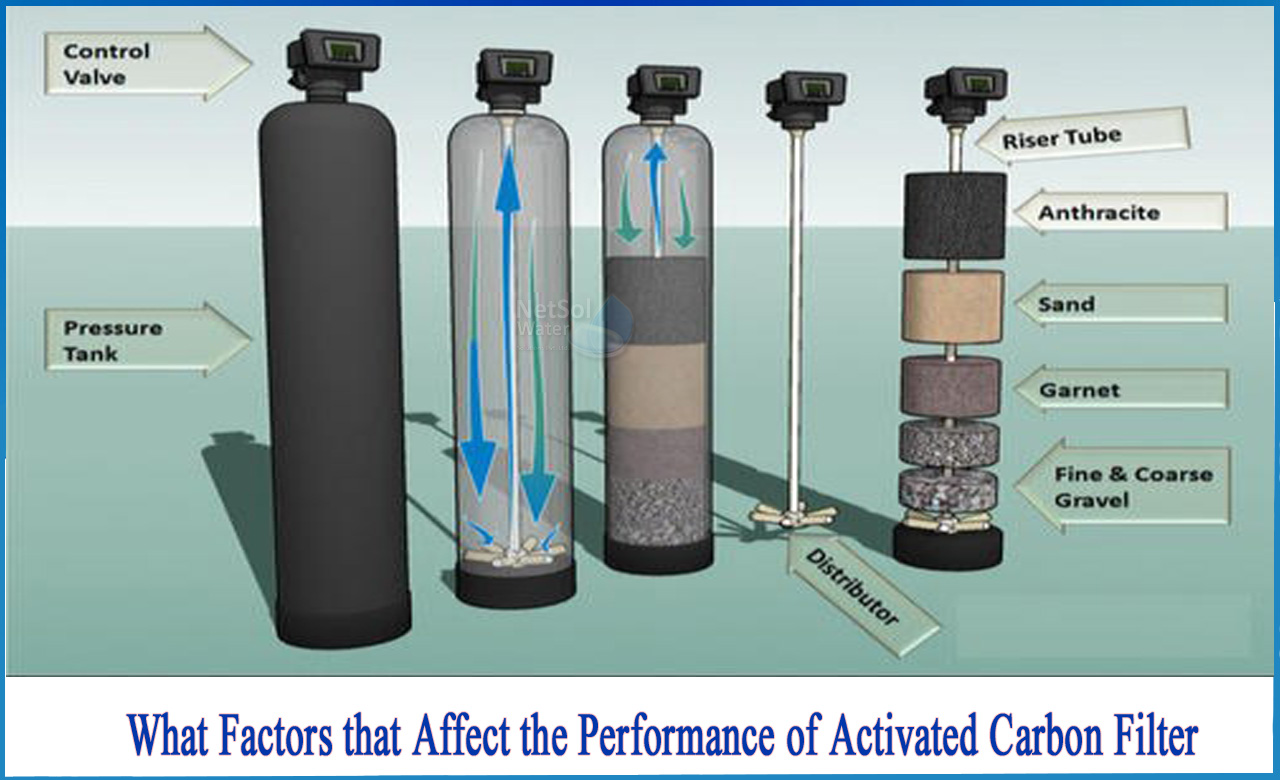
So, you’ve heard of a carbon filter, right? Maybe it’s lurking in your kitchen sink, your fancy water bottle, or that fish tank you bought on a whim and now regret. It’s basically the bouncer at the club of your tap water, kicking out the riff-raff.
But what does it actually do? Does it shoot lasers at germs?
No, sadly, it’s way less cool and way more brilliant. Imagine a microscopic, super-absorbent parking lot for bad smells and weird tastes.
Must Read
The Secret Life of Charcoal
First, let’s get one thing straight: this isn’t the charcoal you use for a summer barbecue. That stuff is covered in ash and grease and will make your water taste like a regretful camping trip.
The carbon in a filter has been “activated” by blasting it with hot gas or steam until it becomes a sponge of microscopic pores. We’re talking about a surface area so massive that a single gram of it can have more internal space than a football field.
Yes, you read that right. A teaspoon of this stuff has more nooks and crannies than a used car salesman’s brain.
The Science of Sticking
So, what’s actually happening in there? It’s a process called adsorption—not absorption. It’s a tiny difference, but important.
Absorption is like a paper towel soaking up a spill. Adsorption is like a magnet; the bad stuff sticks to the surface of the carbon like a clingy ex at a party you didn’t want them at.
Chlorine, that chemically-tasting stuff in tap water that makes it smell like a public swimming pool? The carbon grabs it and won’t let go. Volatile organic compounds, which sound like something from a sci-fi movie but are just weird chemicals from pipes? Stuck.
 Activated Carbon Filter Explained: Function, Benefits, and Uses
What It Won’t Do (And Why You Shouldn’t Cry)
Here’s the kicker: a carbon filter is terrible at removing heavy metals like lead, mercury, or arsenic. It’s like hiring a guard dog to catch a cat burglar—it just sniffs the air and goes back to sleep.
It also won’t zap bacteria or viruses. If your water is teeming with microscopic critters, a carbon filter is basically a luxury hotel for them. They’ll just check in and have a pool party.
And salt? Forget about it. A carbon filter doesn’t care about your ocean-flavored water. That’s a job for reverse osmosis, which is carbon’s much more dramatic cousin.
The Early Bird Gets the Dream Water
Here’s a surprising fact: the first few gallons of water through a new filter are actually worse than the old stuff. It’s called “carbon fines”—tiny pieces of carbon dust that shake loose during shipping.
You’re basically drinking a high-tech smoothie of sediment for the first minute. Run the water for 30 seconds before you drink, unless you enjoy the sensation of chewing your hydration.
Another shocker? Most fridge filters are comically undersized. They’re designed to get your ice from “swampy” to “acceptable” in about three cups, then they give up. That “replace filter” light? It’s probably on a timer, not a sensor.
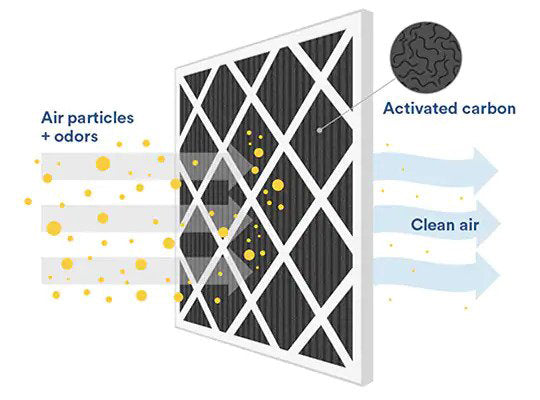 Activated Carbon Filters: What Do They Remove from Your Air?
The Aristocrats of Filters
Fancy carbon filters—like those block-style ones—are made of compressed carbon that water has to squeeze through. Think of it like a maze for contaminants.
Cheap ones are just granulated carbon rattling around in a plastic tube. The water takes the easy route, bypassing most of the carbon. It’s like trying to get a cat into a carrier—mostly ineffective and full of drama.
The best ones use “catalytic carbon,” which is basically carbon on steroids. It’s been chemically treated to zap chloramine—the zombie version of chlorine that’s hard to kill and makes your shower stink.
The Bottom Line
So, does a carbon filter turn your tap water into magical unicorn tears? No. But it does remove 99% of the ick that makes you wrinkle your nose.
It’s the unsung hero of your kitchen, working 24/7 to remove the taste of “old pipe” and “slightly swam in.” It’s like a silent bouncer who never asks for a tip.
Just remember, it has limits. And if your water tastes like a penny, a carbon filter won’t save you. You need a different party—and probably a plumber.
Now go drink some water. It’s probably fine. Probably.
