How Does A Water Filter Work

Let’s be honest: most of us only think about our water filter when we realize we’ve been drinking from the tap for three days straight and our tongue feels like it’s licking a...

Let’s be honest: most of us only think about our water filter when we realize we’ve been drinking from the tap for three days straight and our tongue feels like it’s licking a chalkboard. You know, that moment when you pour a glass and it smells faintly of swimming pool? Yeah, that’s when you really appreciate the little plastic hero hiding in your fridge.
So, how does that water filter actually work? It’s not magic, though it sometimes feels like it. It’s more like a bouncer at a very exclusive club, letting only the good stuff through.
The Bouncer with a Fancy Resume
Imagine your tap water as a wild house party. You’ve got the usual suspects: chlorine, sediment, and maybe a little rust from old pipes. These are the party crashers nobody invited.
Must Read
The filter is your bouncer. It uses something called activated carbon, which is basically charcoal that’s been “woken up” and made extra porous. Think of it like a slice of burnt toast with a million tiny caves inside.
As water rushes past, those caves trap the bad stuff. Chlorine gets grabbed by the carbon’s surface, while bigger particles like dirt get physically blocked. It’s like passing through a maze where only the clean water knows the shortcuts.
The Secret Ingredient: Tiny Pores and a Little Bit of Attraction
Here’s the funny part: the carbon doesn’t just slap a filter screen over the water. It actually attracts certain chemicals. This is called adsorption—with a ‘d’, not absorption. The bad guys stick to the carbon like gum on a hot sidewalk.
Meanwhile, good stuff like minerals usually get a free pass. Calcium and magnesium? They’re the cool guests who get to stay. The filter is not a snob—it just hates the taste of pool chemicals.
I remember once replacing my filter after six months and nearly fainting at the brown sludge that came out. The first few glasses afterward tasted like mountain spring water, and I actually said, “Thank you, plastic tube.” You don’t realize how much you miss fresh water until it’s back.
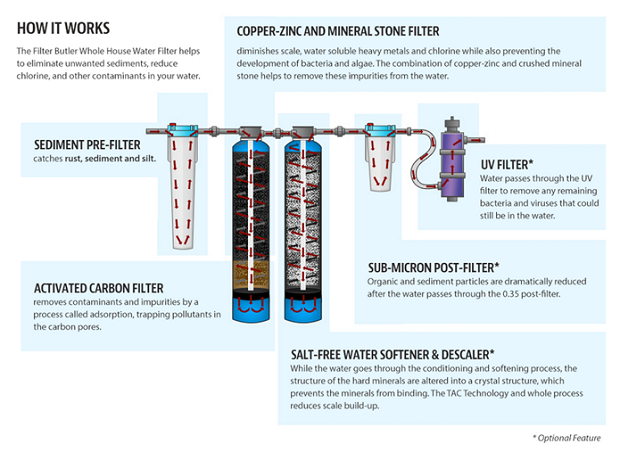 How A Homemade Water Filter Works
Different Filters for Different Dirty Water
Not all filters are the same, and that’s okay. A pitcher filter works like a slow Saturday: water dribbles through gravity and gets a gentle clean. It’s perfect for city water that just tastes a little “off.”
But then you have reverse osmosis systems. These are the overachievers. They use pressure to force water through a membrane so fine that even tiny molecules like salt and lead get left behind. It’s like teaching a cat to walk through a dog door—only the determined stuff gets through.
Then there’s the classic faucet-mounted filter. Mine always feels like a shy octopus hugging the spout. It’s simple, but it works because it uses the same carbon trick on a smaller, faster scale.
The “Oops, I Forgot” Moment
You know the real struggle: ignoring the little red light that screams “Replace filter!” for three months. I do it every time. Then one morning, your coffee tastes faintly of stale garden hose, and you realize the filter is now a breeding ground for regret.
That’s because filters have a capacity. They can only trap so much gunk before they start letting it seep back out. It’s like a sponge that gets too full—eventually, it just spreads the mess around.
 How Does Water Filtration Work?
So, the secret to a happy filter is regular replacement. Think of it as giving your bouncer a vacation before he gets grumpy and starts letting in everything.
Why You Should Care (Even If You Hate Reading Manuals)
Water filters don’t just make your water taste better—they make you want to drink more. And drinking more water is the easiest life hack nobody sells you in a bottle.
Plus, using a filter saves you from buying plastic bottles. Your wallet gets fatter, and the planet gets less trash. It’s a win-win that requires exactly zero effort beyond twisting a plastic thingy.
So next time you pour a glass of filtered water and it tastes like a crisp morning in the mountains, give that little cylinder a nod. It’s doing the dirty work so your taste buds don’t have to.
And if you forget to replace it? Well, just remember: a sad filter is like a friend who never calls back—it’s not helping anyone. But a fresh one? That’s pure, easy-going happiness in a glass. Cheers to that.
