Why Is My Well Water Cloudy

So you pour a glass of water from your well, and it looks like a tiny, clouded mirror. Don’t panic! You haven’t accidentally sunk a pipe into a milkshake volcano. That cloudy...
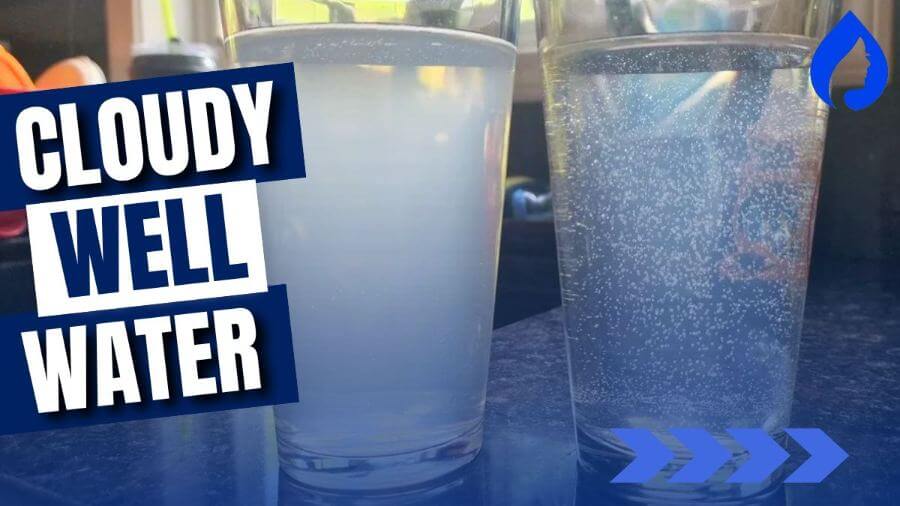
So you pour a glass of water from your well, and it looks like a tiny, clouded mirror. Don’t panic! You haven’t accidentally sunk a pipe into a milkshake volcano. That cloudy mystery is actually your first invitation to become a home water detective—and trust me, the clues are fascinating.
The Great Cloud Cover-Up: Air Bubbles vs. Sediment
Nearly all cloudy well water comes from one of two harmless culprits: trapped air or fine sediment. If you let the glass sit for a minute and it clears from the bottom up, congratulations—you’ve got dissolved air. That’s just tiny bubbles partying in your water, usually from a pressure tank or pump. It’s completely safe, and honestly, kind of charming when you think of it as sparkle waiting to escape.
If the cloudiness sinks to the bottom like a slow-motion snow globe, you’re dealing with sediment—tiny bits of sand, silt, or clay. This is your well’s way of saying, “Hey, I’m a natural aquifer, not a filtered faucet!” A simple sediment filter can fix this, and you’ll feel like a plumbing wizard installing it.
Must Read
When Cloudy Gets a Little Too Juicy (Hint: Check Your Iron)
Sometimes the cloudiness has a reddish or yellowish tint. That’s iron or manganese—nature’s subtle way of adding a bit of rust-colored personality to your water. It won’t hurt you, but it can stain your laundry a delightful shade of “oops.” A basic water softener or iron filter turns that frown upside down.
What if it smells like rotten eggs alongside the cloudiness? That’s sulfur bacteria—which sounds scary but is just a tiny critter that loves your well’s ecosystem. A quick shock chlorination will send those little stinkers packing, and your water will taste as crisp as a mountain stream. See? You’re already a well-care expert!
 Cloudy Water From Filter | Cloudy Aquarium Water: Bacterial Bloom
The Fun Science of Your Own Aquifer
Here’s the real secret: your well is a direct line to the earth’s plumbing. Every cloudiness is a story about the rocks, soil, and pressure hundreds of feet below your feet. You’re not just drinking water—you’re sipping a geology lesson. How cool is that?
When you solve the cloudy water puzzle, you’re not just fixing a nuisance. You’re learning to speak the language of your land. You’ll start noticing how every little change in your water—hardness, taste, clarity—tells you something about the seasons or rainfall. It’s like having a secret conversation with your backyard.
Test Like a Boss (And Feel Empowered)
Grab a simple home water test kit—they’re cheap and surprisingly fun. You’ll feel like a mad scientist mixing vials and matching colors. And when you find out your water is actually full of healthy minerals? You’ll never look at tap water the same way again.
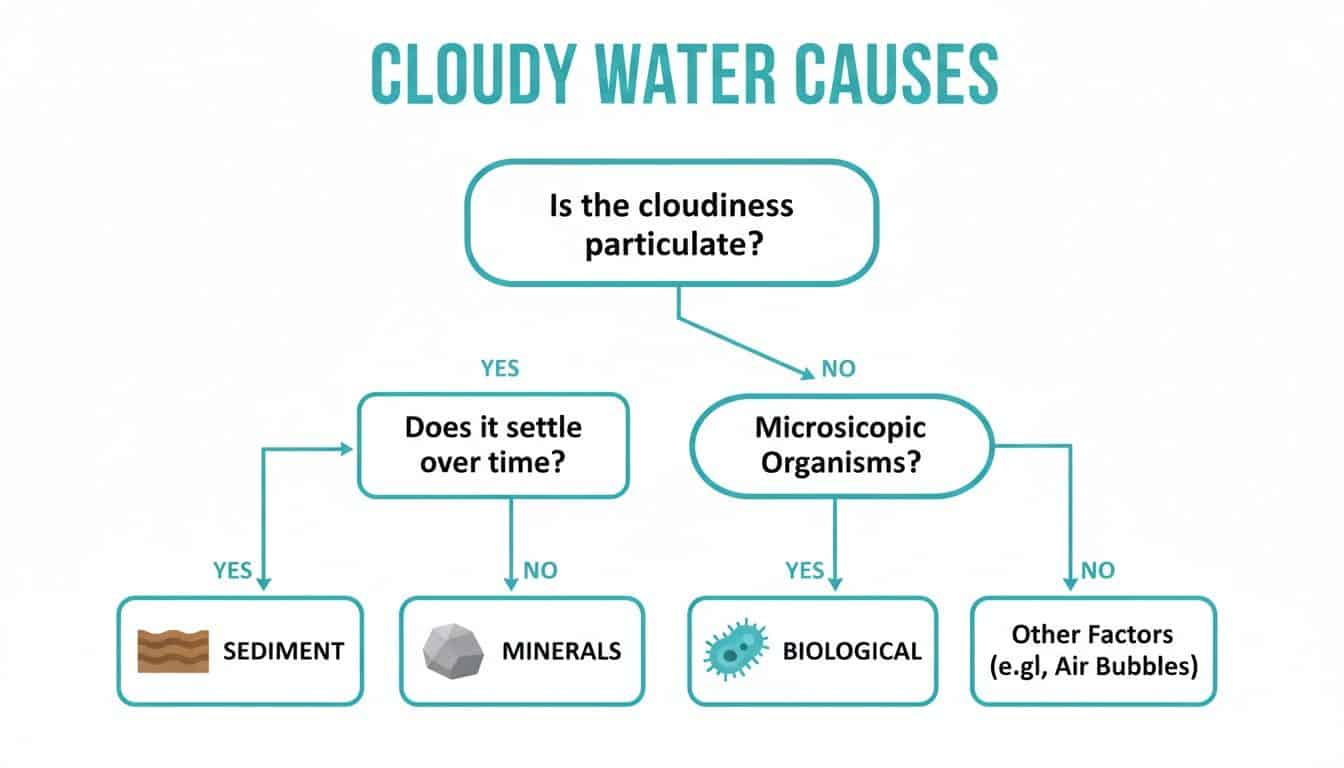 Cloudy Well Water: Why It Happens and How to Fix It
Remember: cloudy water is almost never dangerous. It’s just your well’s way of saying “I’m alive and kicking!” Most issues are fixed with a $20 filter, a little patience, or a friendly call to a well professional. And that call? That’s how you become the hero of your own hydration story.
So next time you see that milky glass, smile. You’ve got a mystery to solve, a system to understand, and a perfectly good glass of water waiting to be enjoyed. Embrace the cloudiness—it’s the first step to becoming the savvy, smiling steward of your own private little ocean.
Go ahead, pour another glass. The adventure is just beginning, and it tastes incredibly clear once you know the secret.
