What Does Water Purifier Do

We’ve all been there—standing in the kitchen, glass in hand, staring at the faucet with a flicker of doubt. Is that tap water really okay? Or are you just one sip away from ta...

We’ve all been there—standing in the kitchen, glass in hand, staring at the faucet with a flicker of doubt. Is that tap water really okay? Or are you just one sip away from tasting the ghost of last night’s pasta sauce? Enter the water purifier: your personal hydration bodyguard, on a mission to turn the ordinary into the extraordinary.
In a world where we obsess over clean beauty and organic snacks, it’s wild that we often ignore what’s swimming in our glass. A water purifier isn’t just a fancy appliance; it’s a silent guardian that filters out the invisible stuff—think chlorine, lead, pesticides, and microplastics. You’re not just drinking water; you’re drinking peace of mind.
The Science of Sippable
So, what does it actually do? At its core, a water purifier uses a series of filters—like activated carbon, reverse osmosis membranes, or UV light—to trap or kill contaminants. It’s basically a spa day for your H₂O, scrubbing away the grime before it hits your lips.
Must Read
Think of it as the bouncer at the world’s most exclusive club. Only the purest water molecules get past the velvet rope; everything else—bacteria, sediment, that weird metallic taste—gets told to leave. The result? A glass of water that tastes like a mountain spring, even if your pipes are from the 1980s.
Fun fact: the average tap water can contain over 2,000 different chemicals, from fluoride to trace pharmaceuticals. No, you’re not accidentally brewing a multivitamin; that’s just modern life in a pipe. A good purifier catches up to 99% of these uninvited guests.
Why Your Taste Buds Are Begging for It
Let’s be real—bad water ruins everything. That morning coffee that tastes flat? It’s not the beans; it’s the water. Even your fancy French press can’t salvage H₂O that smells like a swimming pool. Filtered water is the upgrade you didn’t know you needed.
And here’s the kicker: once you switch, you’ll never go back. It’s like the first time you shelled out for a memory-foam mattress—you suddenly realize you’ve been settling for less your whole life. Your tea will taste rounder, your iced drinks crisper, and your hangover (if that’s your vibe) slightly less punishing.
Culturally, we’ve been obsessed with pure water for centuries. The ancient Greeks boiled and filtered their water through charcoal cloth bags. The Japanese have a ritual called Mizumoto, honoring water’s life-giving purity. Today? We just put a gadget under the sink and call it a day. Progress, baby.
 What Is Purified Water? | The Chemistry Blog
Practical Tips for the Purifier Newbie
Okay, so you’re sold on the idea. But which purifier do you pick? Here’s the cheat sheet: if you want convenience, go for a countertop pitcher filter—simple, cheap, and zero installation drama. If you’re a serious water snob or have hard water, a reverse osmosis system under your sink is the gold standard.
Don’t forget the maintenance. A filter that’s past its prime is like a broken umbrella; it just lets the rain through. Most need swapping every 3–6 months. Set a calendar reminder, or your water will slowly revert to “meh” territory without you even noticing.
Pro tip: Traveling? Get a portable purifier bottle. It’s like a reusable water bottle, but with a secret superpower—you can fill it from any tap, from Tokyo to Turin. No more buying plastic bottles at inflated airport prices. Save the planet, save your wallet, and save your taste buds.
Fun Little Facts to Impress Your Friends
Did you know that the world’s largest water purifier is in Singapore? It’s a giant system that recycles wastewater into drinking water, called NEWater. Yes, you read that right—toilet to table, with a multi-step filtration that even astronauts would trust. Science is wild.
Or this: a single carbon filter can trap more than 100,000 particles per square inch. That’s like catching confetti from a parade with a net the size of a postage stamp. Your water is cleaner than a hospital operating room.
And here’s a cultural one: in South Korea, you’ll often find purifier machines in public parks and subway stations. They dispense free water at specific temperatures, from icy cold to near-boiling for tea. It’s so normal that locals don’t think twice—but for visitors, it’s a subtle luxury that says, “We care about your hydration.”
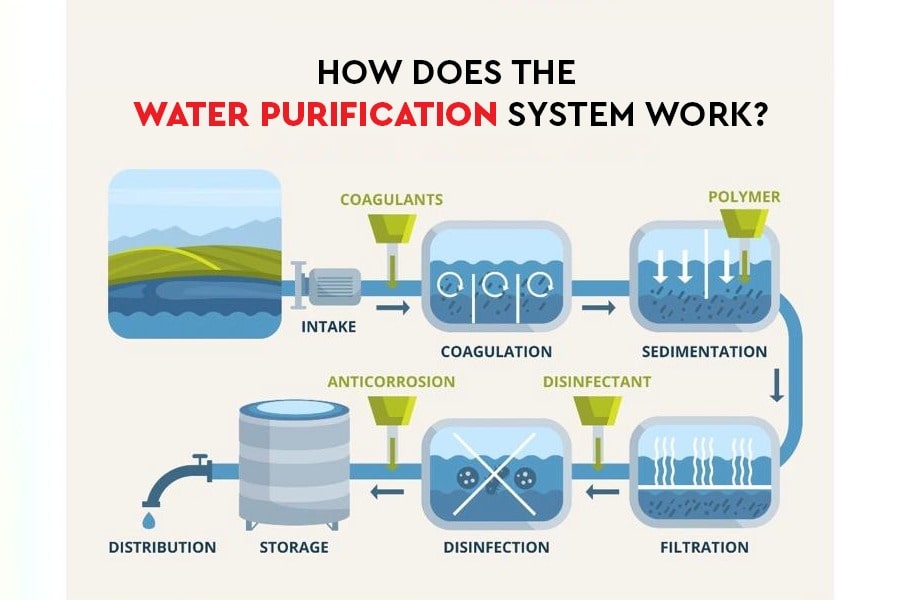 Water Filtration Process Diagram 8 Stage Alkaline Mineral Infrared
The Eco-Warrior Angle
Let’s talk about the planet. Each year, humans buy over a million plastic water bottles every minute. Most end up in oceans or landfills, living longer than your great-grandkids. A purifier is the ultimate cheat code to ditching bottled water for good.
Fill your reusable bottle at home, and you’ll save roughly 1,500 single-use plastic bottles per year. That’s not just a stat—that’s a personal victory dance for the environment. And your wallet will thank you: tap water costs about 0.01 cents per gallon, versus $1–$2 per bottle. Do the math.
Even the filter itself is getting greener. Many brands now offer recyclable cartridges or refillable systems. Look for labels like “zero-waste compatible” or “carbon-neutral certified.” It’s hydration with a conscience.
A Reflection for the Everyday
At the end of the day, a water purifier isn’t about being fancy or indulgent. It’s about taking one small, visible step toward caring for yourself and the world around you. You pour a glass, and you know—you are worth this level of care.
Think about your morning routine. That first sip of water after brushing your teeth? It sets the tone. If it’s clean and bright, the day feels lighter. If it’s cloudy or tastes like a copper penny, you start off a little… off. A purifier smooths that edge, turning a chore into a quiet ritual.
So go ahead, take the plunge. Let your water be clear, your coffee be bold, and your conscience be clean. In a noisy, messy world, sometimes the simplest thing—a pure, cold glass of water—is exactly the reset you need. Cheers to that.
