How To Get Rid Of Limescale

You know that moment when you fill the kettle, press the switch, and instead of the usual gentle hum, you hear something that sounds like a tiny, angry gravel truck shifting g...

You know that moment when you fill the kettle, press the switch, and instead of the usual gentle hum, you hear something that sounds like a tiny, angry gravel truck shifting gears? Yeah, that happened to me last Tuesday. I opened the lid, expecting water, and found what looked like a miniature, chalky coral reef clinging to the heating element.
That was the day I declared war on limescale. And let me be honest with you—it’s a silent, sneaky enemy that ruins your coffee and your appliances. But don’t worry, I’ve got the dirty, satisfying secrets to beat it.
What Even Is This White Crust?
Limescale is basically nature’s way of saying your water is hard. It’s just calcium and magnesium carbonates that precipitate out of the water when it gets hot. Think of it as the ghost of evaporated mineral water, haunting your plumbing.
Must Read
The real kicker? It’s not just ugly. It makes your kettle take forever to boil, destroys your washing machine’s heating element, and leaves a gross film on your shower glass. We need to kick it out, and we need to do it with stuff you probably already have under your sink.
The Alpha Weapon: White Vinegar
White vinegar is the king of limescale removal. Not the fancy balsamic or apple cider kind—don’t waste that, save it for your salad. Grab the cheap, clear, acidic stuff that smells like a pickle factory. It’s a genius.
For your kettle, mix equal parts water and white vinegar, fill it up, and boil it. Then let it sit for about 20 minutes. The magic happens while it cools. When you pour it out, you’ll watch flakes of scale slough off like dead skin after a sunburn. Gross, but so satisfying.
For your coffee machine, run a full cycle with just the vinegar-water mix (without the coffee grounds, obviously). Run two more cycles with plain water to rinse, or your morning latte will taste like a pickle. Not a fun surprise.
Bad News: It Smells
I won’t lie—your kitchen will smell like a chip shop for a bit. Open a window. Light a candle. Maybe even leave the house for an hour. The smell fades completely after the rinsing cycles, but the initial pungency is real.
 Quick tip: How to Remove LIMESCALE - YouTube
Pro tip: if you hate the smell, you can substitute white vinegar with citric acid powder. It’s cheap, odorless, and even more aggressive against scale. You can find it in the canning section or online. Use one tablespoon per liter of water.
Lemon For The Aristocrats
If you want to feel fancy while fighting crust, use lemons. Boil a few thick slices or squeeze the juice into the kettle. It works on the same acid principle, but your kitchen smells fresh and clean.
Just watch out: lemons are a little gentler, so really hard, thick scale might need two treatments. But the effort is worth it for the scent alone. You’re basically aromatherapy-meets-plumbing.
How To Slay The Showerhead Beast
Limescale on your showerhead looks like white barnacles. It doesn’t just look bad; it sprays water in weird, painful jets. The fix is laughably easy.
Take a plastic bag, fill it with a cup of white vinegar, and tie it around the showerhead so the nozzle is submerged. Secure it with a rubber band or a twist tie. Wait overnight while the acid does its thing. In the morning, remove the bag and run the shower for a minute. It’ll spray evenly again, and you’ll feel like a wizard.
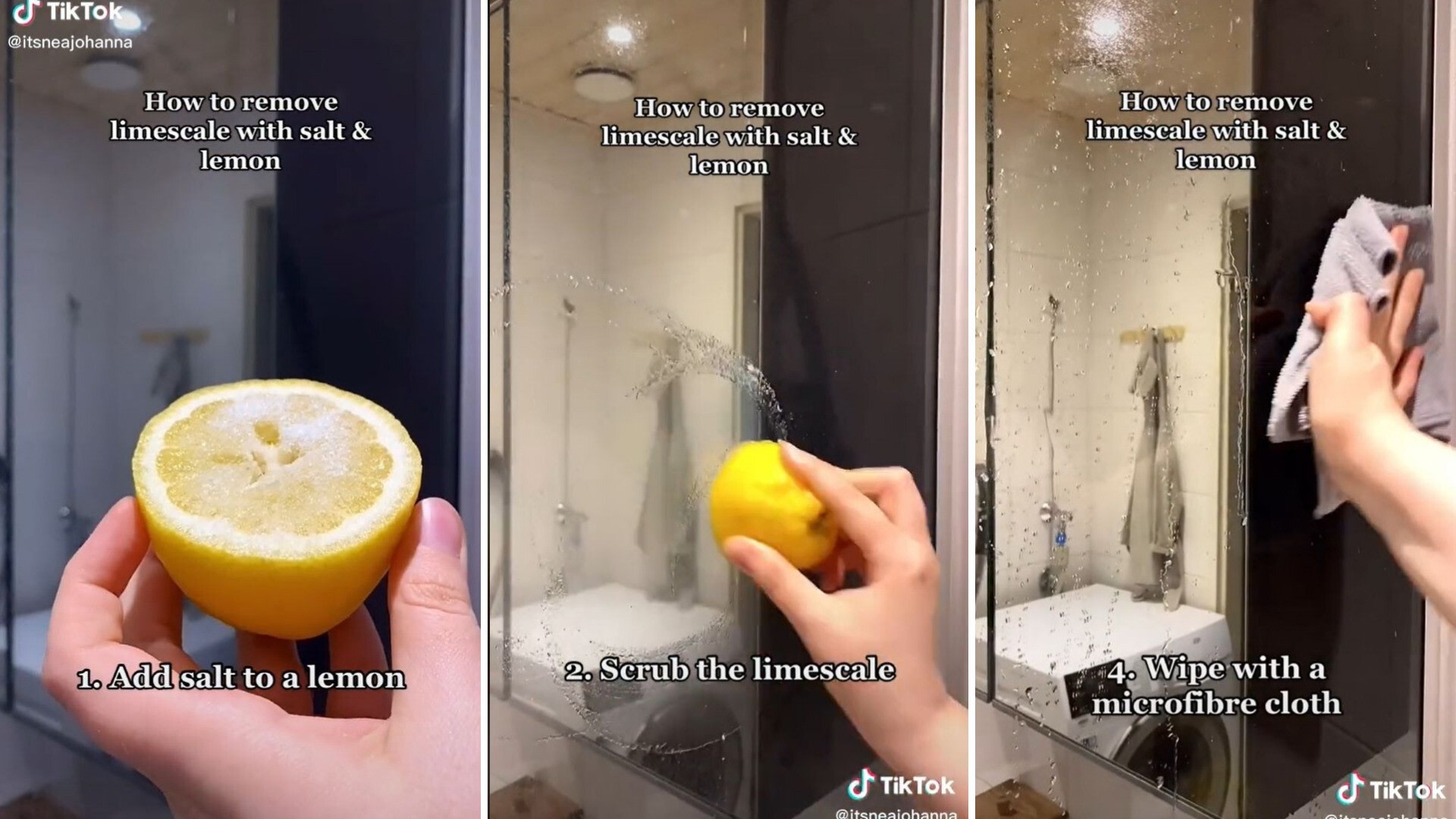 TikToker shares amazing hack to get limescale out of your shower
The Limescale Endgame: Prevention
Now that you’ve killed the monsters, you don’t want a sequel. The easiest hack is to dry your surfaces. In the shower, use a squeegee on the glass walls after every shower. I know it’s annoying, but it takes ten seconds. Ten seconds saves you an hour of scrubbing later.
For appliances, consider a water softener or a descaling tablet once a month. Many modern kettles have a descaling cycle built in. Use it! That little button exists for a reason, not just to beep at you.
A Word On The Bad Stuff
Don’t use bleach. Don’t use harsh commercial descalers with fancy names unless the label says “safe for appliances”. Some aggressive bathroom cleaners can eat away rubber seals. Stick to vinegar, citric acid, or lemons. They’re cheap, they work, and you won’t accidentally dissolve your kettle’s plastic window.
One more thing: never mix vinegar with bleach. That creates toxic chlorine gas. So keep your cleaning caddies separate. Please. I want you around to drink your scale-free coffee.
The Final Rinse
So, back to my “coral reef” kettle. I gave it the vinegar treatment, rinsed it twice, and boiled the first cup of tea. It was silent. Smooth. Pure. I felt a deep, primal satisfaction—like I had conquered a tiny, crusty mountain.
You can have that same victory. Grab the vinegar, attack your appliances, and laugh at the flakes. Then make yourself a drink. You’ve earned it, and your kettle will thank you. Probably not verbally, but you’ll feel the love.
