How To Calculate Water Bill

We’ve all been there. That little envelope slips through the mail slot, or a notification pings on your phone, and suddenly you’re staring at a number that feels like a riddle...
We’ve all been there. That little envelope slips through the mail slot, or a notification pings on your phone, and suddenly you’re staring at a number that feels like a riddle wrapped in a mystery. Yes, we’re talking about the water bill.
But here’s the secret: calculating your water bill isn’t rocket science. It’s actually a bit like reading a recipe for your morning smoothie—once you know the ingredients, it’s surprisingly simple. Let’s break it down like we’re chatting over coffee, not auditing a financial report.
Your Two Main Ingredients: Usage and Rates
Think of your water bill as a cocktail. The base spirit is your water usage, usually measured in gallons or cubic feet (look for “CCF” on your bill—that’s 100 cubic feet, or about 748 gallons). The mixer is your local water rate, which is the price per unit your town charges.
Must Read
Most municipalities use a tiered rate system. This means the more water you use, the more you pay per gallon—like a reverse happy hour. The first 3,000 gallons might be cheap, but that 10,000th gallon? It’s coming at a premium.
Here’s the formula you’ll never forget: Usage (in units) x Rate per unit + Fixed fees = Your total. That’s it. You’ve just cracked the code.
Decoding the Charges on Your Bill
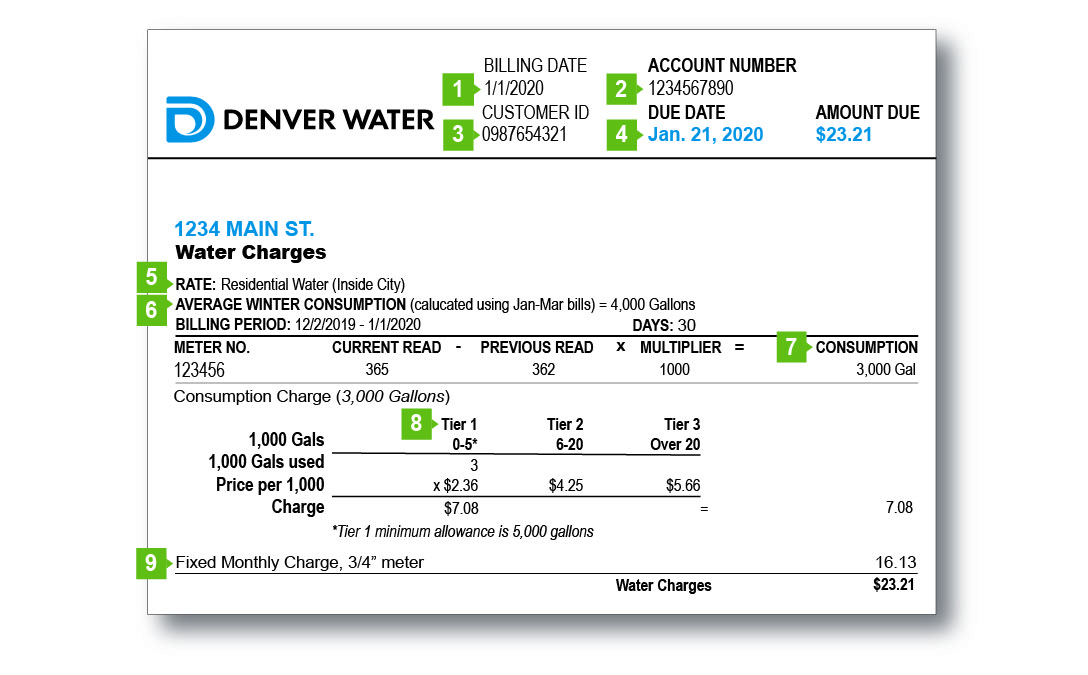
Now, pull out that bill and look for the line items. You’ll almost always see a water usage charge—that’s the variable part we just calculated. Then there’s a fixed service fee, which covers meter maintenance and infrastructure, like a subscription to the water club.
Don’t forget the sewer charge. In many towns, it’s calculated as a percentage of your water usage (usually 70-100%), because they assume most of what goes down the drain ends up in the sewer. It’s an honor system, but a pricey one.
Finally, watch for taxes and surcharges. These little guys are the sprinkles on top—small but they add up. A 5% stormwater fee or a conservation surcharge is common in coastal cities like San Francisco or Miami.
Practical Tips to Lower Your Bill (Without Living Like a Monk)
You don’t need to take military-grade showers. Start with fixing leaks—a dripping faucet this year could lose you 3,000 gallons, enough to fill a small swimming pool. Use food coloring in your toilet tank: if it seeps into the bowl without flushing, you’ve got a silent leak.
 Water And Sewer Bill Estimate at Trish Nelson blog
Next, embrace the short shower. Cutting just two minutes off your daily rinse saves about 1,750 gallons per person per year. That’s like skipping a whole month’s worth of water for the price of a few extra songs on your playlist.
And here’s a fun fact: Lawn irrigation is the biggest household water hog, using up to 40% of your total. Set your sprinklers for early morning (before 6 AM) to reduce evaporation. Your grass will be just as green, and your wallet will thank you.
Cultural References That Make This Fun
Remember the Friends episode where Monica obsesses over the water bill? She was onto something. In many cultures, like in rural Japan, water is measured by the tō (about 18 gallons), and their bills are poetic. Meanwhile, in Las Vegas, they practically pay you to conserve—rebates for removing grass are a thing.
In ancient Rome, water was free for public baths but taxed for private homes. Today, our bills are a modern tribute to infrastructure. So next time you pay, think of it as a tiny tax for indoor plumbing—a luxury most humans didn’t have 150 years ago.
For a bit of pop culture, look at Shrek: he lived in a swamp with no bill at all. But we don’t have ogre metabolism, so we pay our dues. Channel your inner Donkey and keep it light—the math doesn’t have to be a dragon to slay.
How to Actually Do the Calculation at Home
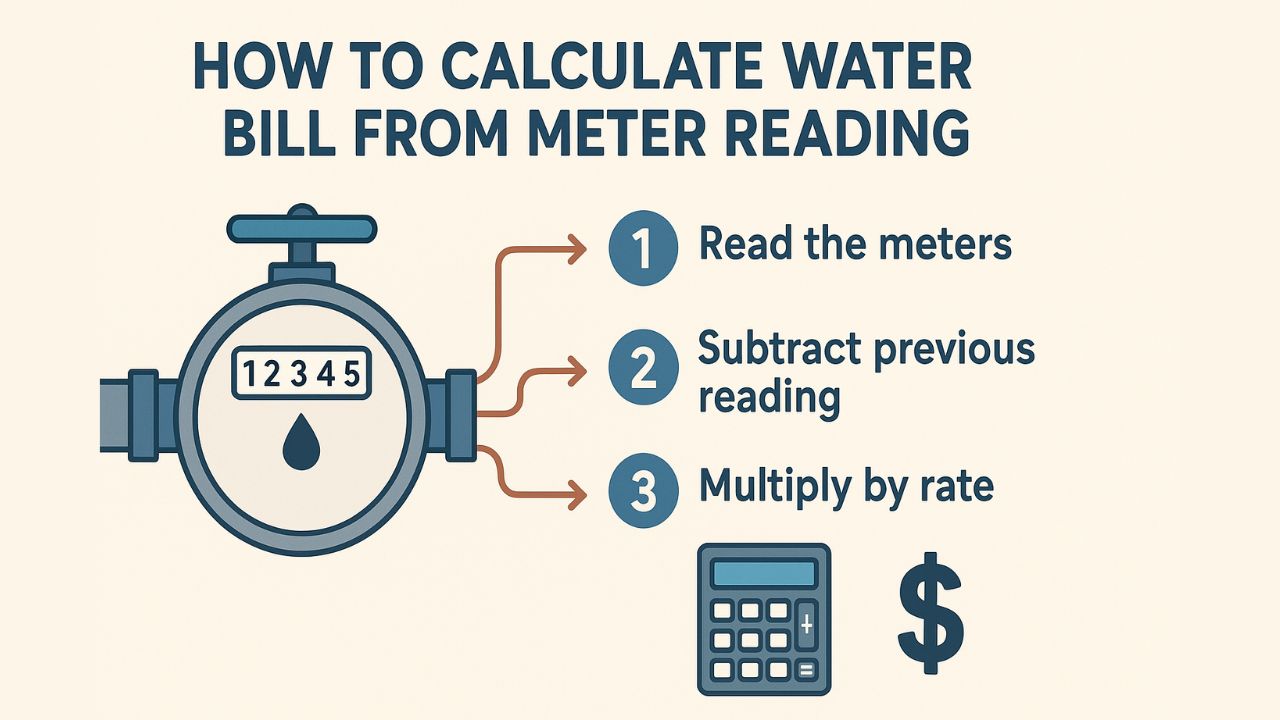
Find your meter reading. It’s that spinning dial in the basement or a digital screen outside. Your last month’s reading and this month’s reading give you the difference—your usage. Write it down like a detective. First reading minus second reading equals your consumption.
Now, check your rate schedule (it’s often on your utility’s website). If you used 8 CCF and your first tier is $1.50 per CCF for the first 5 CCF, and $2.00 after, then: (5 x $1.50) + (3 x $2.00) = $7.50 + $6.00 = $13.50 for usage. Add your $10 fixed fee and 70% sewer charge on 8 CCF (8 x $0.70 x $1.50? Check your specific sewer rate—it varies!). You get the idea.
 HOW TO CALCULATE WATER BILL? - YouTube
To make it easy, use a water bill calculator app. Many utilities offer one online. Just punch in your meter numbers, and it spits out the total. It’s like a cheat code for adults.
Fun Little Facts to Impress Your Friends
The average American family uses 300 gallons of water per day. That’s enough to fill a hot tub every 24 hours. Meanwhile, a single toilet flush uses 1.6 gallons—so your seven flushes a day add up to a mini-river.
And here’s a wild one: in 2023, the City of Sydney, Australia, offered residents a free water audit where they’d install low-flow showerheads for you. Similar programs exist in Portland and Tucson. Check your local incentives—they’re like finding a twenty-dollar bill in an old coat.
Lastly, did you know that water billing is older than electricity? Ancient Greek aqueducts had crude meters using clay pots. We’ve been optimizing this since 500 BC. Our bills are just glorified pottery receipts.
A Short Reflection for Your Daily Life
So there you have it. Calculating your water bill isn’t a chore—it’s a peek into your daily habits, a tiny poem about how you use the planet’s most precious resource. Every drop you save is a small vote for a smarter, cooler future.
Next time you brush your teeth, turn off the tap. When you water your garden, feel the soil. And when that bill arrives, smile. You’ve got the tools to decode it, and maybe even lower it. Your home isn’t just a house—it’s a living system.
And honestly? That’s kind of beautiful. Now go take a wonder-full, efficient shower—and don’t forget to check the meter. You’re the hero of your own utility story.
