What Does Active Carbon Do

Alright, settle in, grab your coffee—or better yet, a fancy filtered water—because we need to talk about a tiny, invisible hero that’s basically the ninja of the material worl...

Alright, settle in, grab your coffee—or better yet, a fancy filtered water—because we need to talk about a tiny, invisible hero that’s basically the ninja of the material world. I’m talking about activated carbon. You’ve seen it in fancy water pitchers, fish tank filters, and that expensive face mask your cousin bought on a whim. But what the heck does it actually do?
It’s Basically a Microscopic Sponge with an Attitude Problem
Imagine a sponge. Now imagine that sponge has been supercharged, zapped with heat, and turned into a gritty black powder with a personal vendetta against everything gross. That’s activated carbon. It’s so porous that if you unrolled its internal surface area, one gram could cover an entire football field. Yes, a gram. That’s less than a packet of sugar.
This incredible surface area is what makes it a party pooper for pollutants. It acts like a microscopic bouncer at a club, grabbing tiny molecules of toxins, smells, and impurities and trapping them forever. “Sorry, chlorine, you’re not on the list.” “Get lost, bad odor, you’re ruining the vibe.” It doesn’t react chemically with them; it just uses pure adsorption—which is fancy science talk for “stickiness on steroids.”
Must Read
Why Your Brita Pitcher Isn’t Just Lying to You
If you’ve used a water filter, you’ve seen activated carbon in action. That little black cartridge is a silent guardian. Tap water often tastes like a swimming pool because of chlorine, added to kill bacteria. Activated carbon looks at that chlorine and says, “Not in my house.” Poof. It latches onto it and removes it, leaving you with water that tastes like pure, mountain-stream nothingness.
But here’s the jaw-dropper: it can filter out pesticides, industrial solvents, and even some heavy metals. It’s not magic, but it’s the closest thing we have to a janitor for liquids. Just don’t ask it to remove salt or dissolved minerals like calcium. That’s a job for reverse osmosis, which is like the carbon’s overbearing, high-maintenance cousin.
And before you get any ideas: no, you cannot reuse activated carbon by washing it. That little guy is full. He’s eaten all the bad stuff and now needs a vacation. Once he’s saturated, he’s just another piece of black rock. Toss him.
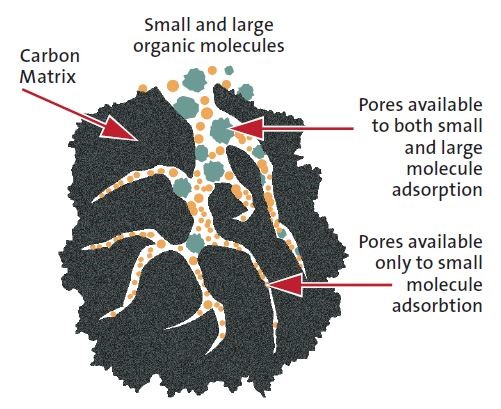 Activated carbon » Rayeneh Group
The ER Doctor for Your Digestive System
Now, let’s get a little weird. You know that scene in a movie where someone overdoses on pills and the doctors pump their stomach? Guess what they often use? Activated carbon. Hospitals keep it on hand like a bartender keeps tonic water. If you accidentally swallow poison or take too many meds, they’ll mix a black, gritty slurry and make you drink it.
It’s not a cure, but a rescue net. The carbon zips through your stomach, grabbing onto the toxins before they can get absorbed into your bloodstream. It’s like having a black hole in your belly that specifically targets bad stuff. Side effect? You might look like you’re drinking liquefied asphalt, and yes, your poop will look like charcoal briquettes for a day. Consider it a dramatic interior redecoration.
Also, some grown-ups use it for hangovers. Science says “meh” on that claim, but desperate humans will try anything. Just don’t take it with your regular medication, because it has zero discrimination. It will steal your good drugs right out of your stomach, leaving you high and dry (and sober).
Keeping Farts and Zombies at Bay
You’ve probably seen charcoal in fancy shoe inserts or mattress toppers. That’s because activated carbon is the ultimate air freshener—but it doesn’t mask smells; it eats them. Trapped inside the microscopic pores, that stinky ammonia or hydrogen sulfide molecule is officially gone. No flower scent cover-up. Just pure, odorless silence.
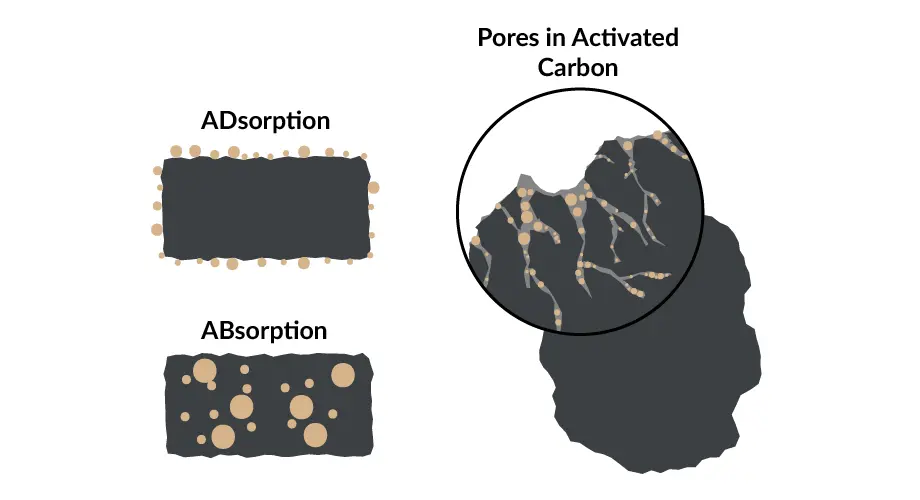 How does Active Carbon Work in Air filtration? | JOA Air Solutions
Surprising fact: sewage treatment plants use mountains of this stuff to clean water. That’s right. The same material filtering your drinking water is also scrubbing the literal poop out of society’s pipes. It’s the most unglamorous, essential job in the universe. If activated carbon were a person, it would be the tired guy in overalls with a mop, nodding at you from the sewers of the Wizard of Oz.
And here’s a weird one: gold miners use activated carbon to extract gold from ore. So, while you’re using it to make your tap water taste less like a pool, someone in Nevada is using it to catch flecks of precious metal. It’s humble and bougie.
The Bottom Line: Tiny, Overachieving Black Dust
So, what does active carbon do? It cleans your water, saves your life from poison, silences your smelly sneakers, and helps steal gold. It’s like that quiet friend who everyone calls for help moving a couch, but also knows how to fix a leaky faucet and gives fantastic pep talks. It does the heavy lifting without ever asking for credit.
Next time you take a sip from a charcoal filter or pop a charcoal pill, give a little nod to your invisible bouncer. He’s working hard, he’s full of holes, and he’s doing your dirty work so you don’t have to. Just don’t expect him to wash the dishes. Even a microscopic ninja has limits.
