How To Shut Off Water Main

So there I was, on a Tuesday night, wearing my favorite hoodie, three episodes deep into a true crime docuseries. That’s when I heard it—a gentle, rhythmic drip-drip-drip comi...

So there I was, on a Tuesday night, wearing my favorite hoodie, three episodes deep into a true crime docuseries. That’s when I heard it—a gentle, rhythmic drip-drip-drip coming from the bathroom. You know the sound. The one that makes your soul leave your body for a second. I ignored it, obviously, hoping it was a ghost or a pipe dream, because who wants to deal with plumbing at 10 PM?
By midnight, the drip had turned into a steady stream. By 1 AM, I was standing in a cold puddle, cradling a rolled-up towel like a newborn, whispering, “Please hold it together.” It didn’t. The pipe burst. And suddenly, I realized I had no idea how to save my apartment from turning into an indoor pool. That’s when I learned the single most important thing every homeowner (and renter) should know: how to shut off the water main.
Why You Need To Know This Right Now
Listen, I’m not trying to scare you, but water waits for no one. A burst pipe, a broken washing machine hose, or a rogue toddler armed with a garden hose can turn your cozy place into a flood zone in minutes. Knowing where that main valve is won’t just save your hardwood floors—it’ll save you thousands of dollars and a major headache.
Must Read
Think of this like knowing where the emergency brake is on a bus. You hope you never need it. But when a kid runs in front of the bus? You want to yank it without Googling “how to stop runaway bus.” Same logic applies here. You don’t want to be frantically searching for a water shut-off while ankle-deep in disaster.
Step 1: Find The Beast
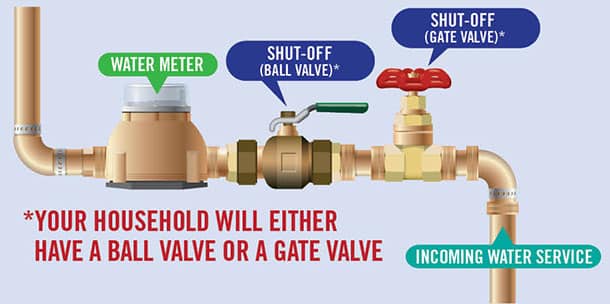
The main water shut-off valve is usually in the basement, the crawlspace, or if you’re in an apartment, near the water heater or the street-facing wall. If you live in a house on a slab foundation, look outside near an exterior faucet or right next to the street—sometimes it’s a metal cover in the ground.
Pro tip: Go find it now. Right now. I’ll wait. Seriously, stand up, search your home, and physically touch that valve. Don’t just “know where it is” in your head—you need the muscle memory, especially when panic hits. If you can’t find it in your basement, check near the garage or the utility closet. It might look like a spigot handle or a simple lever.
Oh, and if you own a home? Tag it, label it, put a piece of neon tape on it. Because when the water is spraying from the ceiling, you won’t have time to play “where’s Waldo” with your plumbing.
 How To Shut Off Water To House (step-by-step Guide) | TAFT Independent
Step 2: Know Your Valve Type (Don’t Panic)
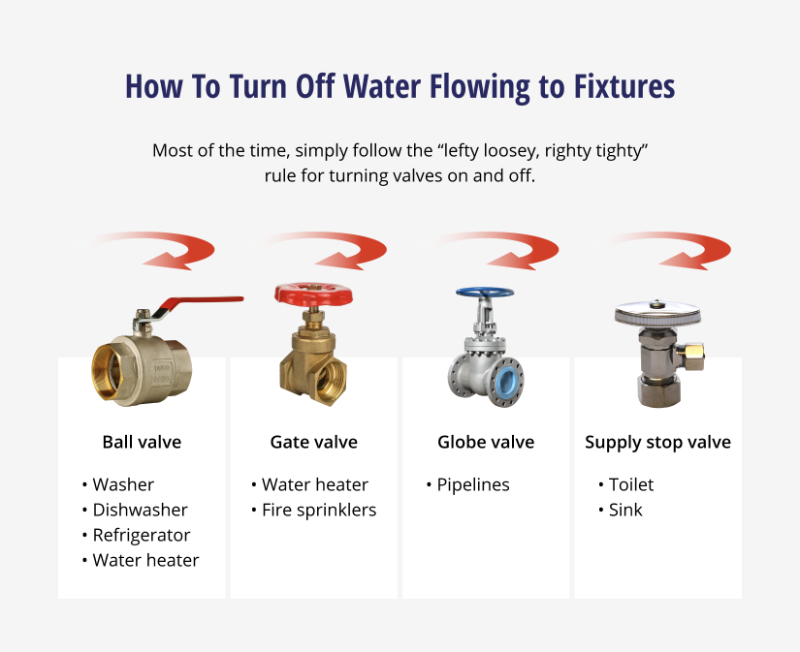
You’ll likely encounter one of two types: a wheel handle (like a faucet) or a lever (a straight metal bar). The wheel handle is the old-school classic—you turn it clockwise to close. The lever is your modern friend—you just push it until it’s perpendicular to the pipe. That’s it. It’s not complicated, but adrenaline will make you forget your own name, so practice this motion now.
Here’s the irony: if that valve hasn’t been moved in ten years, it might be stiff. Like, “I haven’t seen the gym since 2009” stiff. Don’t be afraid to give it a firm, strong turn. Use a wrench if it’s a wheel handle. Don’t use a wrench if it’s a plastic lever (trust me, you’ll snap it). Just push hard with your hand.
Step 3: Execute The Shut-Off (The Big Moment)
When you actually need to turn it off, take a deep breath. You literally have all the power here. For a wheel handle, turn it clockwise—tight, but don’t force it past the breaking point. For a lever, push it until it’s a perfect 90-degree angle to the pipe. That position stops the flow instantly.
Check your faucet inside. Turn it on. If no water comes out? Congratulations, you’re a hero. If water still trickles out, the valve might be partially closed or corroded. That means you need to call a plumber now, before an emergency. But for 99% of cases, that simple spin or flip will kill the water supply to your entire house. You’re not just shutting off a pipe—you’re shutting down the chaos.
 Water Shutoff Valve
The Hidden Trick: The Street Key (For The Brave)
Sometimes your main house valve is old, broken, or buried behind a jungle of laundry. That’s when you might need to go nuclear: the street-level shut-off. Usually, it’s a small meter box buried in your lawn near the sidewalk. Lift the cover (you might need a screwdriver), and you’ll see a faucet-like handle on the water meter.
This is technically the city’s property, so don’t rip it off. But in a true flood emergency—like your pipe is actively filling a swimming pool in your living room—use it. Just have a wrench ready. And remember: turn it clockwise. Also, warning: sometimes the city uses a special square key. If you can’t turn it, don’t break it; call emergency plumber. But if you can? You just saved your basement.
What Happens Next (And What NOT To Do)
Once the water is off, open every faucet in the house to drain the pipes. This relieves pressure and stops any leftover water from spitting out in a rage. Don’t just celebrate and walk away—you’ll have air locks later. And please, for the love of all things dry, don’t turn the water back on until you’ve fixed the broken pipe or called a plumber. I tried that once. It’s like popping a popped balloon. Just doesn’t work.
Now, go buy a dedicated water shut-off tool or “curb key” (they cost like $15) and keep it near your main valve. Tape the number of a 24-hour plumber right next to it. You’re welcome. You’re now the most prepared person in your friend group. Next time someone’s kitchen floods? You’ll be the one walking in, flipping a lever, and saying, “Don’t worry, I got this.”
Final Thought: It’s Not Hard, It’s Just Buried
I wish I’d known this before I spent that night crying into a wet bathmat. But now, you know. And honestly, knowing is 90% of the battle. The other 10% is remembering to turn it clockwise. Print this article, tape it to your water heater, and never feel nervous again. Water is powerful, but you are the gatekeeper.
