How To Stop Freezing Pipes

Let’s be honest: winter can be a bit of a drama queen. One minute it’s all cozy blankets and hot cocoa, and the next it’s threatening to turn your home’s plumbing into a popsi...

Let’s be honest: winter can be a bit of a drama queen. One minute it’s all cozy blankets and hot cocoa, and the next it’s threatening to turn your home’s plumbing into a popsicle. Frozen pipes aren’t just an inconvenience; they’re a plumbing catastrophe waiting to burst. But don’t worry—keeping your pipes happy is simpler than you think, and I’ll show you how without any boring jargon.
Think of your pipes like a pair of jeans left out in the snow. If they get too cold, they stiffen up, and the water inside turns to ice. That ice expands, and suddenly your trusty pipe is cracking under pressure. A burst pipe can flood your basement faster than you can say “towels!”—so prevention is your best friend.
Why Should You Care? (The Fun Part)
Imagine waking up to no water on a freezing morning. No shower, no coffee, no flushing—just a sad, dripping silence. That’s the real horror movie of winter, and nobody wants to be the main character in that scene.
Must Read
Plus, fixing a burst pipe costs hundreds, sometimes thousands, of dollars. That’s money you could spend on a cozy weekend trip or a fancy new board game. Caring about your pipes is basically caring about your wallet—and your sanity.
The Golden Rule: Keep the Heat Flowing
Your pipes love a steady, warm vibe. When temperatures drop below freezing, your home’s heating system is their best friend. Never turn your thermostat completely off, even if you’re away for a holiday weekend. Set it to at least 55°F (13°C)—that’s the warm hug your pipes crave.
Think of it like leaving a light on for a nervous pet. That tiny bit of warmth keeps everything from panicking. If you’re going to Florida for a week, don’t let your house become an icebox just to save a few bucks—trust me, the repair bill will be way bigger.
Let Faucets Drip (No, They’re Not Being Dramatic)
Here’s a little secret: running water is harder to freeze than still water. On those bitterly cold nights—when the wind is howling like a werewolf—let a faucet drip slowly. Just a trickle, like a sleepy faucet saying “hello.”
Choose the faucet farthest from your main water line, because that’s the one most likely to freeze. The movement of the water relieves pressure inside the pipe, so if ice does form, it won’t burst. It’s like giving your pipes a tiny massage all night long.
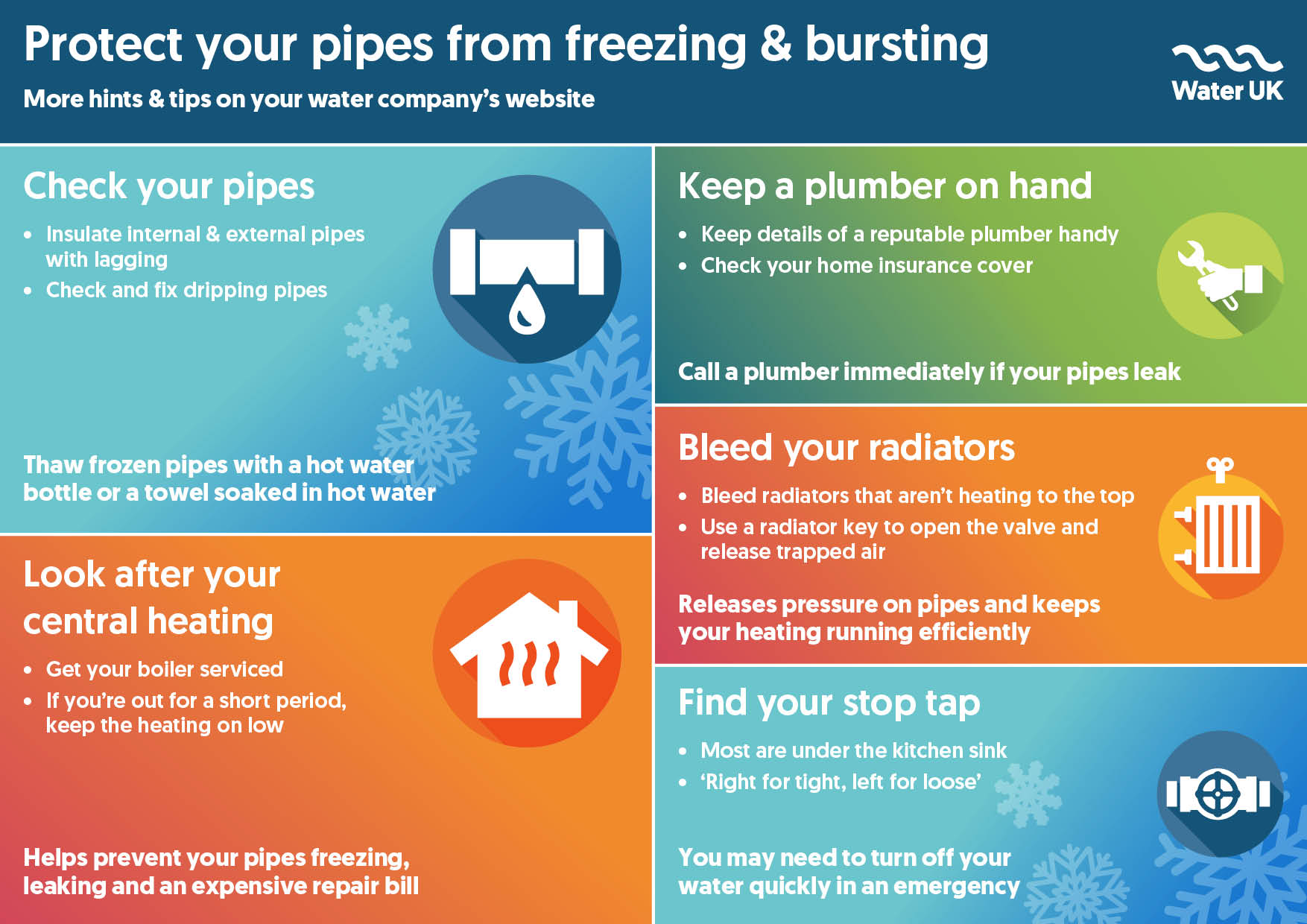 Households and businesses urged to protect pipes from freezing and
Insulate Like You’re Wrapping a Gift
If your pipes live in chilly spots—like an unheated basement, attic, or garage—they need a winter coat. You can buy foam pipe sleeves at any hardware store for a few bucks. Slip them on like you’re tucking your pipes into a cozy scarf.
For a quick fix, grab some old towels, rags, or even newspaper. Wrap them around exposed pipes and tape them in place. It’s not fancy, but it works. Imagine you’re making a pipe burrito, and that visual alone is worth the effort.
Seal the Drafts (Your Pipes Hate Wind)
Cold air sneaks in through cracks around doors, windows, and even where pipes enter your house. If you can feel a draft near your kitchen sink or laundry room, your pipes feel it too. Grab some caulk or expanding foam from the hardware store and plug those gaps like you’re sealing a treasure chest.
A simple draft stopper under the door to your garage can make a huge difference. It’s like putting a cozy blanket over your home’s weakest spots. Your pipes will thank you with gurgles of happiness instead of groans of pain.
What If You’re Going on Vacation?
Before you leave, do a quick pipe check. Open cabinet doors under sinks so warm air can circulate around them. This is especially important for pipes on outside walls—they’re the most vulnerable.
 How to Prevent Frozen Pipes | All Ways Drains | Twin Cities
Ask a neighbor to check your house every few days. Have them run a tap for a minute to keep water moving. It’s a small favor that can save you from coming home to a mini indoor swimming pool. And honestly, neighbors who help with pipes are the best kind of neighbors.
Know the Signs of a Freezing Pipe
If you turn on a faucet and only a sad trickle comes out, you’ve got a problem. Don’t panic. Go check your pipes for frost or bulging. If you spot ice, you can try to thaw the pipe gently—but never use a blowtorch or open flame! That’s a fire waiting to happen.
Use a hairdryer on the warmest setting, a space heater, or even a towel soaked in hot water. Start from the faucet end and work your way toward the frozen spot. It’s like giving your pipe a slow, warm bath—but with a little patience, the water will flow again.
When All Else Fails, Call a Pro
If you can’t find the frozen section or the pipe has already burst, don’t try to be a hero. Shut off the main water valve immediately and call a plumber. That’s not admitting defeat; it’s being smart and safe.
Remember, a plumber once told me that most frozen pipes happen in houses where people were “just trying to save a little.” A few minutes of prevention each winter—like insulating and dripping—can save you a world of soggy carpets. So go ahead, give your pipes a little love. They’ll keep your morning coffee flowing and your cozy winter vibes totally intact.
