Does Copper Rust In Water

Okay, let’s settle a debate I’ve seen brewing on the internet. Does copper rust in water? No, it doesn’t. Not really. And I need you to hear me out before you start Googling g...

Okay, let’s settle a debate I’ve seen brewing on the internet. Does copper rust in water? No, it doesn’t. Not really. And I need you to hear me out before you start Googling green statues.
First, let’s get one thing straight: rust is a very specific bully. It only picks on iron and its buddies, steel. Copper? Copper laughs in the face of rust. It has its own dramatic meltdown, but it’s a different kind of drama.
Think of rust like a terrible, flaky sunburn on iron. Copper gets a patina instead. That’s the fancy word for the green or blue crust you see on old pennies or the Statue of Liberty. It’s not rot; it’s a shield.
Must Read
So, what actually happens to copper in water?
Imagine copper as a very vain celebrity. It doesn’t want to be naked. When you drop it in water—especially water with a little oxygen or salt—it throws on a layer of copper oxide. That’s the dark, dull color you see first.
Then, if the water hangs around? That oxide layer reacts further. It turns into a green carbonate or chloride. That green stuff? It’s like a force field that stops the copper from breaking down further. It’s the opposite of rust.
Rust flakes off and eats the metal alive. Copper’s patina clings and protects it. It’s basically the metal equivalent of “I’m not aging; I’m evolving.”
But does it dissolve? (The sneaky part)
Here’s where it gets a little weird. Pure water? No problem. Copper barely cares. But add some acid—like from rain or a dirty pipe—and copper starts to leach. Those copper ions slip into the water, turning it slightly blue.
That’s why old pipes can give you “copper water.” It’s not the metal crumbling, but tiny bits of it taking a swim. You’d need a lot of it to hurt you, but it can taste metallic. Don’t worry; your body needs a little copper anyway.
 Does Copper Rust In Water at Dominic Nanya blog
And saltwater? Salt is copper’s nemesis. It speeds up the patina process like crazy. That’s why boat propellers turn green so fast. They aren’t rusting; they’re growing armor.
What about that weird penny experiment?
Remember soaking a penny in vinegar? It gets super shiny, right? That’s because vinegar dissolves the patina. You’re not making it clean; you’re stripping its protective coat. Leave it in too long, and the penny starts to dissolve completely.
So, yes, water can eat copper if you’re nasty enough. But under normal conditions—a lake, a pipe, a rainstorm—copper holds its ground. It’s like that friend who gets a tan instead of sunburned.
Here’s the punchline: Copper is mighty. It’s why we’ve used it for roofs and plumbing for thousands of years. It doesn’t rust. It just gets prettier with age.
Okay, but what about “copper rust” products?
You might see “copper rust” spray paint at the store. That’s a marketing lie. They’re selling a fake iron look. Real copper never goes that nasty orange-brown. It goes green, black, or blue.
And if you see a copper pipe that looks flaky? That’s usually galvanic corrosion. That’s a fancy science fight where copper touches a different metal (like steel) in water. It’s not rust; it’s a metal divorce.
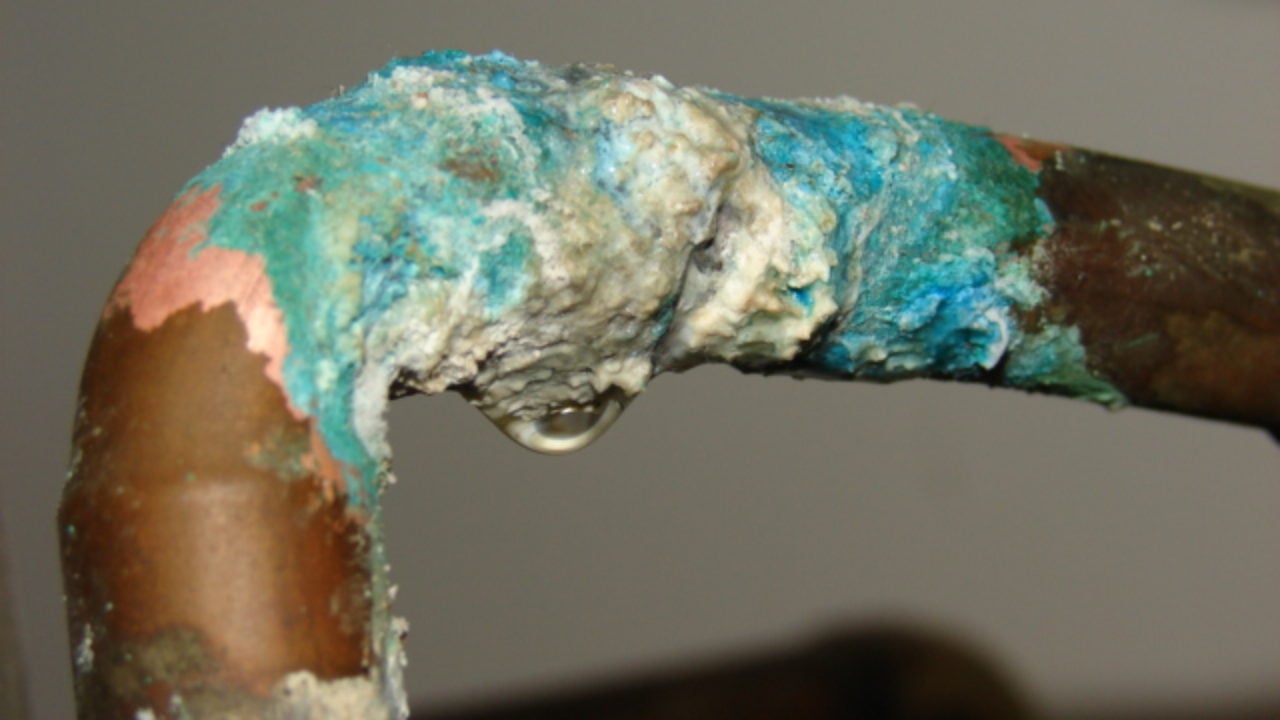 Copper Corrosion In Saltwater
Also, hard water? That leaves white chalky deposits, not rust. That’s calcium saying hello. Copper just blushes under it.
So, final verdict for your coffee chat:
Pour a glass of water. Drop in a copper coin. Leave it for a week. You’ll get a dark coin and some green sludge. That’s not rust. That’s copper being its glorious, protective self.
If you want rust, you need iron. Go find an old nail and leave it in the rain. That thing will crumble like a cookie. Copper? It’ll just get a nice tan.
Rhetorical question time: Would you rather have a roof that flakes away or one that turns beautiful with time? Exactly. Copper wins.
One last thing: Don’t confuse patina with corrosion. Corrosion is destruction. Patina is a makeover. Copper in water picks the makeover every time. It’s like metal skincare, honestly.
So next time someone says, “Does copper rust in water?” you can look them in the eye, take a sip of your coffee, and say, “Nope. It just gets cooler.” And then you can point at the Statue of Liberty and feel like a genius.
