What Does Soft Water Mean

Ever step out of the shower and feel like you just can’t get all the soap off your skin? Or worse, does your favorite glass coffee pot look like it’s been through a winter sto...

Ever step out of the shower and feel like you just can’t get all the soap off your skin? Or worse, does your favorite glass coffee pot look like it’s been through a winter storm with all that white, chalky film? If that sounds like your life, you might be living with hard water. And honestly? Your home and your hair are probably pretty grumpy about it.
Let’s talk about the opposite: soft water. It sounds like a fancy spa term, but it’s really just water that has been stripped of certain minerals—mostly calcium and magnesium. Think of hard water as that friend who brings five extra suitcases on a weekend trip. Heavy, bulky, and a total drag. Soft water? That’s the friend who shows up with a single backpack and a smile. Light, easy, and helpful.
The Magic of a "Squeaky Clean" Feeling
Remember that squeaky clean feeling after washing your hands? Well, with soft water, that squeak isn’t actually clean—it’s often leftover soap scum clinging to you. When you switch to soft water, your skin feels silky instead of tight and dry. Your shampoo actually lathers up like a birthday party, not a sad drizzle.
Must Read
I noticed the difference when my friend got a water softener. I washed my hair at her house and it felt like I’d just stepped out of a salon. No conditioner buildup, no frizz. My hair just bounced.
And here’s the kicker: you use way less soap. Like, half the amount. Your hands won’t feel stripped, your dishes won’t have water spots, and your laundry will smell fresher without needing a ton of detergent. It’s the little victories.
Your Appliances Will Thank You (Seriously)
Hard water is basically a slow-motion bully for your home. It builds up inside your pipes, your coffee maker, your dishwasher, and even your water heater. That white crust you see on your faucet? That’s mineral scale, and it’s slowly robbing your appliances of their lifespan.
Imagine trying to run a marathon while wearing a heavy winter coat. That’s what your water heater does when it’s coated in scale. It has to work harder to heat the water, which means higher energy bills and a shorter life for the machine. Soft water lets your appliances breathe easy.
One of my neighbors said her dishwasher went from sounding like a dying lawnmower to a gentle hum after she installed a softener. She also stopped having to scrub her glasses with vinegar every week. Now that’s a win for relaxation time.
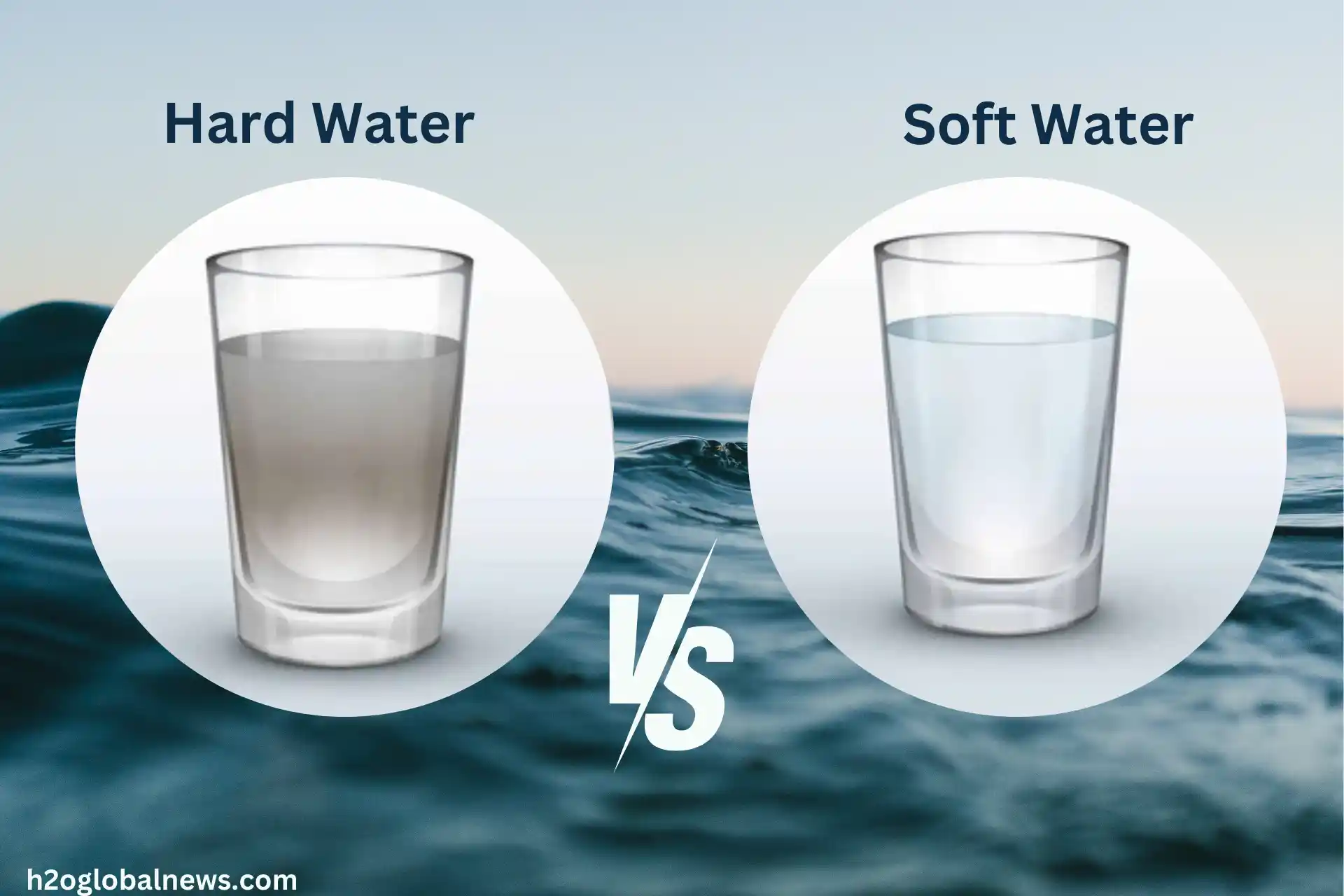 What Is The Difference Between Hard And Soft Water: Key Facts Explained
The "Sparkling" Glass Test
Let’s do a quick visualization. You take a clean glass out of the dishwasher. With hard water, it looks foggy, maybe with white streaks that look like a dried riverbed. You have to polish it with a towel just to get it clear. Annoying, right?
With soft water, that same glass comes out sparkling. Like, crystal-clear, showroom-new sparkling. No film, no spots. You can hold it up to the light and it’s just pure clarity. It’s a small joy, but it’s a daily one.
And honestly, your morning coffee will taste better. Hard water minerals can mute the flavor of your brew. Soft water lets the coffee shine. It’s not a snobby thing; it’s just better chemistry. Your taste buds will notice, even if you don’t realize it at first.
The "Dry Winter Skin" Savior
If you suffer from dry, itchy skin in the winter, soft water is like a big warm hug for your epidermis. Hard water leaves a soap residue that clogs pores and strips natural oils. Soft water rinses clean, leaving your skin’s natural moisture barrier intact.
I have a friend with eczema who swore by heavy lotions. After switching to soft water, she cut her lotion use in half. Her skin just didn’t feel as angry anymore. It’s not a cure-all, but it’s a massive quality-of-life upgrade for anyone with sensitive skin.
Even your bath feels different. The water feels softer to the touch, almost like it’s been warmed with a little bit of liquid velvet. You’ll want to soak longer. Just don’t fall asleep in there.
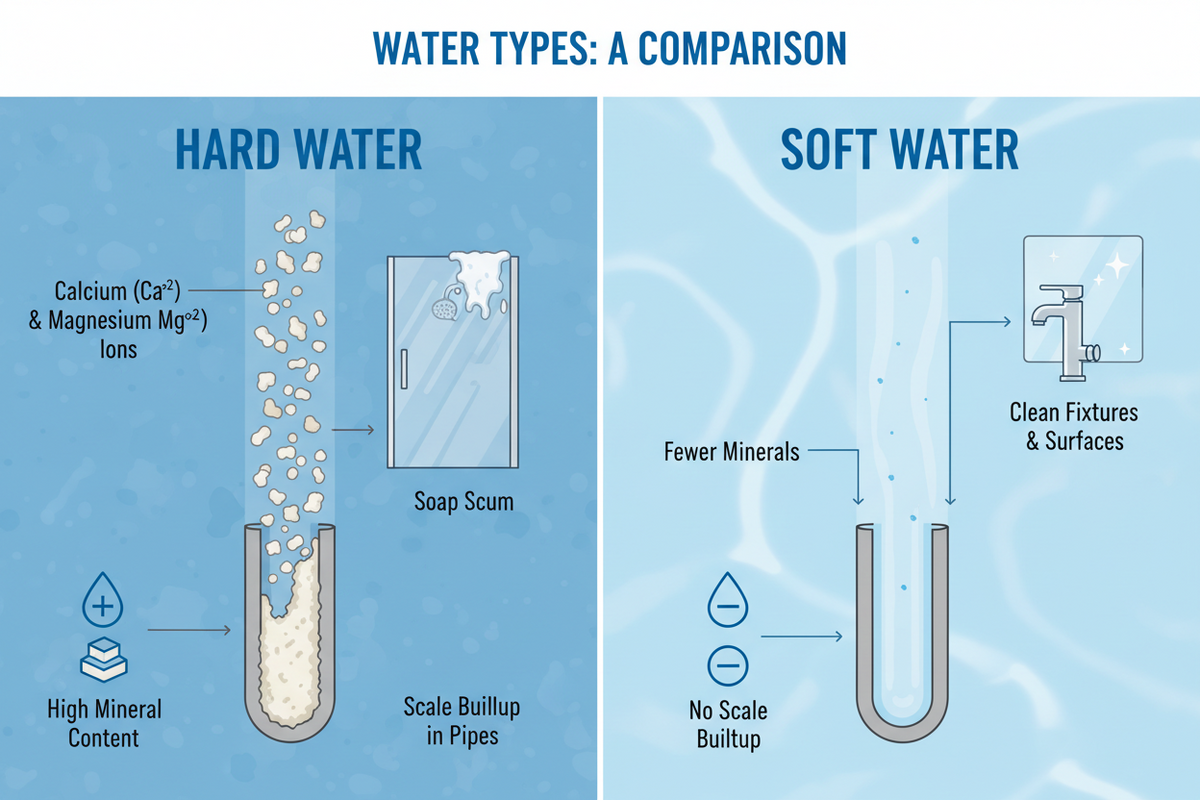 Hard vs. Soft Water Explained | Synergy Science™ – Echo Water
But Wait—Is Soft Water Safe?
You might hear someone say, “But don’t we need those minerals?” And yes, we do, but we get our calcium and magnesium from food, not from showering. Drinking soft water is perfectly fine for most people. Some folks add a small reverse-osmosis filter at the kitchen sink if they’re worried about sodium levels (which can increase slightly in the softening process).
But honestly, for everyday life—bathing, cleaning, laundry—soft water is the unsung hero of a low-stress home. It’s not a luxury for the wealthy; it’s a practical upgrade that saves you money and sanity over time.
Think of it this way: hard water is the high-maintenance friend who always wants to go to a fancy restaurant but complains about the bill. Soft water is the buddy who brings pizza and a movie, and says, “Don’t worry, I got the drinks.” It just makes everything easier.
The Bottom Line? Give It a Try
You don’t have to renovate your whole house to test soft water. You can buy a simple showerhead filter that softens water just for your morning rinse. Or, if you own your home, a whole-house softener is a solid investment that pays for itself in soap savings and fewer appliance repairs.
Curious? Ask a friend with soft water for a shower test. Or look up a rental option for a month. I promise you, after a week of soft water, your skin, your hair, and your coffee mug will beg you not to go back to the hard stuff.
It’s soft, it’s simple, and it makes your daily grind just a little bit smoother. And isn’t that what we all really need?
