What Is An Air Gap Faucet

So, you’re standing in your kitchen, staring at that weird little chrome mushroom sprouting from your countertop next to the sink. It’s not a bottle opener, it’s not a hand sa...
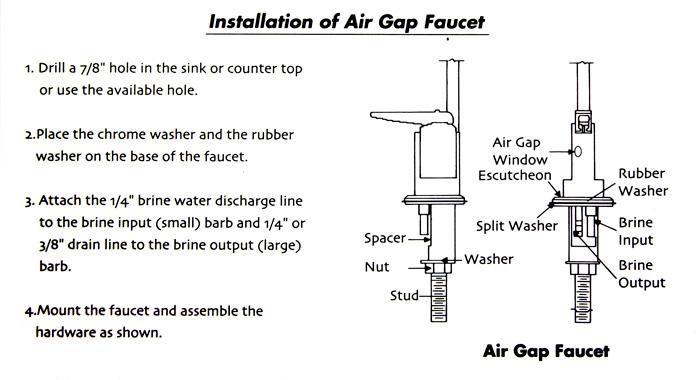
So, you’re standing in your kitchen, staring at that weird little chrome mushroom sprouting from your countertop next to the sink. It’s not a bottle opener, it’s not a hand sanitizer dispenser, and it definitely isn’t a tiny alien listening device—though I admit, it looks suspicious. That, my friend, is an air gap faucet, and it has one very important, very disgusting job.
The Plumbing Secret Nobody Tells You
Picture this: you just washed a sinkful of greasy dishes, and that water has to go somewhere. In most homes, it gurgles down the drain into your garbage disposal, then gets yeeted into the main sewer line. But if you have a reverse osmosis water filter under your sink—the kind that gives you that fancy, crisp-tasting water—your dirty dishwater and your pristine drinking water share the same plumbing neighborhood. That’s a problem.
If your drain clogs, that nasty, chunky dishwater can actually backflow into your perfectly filtered drinking water. Yes, I’m talking about cross-contamination. Leftover spaghetti sauce and coffee grounds could theoretically end up in your ice cubes. That’s where the air gap comes in, and it plays hero without any cape.
Must Read
An air gap is simply a physical, visible break between your drain line and your filtered water line. That little spout on your counter isn’t for decoration—it’s a safety valve. If pressure builds up in your drain, water shoots out of that spout onto your counter instead of creeping into your water supply. It’s like a sprinkler system for your worst kitchen nightmares.
But Wait—It Looks Like a Plumbing Fart
Let’s be honest: air gap faucets are the ugly ducklings of the kitchen island. They poke up awkwardly, they dribble water when you run the disposal, and they sometimes make a horrifying gurgling noise that sounds like a zombie gargling gravel. Builders install them because building codes in many places require air gaps for reverse osmosis systems. It’s the law, not a design choice by someone who hates shiny things.
Here’s a shocking fact: you’ve probably seen an air gap at work and thought it was broken. When your garbage disposal is churning, that little chrome spout may suddenly spit a tablespoon of water onto your clean sponge. That’s not a defect—that’s physics doing its job. The air gap is literally saving your kidneys from a briny bath of last night’s chili.
I once had a friend who sealed her air gap shut with duct tape because “it looked like a mistake.” Two days later, her filtered water tasted faintly of Taco Tuesday. She now owns a plaque that reads “Respect the Gap.” Don’t be like her.
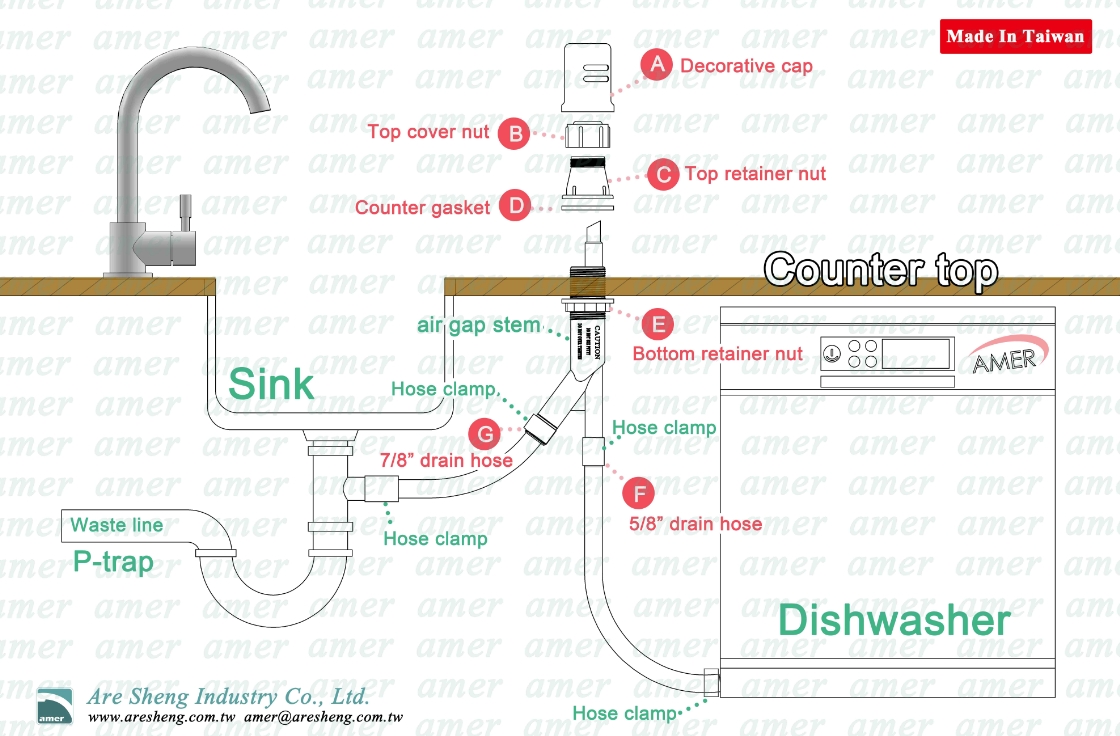 What Is An Air Gap – Air Gap Plumbing – IAHPB
The Hidden War: Air Gap vs. “Non-Air Gap”
You might hear about a “non-air gap” system, which uses a check valve—a small one-way door—instead of that obvious spout. These are sleeker, cheaper, and hide under your sink like a ninja. But check valves can fail. A single grain of sand or a pea from soup can jam the valve open, and suddenly your coffee maker is brewing with leftovers from the deep sink.
An air gap is mechanical overkill, and I love it for that. It’s like bringing a fire extinguisher to a birthday candle. You don’t need it until you really need it, and then it’s the best thing you ever spent $40 on. The National Sanitation Foundation even ranks air gaps as the gold standard for backflow prevention. Take that, sleek Instagram kitchens.
If you’re remodeling, your plumber will probably recommend an air gap, not because they hate counter space, but because they’ve seen what happens when a check valve fails at 3 a.m. It’s not pretty. It’s why plumbers own waterproof boots with high socks.
How to Live With Your Weird Chrome Friend
First, never plug the air gap hole. That’s like removing the safety latch on a grenade because it looks ugly. If your current faucet doesn’t have one, you can buy a separate air gap device that mounts next to your faucet. Yes, it adds another hole in your counter. Yes, your spouse will question your taste. Yes, it’s worth it.
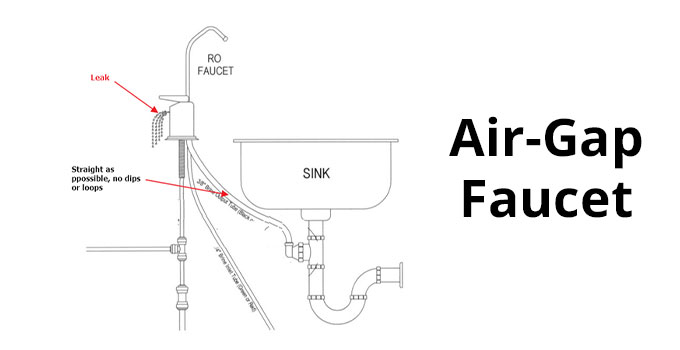 Reverse Osmosis Air Gap Faucet
Second, clean the air gap about once a year. Unscrew the cap, pull out the little plastic body, and rinse it in hot water. You’ll be shocked by the fuzzy brown gunk that comes out—it’s like a science experiment from a high school that has given up. But that gunk is proof the system is working.
Third, if your air gap starts gurgling or spitting constantly, your drain is likely clogged. Don’t panic—just pour a half cup of baking soda and vinegar down the disposal, chase it with hot water, and say a little prayer to the plumbing gods. Usually clears right up. If not, call a plumber before the gurgling becomes a song.
The Surprising Upside
Here’s the twist: an air gap faucet actually improves your water pressure on reverse osmosis systems. Because the drain line is open to air, the system doesn’t fight against backpressure, so your filtered water flows faster. You’re not just safe—you’re efficient. Take that, fancy bottled-water companies.
And for the eco-warriors: a properly functioning air gap means zero wasted water from backflow events. That’s right—you’re saving the planet from contaminated water while simultaneously protecting your own insides. You’re basically a superhero with a chrome utility belt.
So next time you see that weird little spout, don’t glare at it. Give it a nod. It’s the unsung hero of your kitchen, a silent sentinel against the horrors of reverse plumbing. And if it ever spouts water on your counter, just smile, wipe it up, and whisper: “Thanks for not letting that end up in my oatmeal.”
