What Is Di Water Used For

Let’s be honest: water is water, right? You turn on the tap, fill a glass, and you’re done. But in the hidden corners of science labs, high-tech factories, and even your local...
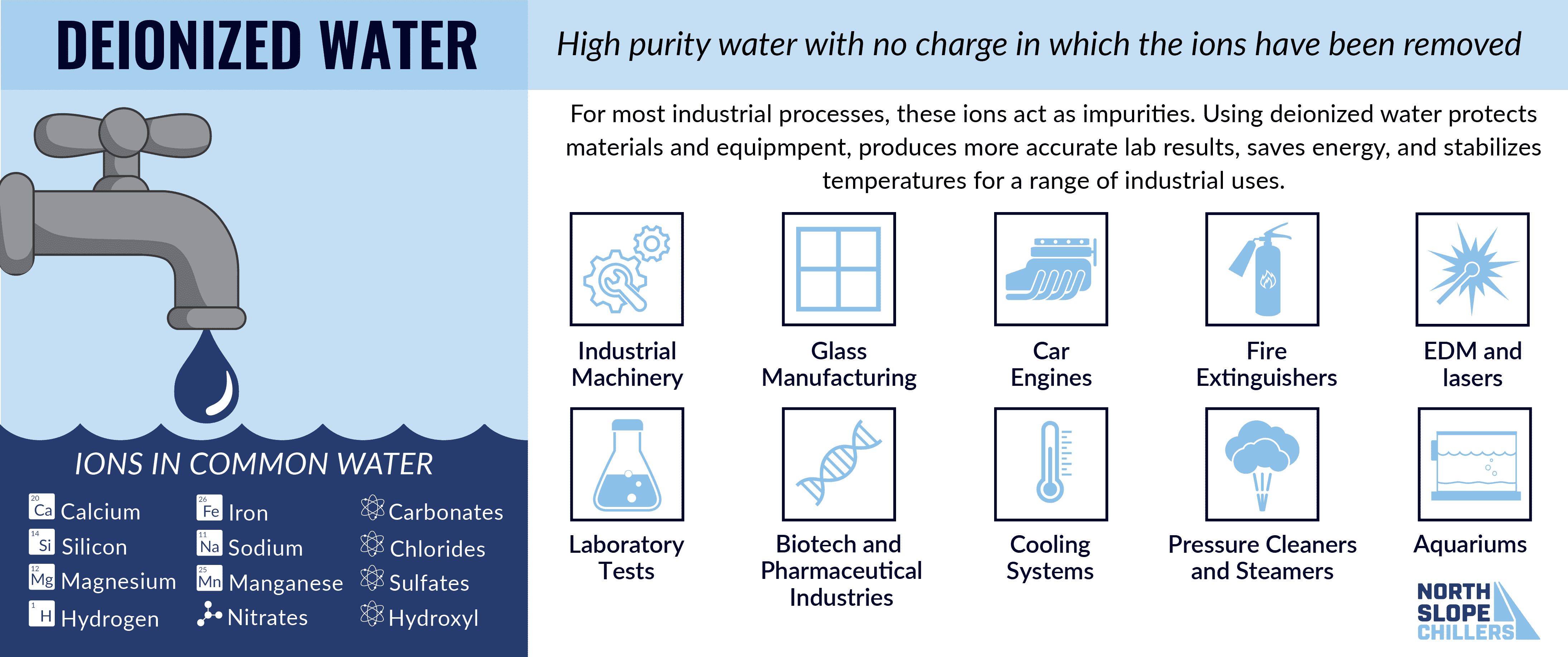
Let’s be honest: water is water, right? You turn on the tap, fill a glass, and you’re done. But in the hidden corners of science labs, high-tech factories, and even your local coffee shop, there’s a pristine ghost of a liquid called DI water—and it’s having a moment.
DI stands for deionized. It’s water that’s been stripped of every charged ion, mineral, and impurity until it’s almost disturbingly pure. Think of it as the Marie Kondo of H2O: it sparks no joy for bacteria, salts, or metals. And its uses? They’re as weirdly wonderful as they are essential.
Chemistry’s Clean Slate
If regular water is a messy desk, DI water is a blank, white table. Scientists use it because even trace minerals can ruin an experiment. One stray calcium ion, and your DNA sample might act like a moody teenager and refuse to cooperate.
Must Read
That’s why you’ll find DI water in every serious lab, from university biology departments to high-stakes pharmaceutical research. It ensures that when you mix chemicals, only the intended reaction happens. It’s the clean canvas that makes discovery possible.
Your Car’s Best Friend
Here’s a fun fact: you’ve probably already used DI water without knowing it. Car batteries and cooling systems rely on it because regular tap water contains minerals that cause corrosion. A lead-acid battery filled with hard water is like a marathon runner chugging soda—it won’t end well.
Practical tip: If you’re topping off your car’s battery or coolant, never use tap water. Spend a dollar on a jug of distilled or DI water at the auto shop. Your engine will thank you with a longer, happier life.
The Iconic Spotify of Water
DI water is also the secret sauce in many industrial processes. It rinses circuit boards during manufacturing because even a microscopic salt residue can short-circuit a smartphone. Next time you scroll TikTok, thank DI water for keeping your screen alive.
It also sterilizes medical equipment. Hospitals use it to wash surgical tools and IV bags because you really don’t want mystery minerals mingling with your bloodstream. It’s basically the hygiene superstar you never see.
 Reliable Commercial & Industrial DI Water Systems Solutions
From Espresso to Airplane Windows
Coffee snobs, listen up. Many high-end espresso machines require DI water to prevent scale buildup in those expensive brass boilers. But here’s the twist: pure DI water actually tastes flat because it lacks the dissolved minerals that give water its mouthfeel. Baristas often remineralize it for brewing.
And yes, airplane bathrooms use DI water for the same reason—no scale means fewer maintenance headaches at 30,000 feet. So next time you splash your face in a tiny lavatory sink, you’re essentially washing with the same stuff used to make microchips. Fancy, right?
The Clean Crop Conspiracy
Farmers and greenhouse operators have also jumped on the DI train. Hydroponic systems—where plants grow without soil—use deionized water to precisely control nutrient delivery. Your organic, Instagram-worthy kale might be sipping the exact same liquid as a CERN particle accelerator.
Fun fact: DI water is so pure that it can actually be dangerous to drink in large quantities. It leaches minerals from your body. So while it’s perfect for science, stick to spring water for your morning hydration ritual. Your kidneys will appreciate the mineral diversity.
Beyond the Lab: Where You’ll Find It
Look around your home. That steamer for your shirts? Probably uses DI water. The glass cleaner that leaves zero streaks? Often made with DI water. Even some aquarium owners swear by it for sensitive fish like discus or crystal shrimp.
 What is Deionised / DI Water? - Fluid Science - All For One
Practical tip: Want streak-free windows? Fill a spray bottle with DI water and a tiny drop of dish soap. The lack of minerals means no white residue—just pure, satisfying clarity. It’s the lazy person’s guide to a professional window wash.
A Quick Word on Safety
Don’t run out and buy a DI system for your sink just yet. While it’s safe for most industrial uses, it’s not the same as filtered water. Deionization removes contaminants but also removes good electrolytes. If you’re into long-haul hiking or fitness, you want electrolytes in your water, not an empty void.
Think of DI water as a technician’s tool, not a lifestyle drink. It’s the hero of precision, not the star of hydration.
The Mirror Effect
Here’s a strange truth: DI water is completely transparent, but it does not conduct electricity until you add salt. In its purest form, it’s an insulator. That means the same water that powers your battery needs to be “dirty” to work. It’s a beautiful paradox—purity often comes with a trade-off.
Reflect on that for a moment. We chase purity in things—clean water, clean schedules, clean vibes. But sometimes, the most useful version of something is the one that has a little character, a little mineral grit. DI water reminds us that perfection is relative. A laboratory needs it; your life probably doesn’t.
So next time you sip a crisp glass of tap water, give a nod to its deionized cousin. It’s out there, somewhere, perfect and alone, scrubbing a circuit board or cooling a rocket engine. And you, with your slightly mineral-rich drink in hand, are probably better off for the difference.
