What Is An Orthophosphate

So, you’ve run into the word orthophosphate. Maybe at work, maybe in a pool supply store, or while reading something ridiculously scientific. Your brain probably went, “Uh, is...

So, you’ve run into the word orthophosphate. Maybe at work, maybe in a pool supply store, or while reading something ridiculously scientific. Your brain probably went, “Uh, is that, like, a fancy rock? A dinosaur bone dust?” Relax. Grab your coffee (or tea, I won’t judge). Let’s untangle this word like a gentle friend.
Okay, So What Is It, Really?
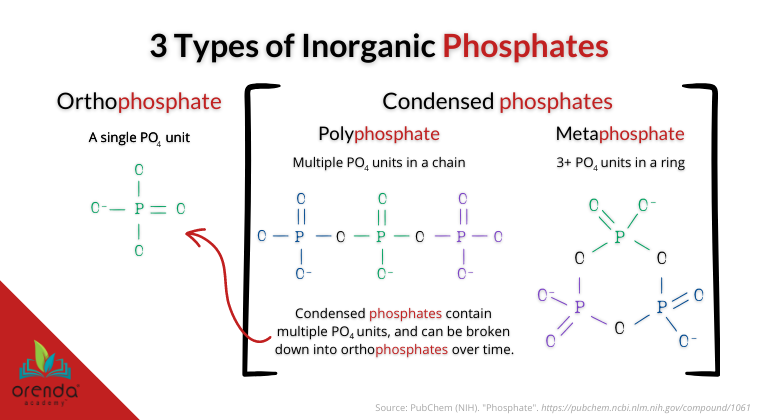
In the simplest, most chill terms: an orthophosphate is a single, lonely phosphate molecule. Imagine a tiny building block for chemistry. It’s the most basic form of phosphorus hooked up with oxygen.
Think of it as the original phosphate. Not a chain, not a cluster. Just one unit, ready to party. Chemists call it PO₄³⁻, but we’ll stick with “the simple one.”
Must Read
Why should you care? Because this little molecule is everywhere. It’s in your fertilizer, your toothpaste, your pool, and even inside your own body. It’s the unsung hero of stuff.
Why “Ortho” Is a Weird Prefix
“Ortho” comes from Greek. It means “straight” or “correct.” In chemistry land, it usually means “the most hydrated” or “the simplest form.” So, orthophosphate is the correct, simple phosphate. Fancy, right?
There are other phosphates out there. Big, chunky ones like pyrophosphates and polyphosphates. Those are like the chain-link fences of chemistry. But orthophosphate? That’s a single, free-standing brick.
When your pool guy says “low orthophosphate,” he means you have too few of these single bricks. And that’s a problem for algae. But more on that later.
Where You’ll Find This Sneaky Molecule
Let’s start with your garden. You know that fertilizer you buy? The one with the N-P-K numbers? The “P” is mostly orthophosphate. Plants love it. They literally slurp it up through their roots. It’s their favorite energy drink.
Next stop: your dishwasher. Remember those old-school detergents? They were packed with polyphosphates. But those break down into orthophosphates in water. They soften water so your glasses don’t look cloudy. Magic, but also chemistry.
 Orthophosphate Vs Phosphate : What is the difference between reactive
And, of course, your body. Your DNA? Built with orthophosphate. Your bones? They’re a mineral called calcium orthophosphate. Your cells use it for energy. You are, quite literally, a walking bag of orthophosphates. Don’t freak out. It’s fine.
The “Pool Problem” You Didn’t Know You Had
Here’s where orthophosphate gets annoying. If you own a swimming pool, you hate phosphorus. Not because it’s mean, but because algae loves it. Algae breathes orthophosphate like we breathe air.
So if your pool has high orthophosphate levels, you’ll get a green, swampy mess. It’s basically an all-you-can-eat buffet for slime. That’s why pool stores sell “phosphate removers.” They kidnap those orthophosphate molecules.
But here’s the funny part: orthophosphate is not the enemy in the pool. It’s just food. The real enemy is the algae itself. But we blame the orthophosphate anyway. Typical human move.
Is It Bad For You? (Spoiler: Not Really)
Short answer: no. Long answer: it depends on how much. Orthophosphate is a natural part of the environment. Your kidneys handle it like a boss.
But if your diet is full of processed foods (sodas, processed cheese, fast food), you might get too much. Then your kidneys grumble. You might get calcium deposits in weird places. Balance is key, as always.
 Phosphates in Pools
In drinking water, orthophosphate is actually added on purpose. It coats old lead pipes with a protective film. It prevents lead from leaching into your tap water. So, orthophosphate is the bodyguard of your drinking water. Respect.
Let’s Get a Little Goofy With It
Imagine you’re at a party. Orthophosphate is that one friend who shows up solo, no drama. They don’t need a group. They just say, “Hey, I’m here to bond with calcium and maybe help a plant grow.”
Polyphosphates are the rowdy group of ten friends who show up in a chain. They annoy the bartender. Over time, they break apart into single orthophosphates. Then they become boring too. That’s chemistry for you.
I once told a kid that orthophosphate is like a Lego brick. The red one that can connect to anything. The kid said, “So it’s the most useful Lego?” Exactly, kid. Exactly.
Quick Recap (Because We’re Human)
Orthophosphate = the simplest form of phosphate. It’s one phosphorus atom with four oxygen atoms. It’s in your bones, your garden, your pool, and your soda.
It’s not scary. It’s not a pollutant. It’s just a hungry little molecule that wants to feed plants (or algae, if you’re unlucky).
So next time someone says “orthophosphate,” you can nod wisely and say, “Ah, the straight man of the phosphate family.” Then sip your coffee. You’re now the smartest person in the room. You’re welcome.
