How Much Are Water Rates

Let’s talk about water. Not the fun kind—the kind that swirls down your toilet, washes your gym socks, and magically appears when you turn a knob. We’re talking about water ra...

Let’s talk about water. Not the fun kind—the kind that swirls down your toilet, washes your gym socks, and magically appears when you turn a knob. We’re talking about water rates, that mysterious number on your utility bill that feels like a ransom note from a silent, wet kidnapper. How much are you actually paying for something that falls from the sky for free?
First, the Killer Question: Why Isn’t It Free?
You’d think with 71% of the planet covered in the stuff, your monthly bill would be a firm handshake and a thank-you. Nope. Getting clean water to your tap is a logistical nightmare involving pipes, pumps, treatment plants, and people who fix leaks at 3 AM. You’re not paying for the water itself—you’re paying for the drama of getting it to you.
Think of it like ordering pizza. The ingredients cost pennies, but you’re really paying for the delivery guy, the cardboard box, and the fact that someone didn’t sneeze on your pepperoni. Water is the same, except the delivery system is buried under your lawn and occasionally explodes.
Must Read
The Secret Math: It’s Weirder Than You Think
Water rates are a wild algebra problem designed by a committee of bored accountants. Most cities use a tiered system: the more you use, the more per gallon you pay. It’s meant to encourage conservation, but it feels like your shower is getting a pay raise. Use 5,000 gallons? That’s a gentle nudge. Use 15,000 gallons? Now you’re funding the mayor’s new fountain.
The average American household blows through about 300 gallons a day. That’s the volume of a small bear made entirely of liquid. For that privilege, you’ll typically shell out between $35 and $70 a month, depending on where you live. Which brings me to the real madness.
Location, Location, Location (Or: "Move to a Rainforest, Pay Like a King")
Water rates vary so wildly it feels like a cosmic prank. In Portland, Oregon, where it rains for nine months straight, you’ll pay around $90 a month. Meanwhile, in Phoenix, Arizona, a literal desert, you’ll pay about $50. The desert is cheaper than the rainforest. Explain that to your shower drain.
Atlanta is the national champion of expensive water, averaging over $110 a month. Why? Old pipes that leak like a sieve and a local government that loves "infrastructure improvement fees"—which is just a fancy way of saying "we found another hole in the ground." Congratulations, Atlanta, your faucet costs more than your Netflix subscription.
On the flip side, if you live in Savannah, Georgia, you might pay only $25. That’s cheaper than a fancy latte. The entire system is chaotic and arbitrary, like a game of Monopoly where water is both Park Place and the free parking spot.
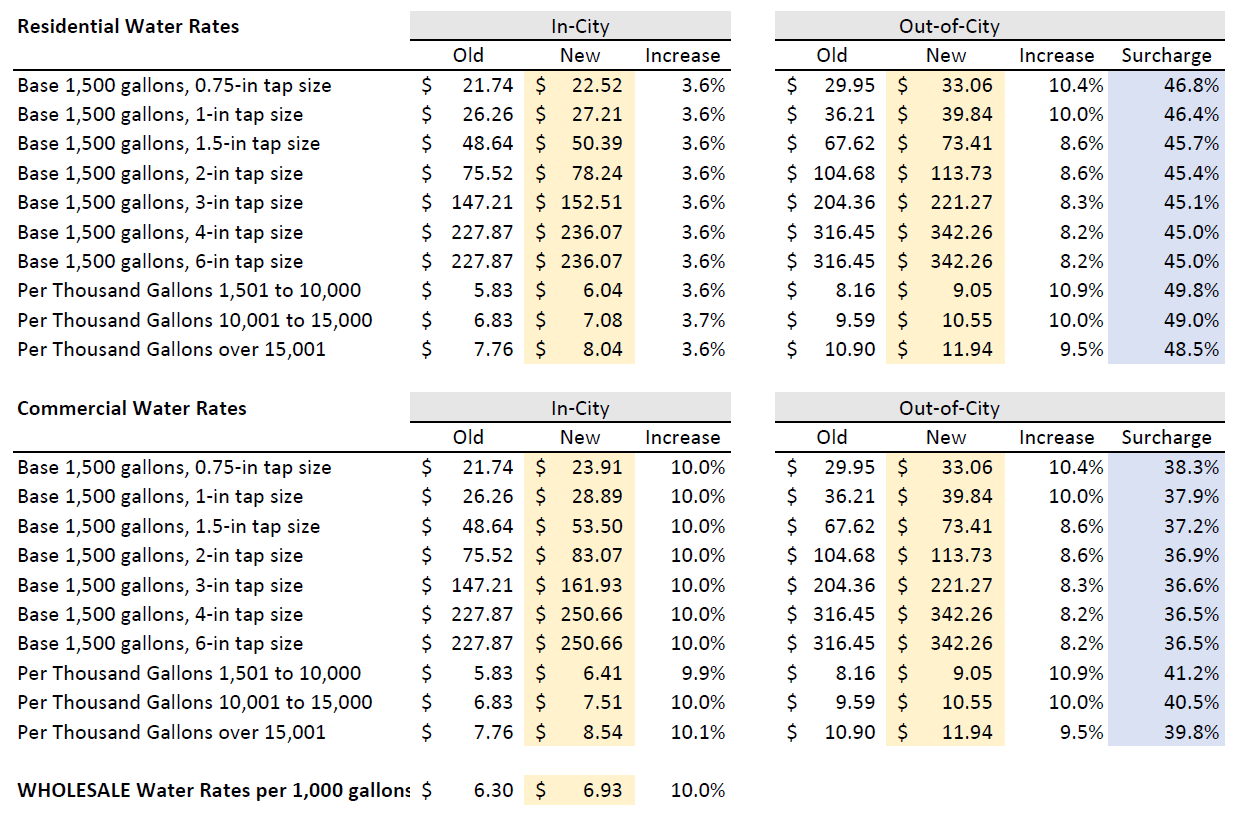 Adopted Rates
The Hidden Fees That Will Make You Spit Out Your Tap Water
Your water bill is a masterpiece of creative charges. There’s the "sewer fee," which is usually higher than the water fee itself. That’s the cost of flushing—literally paying for the privilege of making your waste disappear. Then there’s the "stormwater fee," which is a tax on rain. Yes, you can be billed for the sky crying.
One town in Texas charged residents a "drought surcharge" during a dry spell. Another added a "water conservation fee" for saving too much water—because apparently you disrupted the budget. It’s like getting a ticket for driving efficiently.
And don’t forget the base charge, a flat fee even if you used zero gallons. That’s the water company saying, "Thanks for existing. Pay up." You could be on a month-long vacation, and your empty house still owes twelve bucks for the joy of being connected to a pipe.
The Surprising Fact That Will Blow Your Faucet Off
Here’s the kicker: a gallon of tap water costs about 0.2 cents—less than a penny. That’s cheaper than air, which is technically free but comes with taxes. For that price, you get water that’s tested, treated, and delivered to your home. Bottled water, meanwhile, costs 300 to 2,000 times more. So every time you buy a plastic bottle for $2, you’re paying the water company’s rent, their vacation fund, and their therapist.
Your monthly bill is basically courtesy packaging for this absurd bargain. The issue is that you use thousands of gallons, so the tiny per-gallon price adds up. It’s like buying a million paperclips—individually cheap, but your desk ends up looking like a ferocious office supply explosion.
 Proposed Water Rates for 2023 & 2024 | Engage Hillsboro
How to Lower Your Bill (Without Becoming a Desert Hermit)
First, check for leaks. A dripping faucet can waste 3,000 gallons a year—that’s like flushing the water your neighbor uses for coffee. A running toilet is worse; it sounds like a sad orchestra and costs you $20 a month for the privilege of silence.
Second, shorten your showers by two minutes. That saves about 10 gallons a day, which over a year is a bathtub full of cash. Yes, I know your shower is where you think about your life choices. Do it faster.
Third, collect rainwater for your garden if legal in your area. It’s free, it’s fun, and it makes you feel like a rugged survivalist even if you live in a condo. Just don’t drink it—that’s what the tap (and your 0.2 cents) is for.
At the end of the day, water rates are a weird, necessary tax on being alive. They’re annoying, occasionally baffling, and the one thing you can’t cancel without a major life crisis. But next time you pay that bill, remember: you’re funding civilization’s most elaborate plumbing joke. And the punchline is, it’s still cheaper than bottled water.
Now go take a reasonable-length shower. Your wallet is watching.
