Does Water Have A Smell

Ever stood by a lake or turned on a tap and thought, “Does this actually smell like something?” It’s a deceptively simple question, right? We know coffee has a smell—roasty, b...

Ever stood by a lake or turned on a tap and thought, “Does this actually smell like something?” It’s a deceptively simple question, right? We know coffee has a smell—roasty, bold, life-changing. We know a rose has a smell—sweet, romantic, maybe a little pretentious. But water? The stuff dripping from your faucet? Surely water itself is just … empty air in your nose. Or is it?
Let’s get the science out of the way first, nice and easy. Pure water—the H₂O molecule all by itself—does not have a smell. Your nose is basically a chemical detector, and pure water is a neutral molecule. It’s like trying to smell a ghost. Nothing to latch onto. So if you sniff a glass of perfectly distilled water from a lab, you’ll get a big, disappointing, zero.
But here’s where it gets fun. You never drink pure water. Nobody does. The water you splash on your face, sip from a bottle, or watch rain down from the sky is a chaotic cocktail of minerals, gases, and microscopic hitchhikers. And those are what your brain interprets as “water smell.” Your nose is a super-sleuth, even if you don’t realize it.
Must Read
The Ocean’s Sneaky Perfume
Think about the beach. You close your eyes, inhale, and boom—salty, fresh, windy. But what are you actually smelling? It’s not the salt itself (salt has no aroma). That signature ocean scent comes from dimethyl sulfide, a chemical released by tiny marine bacteria when they munch on algae. It’s literally the fart of billions of microscopic creatures. Doesn’t sound romantic, but it smells like vacation. Funny how that works, huh?
And then there’s rain. That gorgeous, earthy smell after a summer downpour actually has a name: petrichor. It’s a combo of plant oils that have been sitting on dry ground and a chemical called geosmin, released by soil-dwelling bacteria. Your nose is incredibly sensitive to geosmin—some humans can detect it at parts per trillion. That’s like sniffing one drop of it in a thousand Olympic swimming pools. Evolution probably made us love that smell because it signaled safe water and fertile land. Pretty clever for a brain that also thinks morning breath is fine.
 Why Does My Water Smell?
Tap Water Smells Like…Microbes?
Now, let’s talk about what’s in your glass right now. Tap water often smells a little like chlorine—that’s the pool-like tang. That’s added on purpose to kill bacteria, so you’re literally smelling safety. But if your water smells like bleach or dirt, that’s usually a sign of old pipes or too much disinfectant. Ever get a whiff of rotten eggs from the kitchen sink? That’s hydrogen sulfide gas, a byproduct of bacteria living in your drain. It’s gross, but it’s just nature being its honest, messy self.
Bottled water? Oh, that’s a different story. Ever noticed how different brands of “pure” water smell weirdly distinct? One might have a faint plastic scent (from the bottle leaching phthalates). Another might taste and smell “mineral-y” because of dissolved calcium or magnesium. Some fancy spring waters smell almost like wet stone or even a hint of cucumber. It’s not your imagination—it’s geology in a bottle.
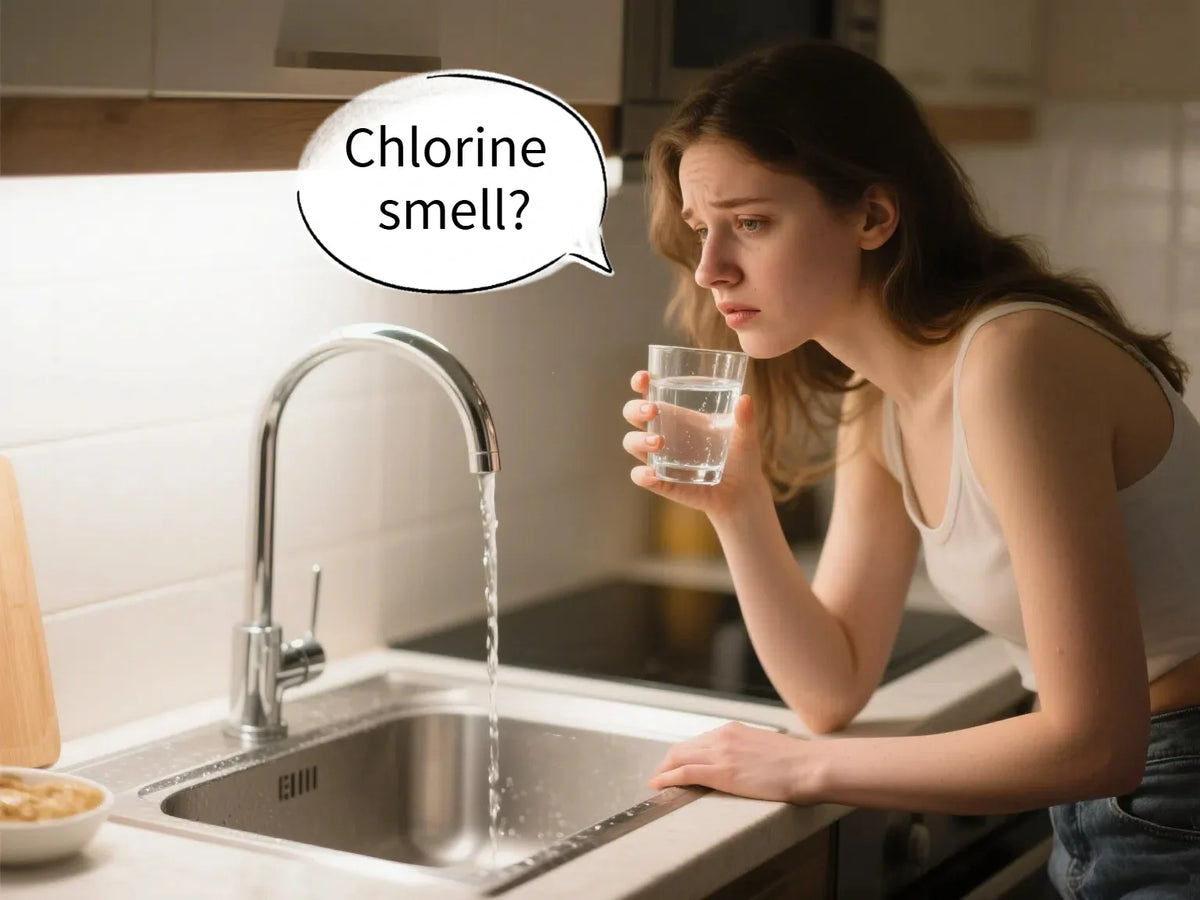 Why Does Water Smell Like Chlorine? Fixes of Chlorine Smell in Water
Why Does Your Brain Care So Much?
Here’s the kicker: smell is directly wired to the part of your brain that handles memory and emotion. That’s why a whiff of rain can instantly transport you to a childhood summer, or why clean tap water reminds you of your grandmother’s kitchen. The smell of water is rarely just the water—it’s your story with water. It’s the morning shower, the dog’s slobbering bowl, the cold stream you splashed on your face after a hike.
So does water have a smell? On paper, no. But in real life, absolutely yes. Water smells like everything it touches—like the earth, the pipes, the plastic, the rain clouds, and the tiny invisible life that swims in it. It’s the ultimate chameleon, borrowing a scent from wherever it’s been and letting you play detective with your own nose.
Next time you lift a glass, take a second. Sniff it. What’s it telling you? Is it telling you “drink me, I’m fresh” or “maybe run that filter for a minute”? Or maybe it’s just reminding you that even the most ordinary thing—like a glass of water—has a whole secret world hidden inside its odor. And that? That’s pretty cool.
