Does Ro Filter Out Pfas

Let’s talk about PFAS. You know, the “forever chemicals.” They sound like a villain from a bad sci-fi movie. And honestly? They kind of are. These things are everywhere. In y...

Let’s talk about PFAS. You know, the “forever chemicals.” They sound like a villain from a bad sci-fi movie. And honestly? They kind of are.
These things are everywhere. In your non-stick pan. In your rain jacket. Even in the dust bunnies under your couch. Spooky, right?
So, what’s the deal with RO?
RO is short for reverse osmosis. It’s a fancy water filter system. Think of it as a bouncer for your drinking glass.
Must Read
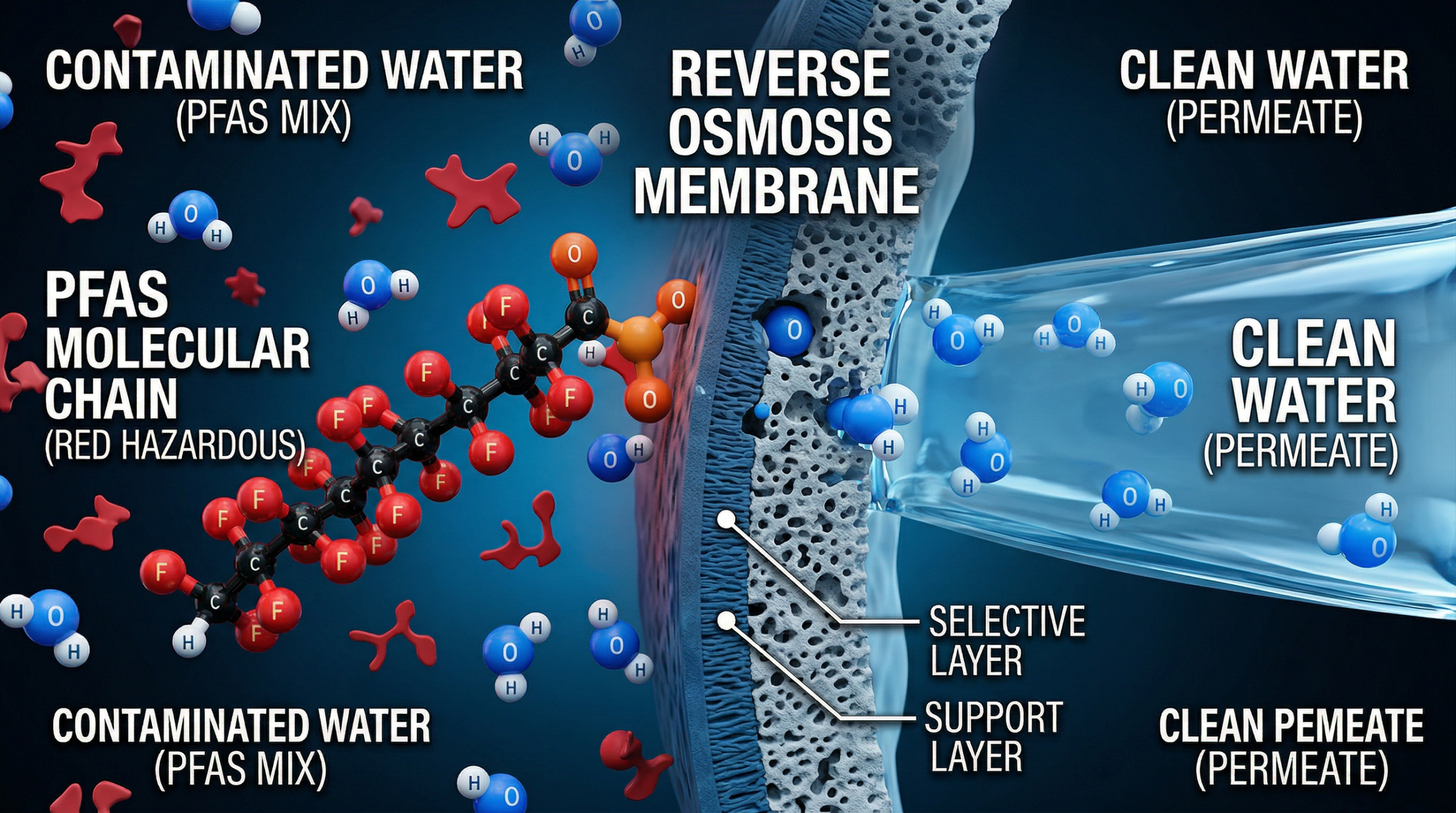
It forces water through a super-tight membrane. Only tiny water molecules get through. Everything else—salts, metals, and yes, PFAS—gets told to scram.
The magic number? That membrane has pores about 0.0001 microns wide. For context, a human hair is about 70 microns wide. That’s like stopping a hippo with a microscopic tennis racket.
Does it actually work on PFAS?
Short answer: Yes. Very yes. Long answer: It’s amazing, but not perfect—yet it’s your best bet.
Studies show RO can remove 90% to 99% of PFAS. That’s a chemical knockout. Even the pesky short-chain PFAS—the ones that laugh at other filters—get booted.
But here’s the quirky catch: RO systems are thirsty. They waste a lot of water. For every gallon of clean water, you might dump three gallons down the drain. It’s like a diva that needs backup dancers.
Why PFAS are so stubborn
PFAS are called “forever” for a reason. They have a super-strong carbon-fluorine bond. It’s one of the strongest in chemistry. Nature can’t break it down.
Your body can’t either. They just hang out in your blood, like unwanted party guests. That’s why we want them gone from our water.
Fun fact: There are over 9,000 different PFAS compounds. Scientists are still discovering new ones. It’s like a chemical Hydra—chop one, and two more appear.
The filter showdown: RO vs. everyone
Activated carbon filters? They work on some PFAS, but not all. They’re like a net that catches big fish but lets minnows slip by. RO catches the minnows too.
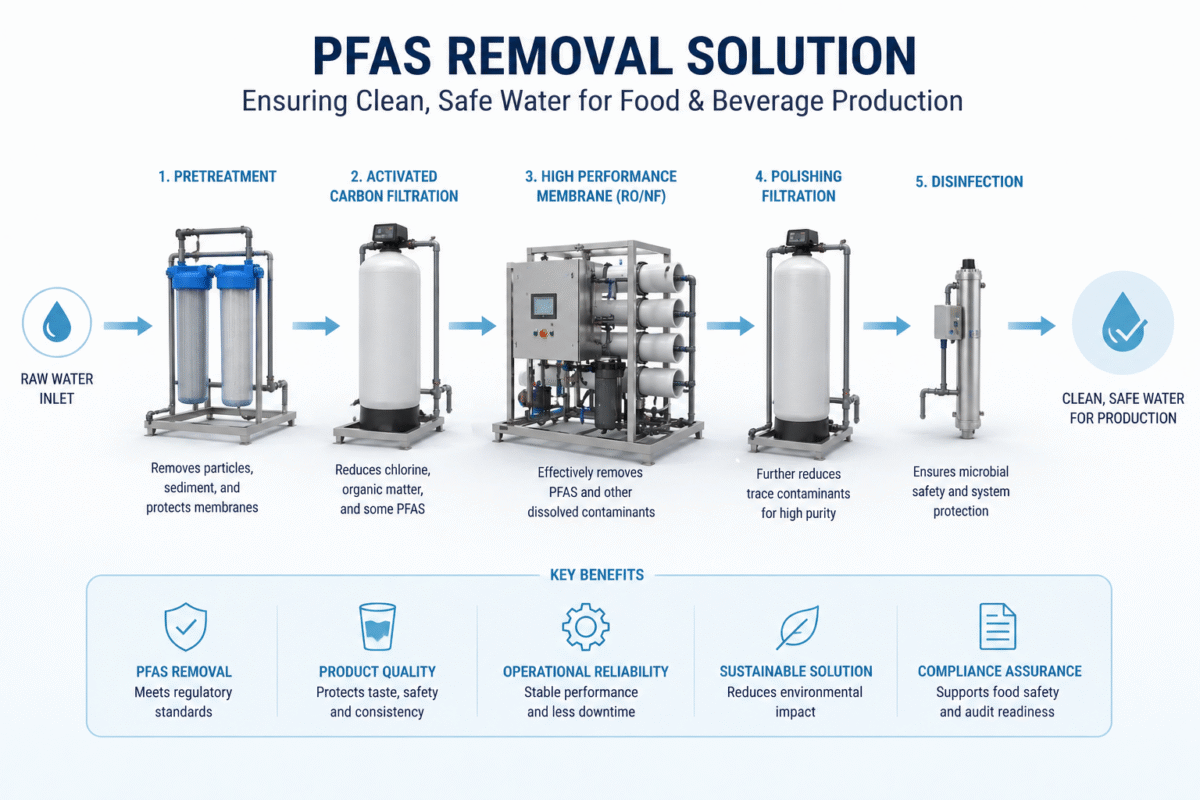 PFAS Removal in Food & Beverage Production Water
Ion exchange filters are clever. They grab PFAS like a magnet grabs paperclips. But they can get full and need replacing. RO just keeps pushing water through.
Distillation? That’s boiling water and collecting steam. It works, but it takes forever. RO is faster and way more convenient for your kitchen.
The funny part about PFAS
You can’t see them. You can’t taste them. They’re invisible ninjas. But they’re probably in your tap water right now.
One study found PFAS in the blood of 98% of Americans. That’s almost everyone! You’ve got a permanent, unwanted souvenir from your raincoat.
Some PFAS are used to make carpets stain-resistant. So, your living room rug might be releasing them into the air. Breathe deep—forever style.
But wait—there’s a catch with RO
RO removes good minerals too. Calcium, magnesium, the stuff your bones love. You end up with water so pure it’s almost sterile.
Some people re-add minerals. You can buy mineral drops or use a remineralization filter. Otherwise, you’re drinking the aquatic equivalent of plain white rice.
Also, RO systems are a bit high-maintenance. They have filters that need changing every 6-12 months. Forgetting to swap them is like leaving a bouncer asleep at the door.
The environmental irony
Here’s a fun twist: The wastewater from RO systems still contains PFAS. You dump it down the drain. It goes to a treatment plant that probably can’t remove it.
 Does Reverse Osmosis Remove PFAS? Removal Rates, EPA Limits, And System
So, you’re just moving the problem. From your glass to your river. Still, it’s better than drinking the stuff.
Some companies are testing new tech to destroy PFAS. Things like plasma reactors or super-heated steam. It’s like a chemical cremation. Science is weird and cool.
Should you buy an RO system?
If you’re worried about PFAS, yes. It’s the gold standard. But check your water first. Some municipalities have low PFAS levels. You might not need a superhero bouncer.
Consider a countertop RO unit. They’re cheaper and don’t need installation. They look like a sci-fi water bottle. Your friends will ask, “Is that a rocket for your counter?”
Or go whole-house. That’s serious. That’s for people who treat their plumbing like a national security clearance. You do you.
The bottom line
RO filters out PFAS. Really well. It’s like a bouncer who never takes a break. But it’s not a cure-all. It wastes water and strips minerals.
The real fun? This whole topic is still new. Every year, scientists find PFAS in random places. Even in toilet paper. Yes, your bathroom is a forever chemical hotspot.
So, stay curious. Sniff your water glass. Ask if it’s filtered. And if you go RO, give it a nickname. Mine is “The Forever-Chemical Popper.” It makes me giggle every time I pour a drink.
Now go hydrate. With or without the bouncer. Just don’t Google “PFAS in kombucha.” Trust me on that one.
