What Is In City Water

Okay, let’s talk about what’s really in your tap water. You know, the stuff you brush your teeth with, make your coffee from, and occasionally spray at your cat for fun. I’m h...
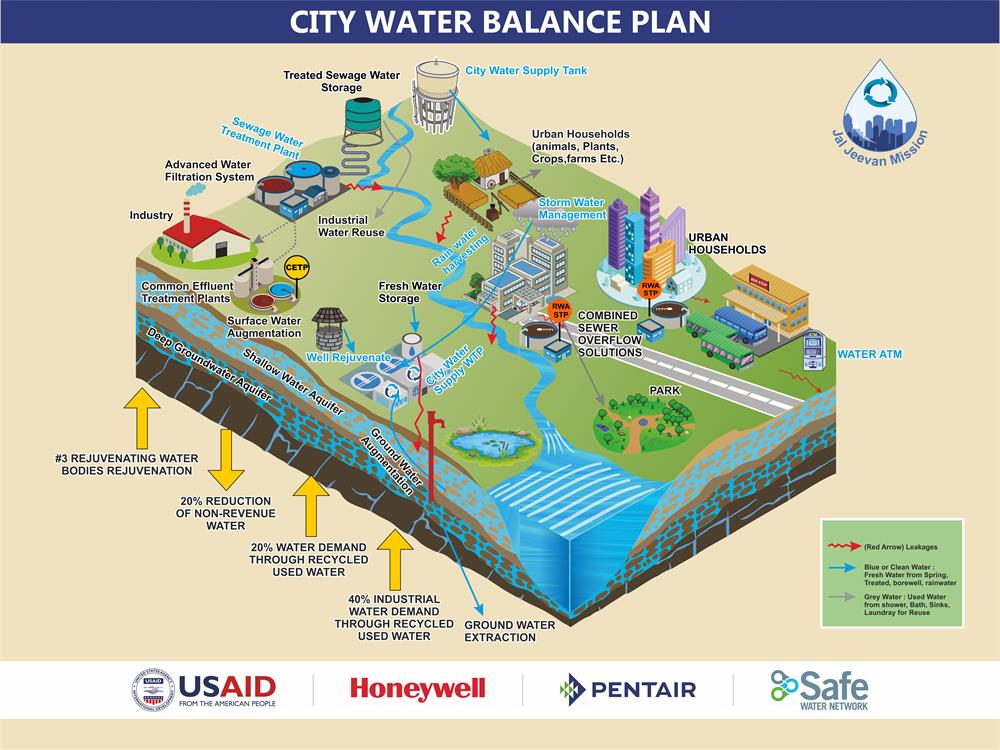
Okay, let’s talk about what’s really in your tap water. You know, the stuff you brush your teeth with, make your coffee from, and occasionally spray at your cat for fun. I’m here to ruin—or, let’s say, colorfully explain—what comes out of that faucet. Spoiler: it’s not just H₂O hanging out in there alone.
The VIP List of Minerals
First, let’s give a round of applause to calcium and magnesium. These two are basically the bouncers of your water, making it “hard.” Hard water means you get white crusty stuff on your showerhead, which is just mineral confetti. Your tap water is basically a liquid multivitamin, but one that leaves a chalky ring in your bathtub.
That harmless-looking scale? It’s actually the skeleton of a thousand tiny seashell ghosts. Fun fact: if you boiled all the calcium out of your water for a year, you could build a small, sad statue of a dinosaur. You’re welcome for that mental image.
Must Read
The Chlorine: Your Water’s Edgy Bodyguard
Next up is chlorine, the chemical that makes your pool smell like summer and your shower smell like a gym sock. Cities add it to kill bacteria, which is great—unless you’re a bacteria, in which case, sorry, mate. It’s like a tiny, invisible bouncer that karate-chops germs before they can throw a party in your colon.
Some people complain about the taste. To them I say: drink cold water. Cold water hides chlorine’s flavor like a criminal hiding in a trench coat. If you let water sit for an hour, the chlorine evaporates like your motivation on a Monday morning.
The Phantom Additives: Fluoride and Friends
Now for the controversial star: fluoride. This little miner is there to fight cavities, not to brainwash you—despite what your uncle’s Facebook feed says. It’s been in water for seventy years, and it’s the reason your teeth don’t look like a crumbling castle. Imagine a microscopic dental hygienist swimming around, patching up your enamel for free.
 Scientific Illustration. Enhance Your Scientific Articles with
But it gets weirder. They also add orthophosphate, which sounds like a Jedi droid but is actually a rust blocker. It coats your pipes in a microscopic layer that stops lead from leaking in. Yes, your water wears a tiny Teflon suit so you don’t slowly become a zombie. You’re welcome, 20th-century plumbing.
The Hidden Hitchhikers: Trace Contaminants
Now, let’s talk about the stuff that accidentally gets in. The EPA allows tiny amounts of arsenic and lead—but “tiny” means you’d have to drink ten swimming pools a day to feel a thing. It’s like finding one grain of sand in a bag of sugar: technically there, but you won’t notice unless you’re a lab rat with OCD.
Oh, and microplastics? Yeah, they’re party-crashing. A 2019 study found plastic fibers in tap water worldwide. But relax: your body is surprisingly good at passing those annoying little bits. Think of them as uninvited guests who eat your chips and leave at 3 a.m.
 Record Player - Animagraffs
The Gross but Harmless Crowd
Ever heard of Giardia or Cryptosporidium? They sound like alien dignitaries, but they’re actually microscopic parasites that can give you major digestive drama. That’s why cities blast water with UV light or ozone—it’s like a tanning bed for bugs, frying them into oblivion. So unless you drink from a puddle in a cow pasture, you’re safe.
There’s also a chance of pharmaceutical residues. Yep, trace amounts of Advil, birth control, and that antidepressant your neighbor swears by. It’s the world’s most dilute soup of modern life. Don’t panic: you’d need to drink a thousand bathtubs to feel any effect. Your water is essentially a homeopathic memory of Big Pharma.
The Official Verdict
So what’s really in city water? A cocktail of minerals, disinfectants, childhood cavity protectors, rust-fighting droids, and a whisper of forgotten Advil. It’s science’s greatest, most boring miracle. Every drop goes through a journey more dramatic than a reality TV show, from reservoir to pipe to your cup, all for pennies a gallon.
Next time you fill a glass, remember: you’re drinking a carefully managed soup of life. It’s slightly gross, mostly safe, and absolutely fascinating. Cheers to the weird liquid that keeps us alive, crusty showerheads and all.
