Tds Tester How To Use

So, you bought a TDS tester. Maybe your friend from that crunchy granola group convinced you, or maybe you just saw a weird-looking pen on sale and thought, “What’s this littl...

So, you bought a TDS tester. Maybe your friend from that crunchy granola group convinced you, or maybe you just saw a weird-looking pen on sale and thought, “What’s this little guy do?” Well, pull up a chair, pour yourself a glass of water (we’ll test it in a second), and let’s figure this out together. I promise it’s way easier than assembling IKEA furniture.
First, what even is TDS? It stands for Total Dissolved Solids. That’s a fancy way of saying “all the tiny stuff floating in your water that you can’t see.” Minerals, salts, maybe a little bit of your grandma’s leftover soup from last week’s plumbing—okay, hopefully not that last part.
Think of your water like a celebrity’s entourage. Pure H2O is the star, but TDS is the posse of managers, assistants, and hangers-on that follow it around. Your tester just counts how many people are in that entourage.
Must Read
Now, let’s get to the fun part: using it. Pop the cap off your TDS tester. It should look like a really boring thermometer or a tiny lightsaber for boring people. Hit the power button. You’ll see a screen light up, probably reading "000" or some random number.
If it reads something crazy like "8888" or just flashes at you, don’t panic. That’s just the tester doing a little dance—it’s called a self-calibration. Wait two seconds, and it’ll calm down. You’ve got this.
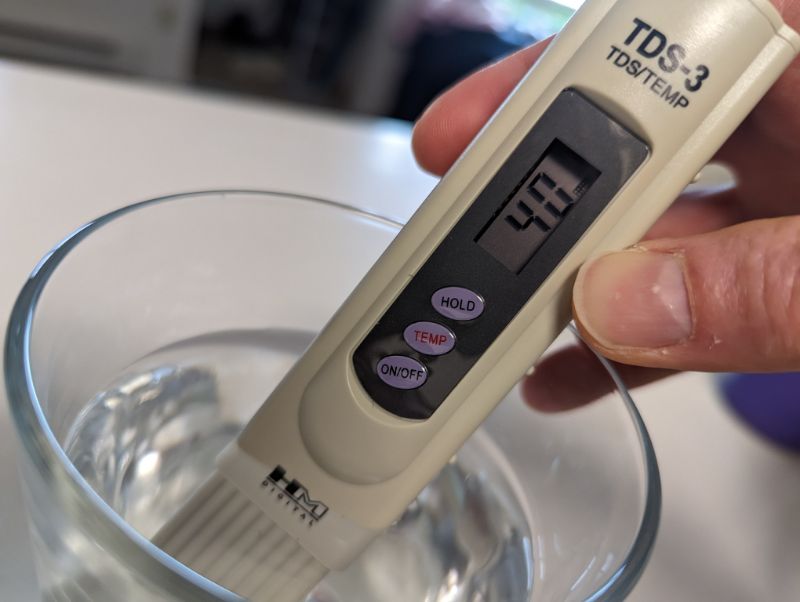
Here’s the big moment: dip the metal prongs (the sensors) into your water. Don’t just dunk the whole thing like it’s a tea bag—just the tip. As my high school health teacher used to say, “Just an inch is plenty.” Swish it around gently to get rid of any air bubbles.
Hold it there for about five to ten seconds. Don’t wiggle it like you’re trying to stir a potion. Just let it chill. The numbers on the screen will start bouncing around like a hyperactive squirrel—that’s totally normal.
Wait for the numbers to stabilize. That means they stop jumping and just sit there, looking bored. That’s your reading. Write it down, or just stare at it and nod wisely like you know exactly what it means.
So, what do those numbers mean? Let’s keep it simple. Under 50 ppm? Hey, that’s basically rainwater. You’re probably drinking fancy filtered water. Anything 100 to 200 ppm? That’s your average tap water—fine, but with a little mineral attitude.
 What is the Ideal TDS of RO Water?
Got a reading of 300 to 500 ppm? Your water is a little bit “hard.” That means it’s full of calcium and magnesium. It’s not dangerous—unless you count the annoying white crust on your coffee pot as a crime.
Over 900 ppm? Whoa there, cowboy. That’s not water, that’s almost soup. You might want to check if you accidentally tested your fish tank or a bottle of sea water. Please don’t drink that—unless you’re a dolphin.
After you get your reading, dry the prongs with a clean cloth. Don’t use paper towels—they leave little fibers that make the next reading goofy. Just give it a gentle wipe, like you’re patting a tiny robot on the head. Then pop the cap back on.
A quick pro tip: never test hot water. Heat messes with the electronics like a sugar rush messes with a toddler. Room temperature is best. If you’re testing your hot tub, let it cool down first, or expect a reading that’s basically useless.
Also, keep the tester away from magnets and powerful speakers. It’s not a ghost hunting tool—it’s a water detective. Treat it with kindness, and it’ll never give you a fake reading. Ba-dum-tss.
You can use this little guy for all sorts of things. Test your aquarium to keep your fish from getting grumpy. Test your houseplant water because, let’s be honest, your orchids are divas. Test your tap water to see if your landlord is actually maintaining the building.
 Tds Water Meter Chart – What Is A Tds Meter – FPYK
It’s also a great party trick. I mean, what’s more exciting than comparing the TDS of different bottled waters while your friends pretend to be fascinated? Nothing, that’s what. Go ahead, be the life of the hydration party.
Some people get obsessed. They test everything in the fridge: orange juice, leftover soup, that weird jar of pickles from 2019. Don’t do that. The tester is for clear liquids only. If you put it in milk, you’ll just get a sticky mess and a broken gadget. You have been warned.
Oh, and if the reading ever looks weird, you can calibrate it—but only if you’re feeling fancy. Most cheap testers come with a tiny screwdriver and a packet of “calibration solution.” It’s like a juice box for nerds. But honestly, for everyday use, the factory setting is totally fine.
Here’s the secret no one tells you: TDS testers don’t measure toxins. They don’t know if your water has lead or pesticides. They just count the total solids. So don’t treat a low TDS number as a clean bill of health—it’s more like a “vibe check.” For real safety, you’ll need a professional lab. But for daily curiosity, this little pen is perfect.
Now, go test your water! Test your friend’s water! Test the water in that puddle on the sidewalk—okay, maybe skip that one. But seriously, you now have a superpower. You can see the invisible. That’s pretty cool for a gadget that costs less than a pizza.
Remember: knowledge is power, and now you know exactly how many tiny bits are floating in your glass. Use that power wisely. And if you get a really high number, just blame it on the aliens.
In the end, a TDS tester is just a tool—but it’s a tool that reminds us that even something as simple as water has a story. Every sip has a little history of the earth it traveled through. So here’s to you, water detective. Go forth, test boldly, and always keep your prongs clean. You’re a hero of hydration now. Smile—you earned it.
