What Is Tds Of Water

Ever stared at a glass of water and thought, “What’s really in there?” You’re not alone—and the answer is more exciting than you might think. Let’s talk about TDS: Total Disso...

Ever stared at a glass of water and thought, “What’s really in there?” You’re not alone—and the answer is more exciting than you might think. Let’s talk about TDS: Total Dissolved Solids. It’s the secret code to understanding your water’s personality.
What on Earth Is TDS?
Simply put, TDS measures everything that’s dissolved in your water—minerals, salts, and even tiny bits of organic matter. Think of it like a spice rack for your H2O. Too little, and your water tastes flat. Too much, and it might taste like a salt lick.
Your tap water, bottled water, even rainwater all have a TDS level. It’s measured in parts per million (ppm), which sounds scientific, but it’s really just a score for how “busy” your water is.
Must Read
Why Should You Care?
Here’s the fun part: TDS determines whether your water is a hero or a villain for your morning coffee. Low TDS water (under 50 ppm) makes a crisp, clean brew. High TDS water (over 300 ppm) can make it taste bitter—or give you a fabulous mineral boost.
It also affects your skin. Ever feel itchy after a shower? That could be high TDS water stealing your moisture. Yikes. Knowing your TDS is like having a backstage pass to your body’s hydration party.
The Sweet Spot for Drinking
Most experts agree: 50–150 ppm is the magic range for delicious, balanced drinking water. It’s got just enough calcium and magnesium to taste smooth, but not so much that it feels heavy. Think of it as the Goldilocks zone of hydration.
Water with TDS over 500 ppm can start to taste metallic or salty. Under 30 ppm? It might taste “empty”—like you’re drinking bottled air. Neither is a disaster, but your taste buds will thank you for finding the sweet spot.
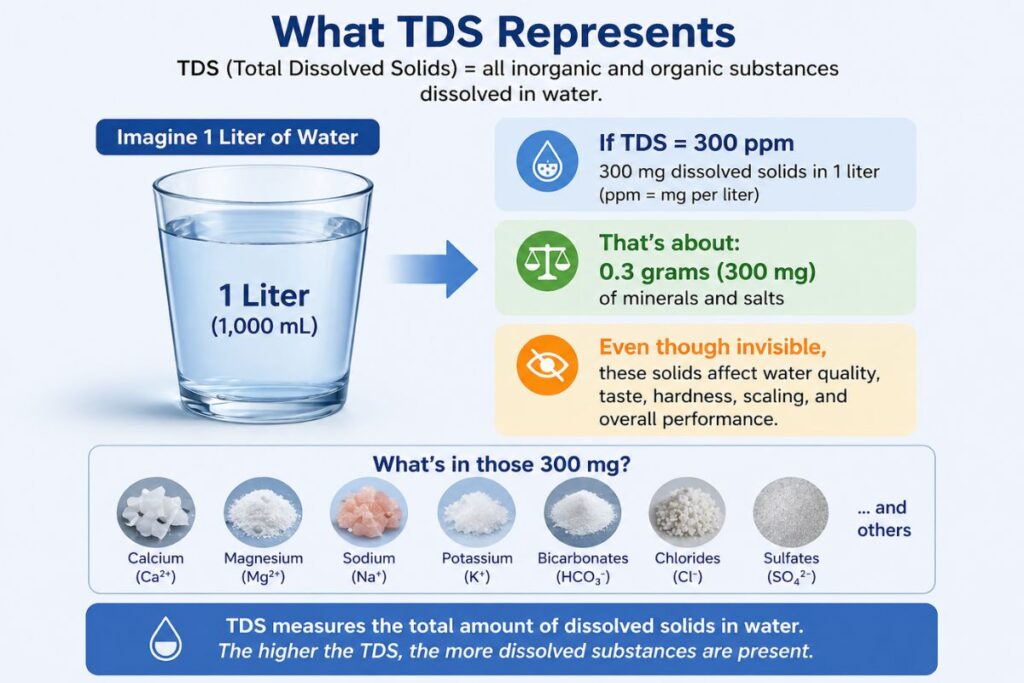 What Is TDS In Water & Why Should You Measure It?
How Do You Measure It?
You don’t need a lab coat. A TDS meter costs about the price of a pizza and works in seconds. Just dip it in your glass, and boom—you’re a water detective. (Extra fun: test your tap, your filtered water, and your neighbor’s fountain. Compare results and become the neighborhood water guru.)
Or you can check your local water utility’s annual report. They’re legally required to share TDS data—talk about transparency!
TDS and Your Fish Tank (Yes, Your Fish Want to Know)
If you have a goldfish or a betta, TDS is a life-or-death stat. Fish are sensitive to mineral changes. Too high, and they stress out. Too low, and they struggle to regulate their bodies. A TDS meter can save you a trip to the pet store with a sad story.
Even if you don’t have fish, it’s a fun experiment. Test the water in your pond or that mysterious puddle after a rainstorm. You’ll start seeing water everywhere with new eyes—like a secret superpower.
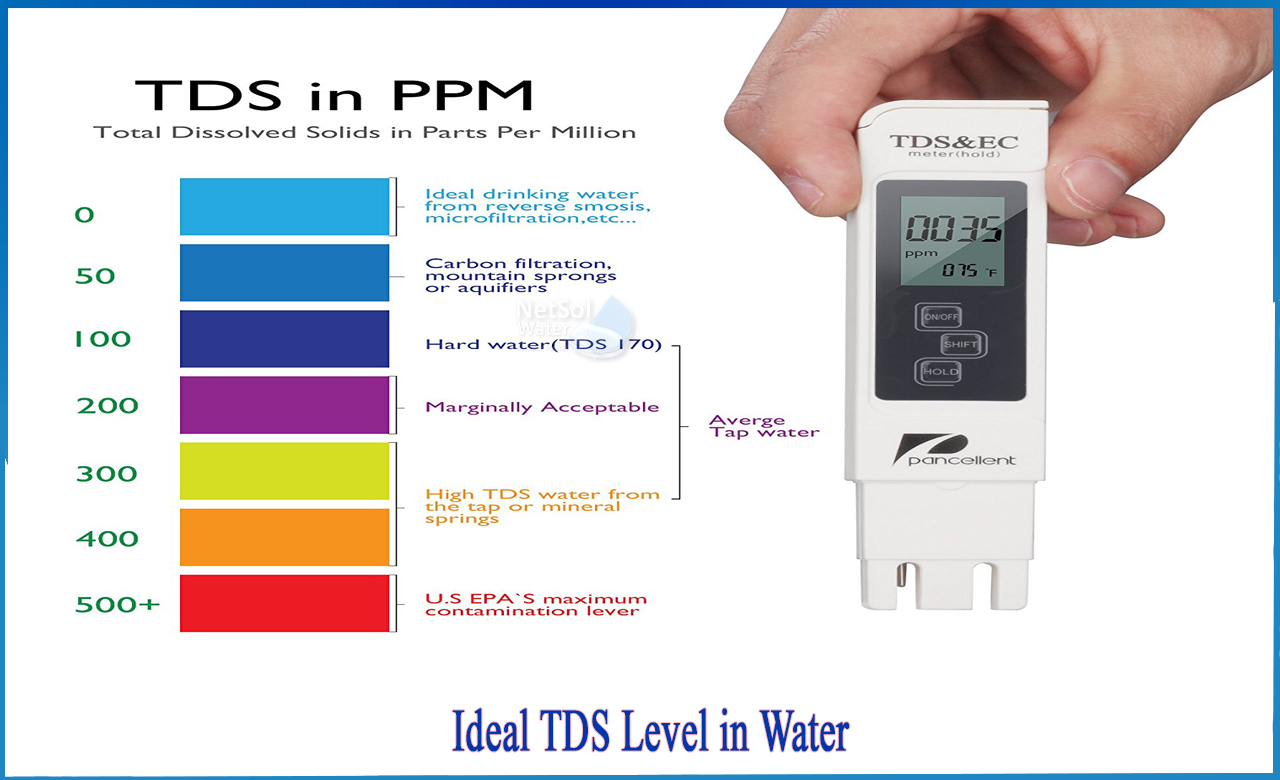 What is the Normal TDS Level of Drinking Water
But Wait—TDS Isn’t the Whole Story
Here’s the twist: TDS tells you how much is dissolved, but not what it is. 300 ppm of calcium is great for your bones. 300 ppm of lead? Run for the hills. That’s why water quality testing goes hand-in-hand with TDS. But for a quick joy ride, TDS is your perfect starting point.
And hey—even the White House uses TDS meters. Okay, I made that up, but it sounds plausible, right? The point is, it’s a tool that makes you feel smart.
The Uplifting Takeaway
Water isn’t boring. It’s a liquid story with a plot twist in every sip. TDS is your decoder ring, helping you appreciate the subtle marvels hiding in plain sight. Next time you pour a glass, you’re not just hydrating—you’re connecting with a world of chemistry, health, and flavor.
So go ahead: grab a TDS meter, test your water, and laugh at how much you didn’t know. Life is full of tiny, wonderful discoveries. And yours starts with a single drop. Cheers to that!
