What Water Is Best For Humidifiers

So, you finally bought a humidifier. Maybe your skin feels like a dried-out alligator handbag. Maybe your sinuses are staging a revolt every winter. Welcome to the club where...

So, you finally bought a humidifier. Maybe your skin feels like a dried-out alligator handbag. Maybe your sinuses are staging a revolt every winter. Welcome to the club where the air is moist and the choices are unexpectedly confusing. You just want steam, not a chemistry experiment in your living room.
Let’s get one thing straight: tap water is the villain of this story. It looks innocent, but out of your faucet comes a tiny army of minerals like calcium and magnesium. When you dump that into a humidifier, those minerals don’t vanish—they turn into white dust that coats your furniture like a ghost sneezed everywhere. Worse, that dust is a five-star hotel for bacteria.
Distilled Water: The Boring Superhero
The gold standard for humidifiers is distilled water. This is water that’s been boiled into steam, then condensed back into liquid. All the minerals are left behind, making it as pure as a monk’s thoughts. Your humidifier will love you for it. No white dust, no bacterial raves, no weird smells.
Must Read
But here’s the shocker: distilled water is basically dead. It lacks the minerals that give tap water its taste. If you drank it, you’d think, “Wow, this is what void tastes like.” That’s fine for your lungs, though—your lungs don’t care about flavor. They just want clean, invisible wetness.
Cost? Expect to pay about $1 to $1.50 per gallon at the store. For a large humidifier running all night in a dry room, you might burn through a gallon every 12 hours. That adds up faster than your coffee budget. Pro tip: if you’re a cheapskate (like me), you can distill your own water at home with a countertop distiller. It’s a $100 gadget that pays for itself in three months of winter, and it makes you feel like a mad scientist.
 Snugell Distilled Water for Humidifiers | 6-Pack 20oz | Travel-Friendly
Filtered Water: The Compromise King
You don’t have to go full distilled. Filtered water (think Brita or a fridge filter) removes most of the nasty stuff—chlorine, sediment, some minerals. It’s like tap water that went to charm school. Your humidifier will still get some white dust, but way less than with tap.
However, filtered water is a great place for mold to throw a party if you leave it sitting too long. Change the water daily. I mean it. If you forget, you’ll open the tank and smell something that reminds you of a forgotten sock. Not ideal for your bedroom romance.
One weird fact: most refrigerator filters won’t remove calcium scale as well as distilled. So if you live in an area with “hard water” (where your coffee maker gets crusty), filtered water still has enough minerals to slowly destroy your humidifier’s ultrasonic plate. That’s a $200 replacement part you didn’t want.
 The Do’s and Don’ts of Using Tap Water in Your Humidifier – Plentiful Air
Tap Water: The Forbidden Fruit
Okay, I’ll admit it: I’ve used tap water in a pinch. At 2 AM, with a nose drier than the Sahara, I poured tap water into my humidifier like a desperate fool. The results: a fine layer of white dust on my nightstand, a slightly musty smell after three days, and a humidifier that eventually died a mineral-choked death.
Tap water also releases chlorine gas into the air. It’s not enough to harm you, but it can irritate sensitive lungs. Plus, if you have a steam humidifier (the kind that boils water), you’re basically making a tiny indoor fog with all those minerals flying around. Your cat will sneeze. Your houseplants will look confused.
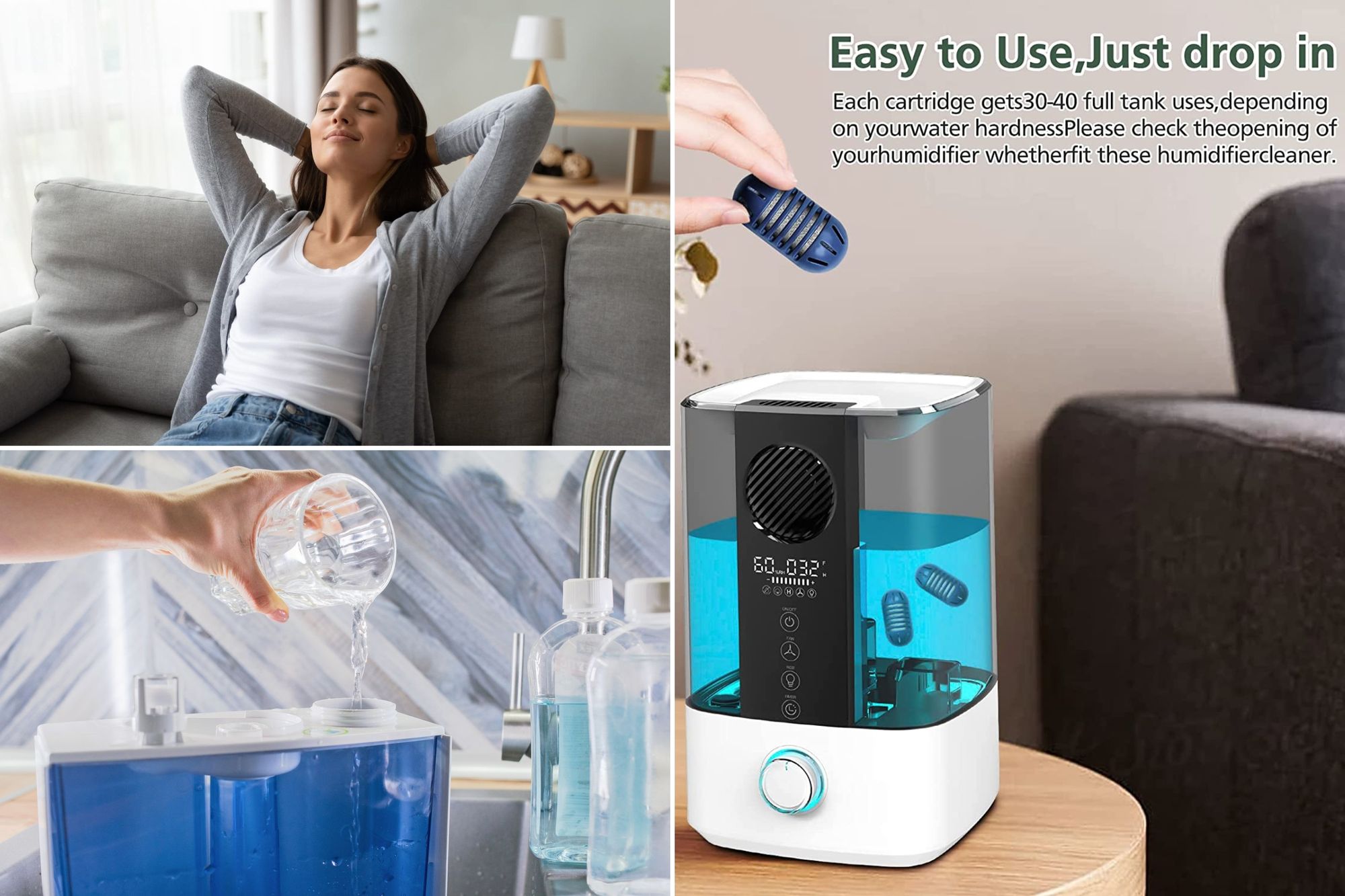 Which Humidifier Water Filter is Right For You?
Surprising fact: if you use tap water in an ultrasonic humidifier, the white dust aerosolized into your air can actually damage your electronics. Yes, your TV’s circuit board can get a fine mineral coating. You’ll be watching Netflix in a dusty envelope of your own making. Not cute.
What About Bottled Spring Water?
Don’t do it. Spring water is nature’s soup of minerals and trace elements. It’s great for your Netflix documentary about water, terrible for your humidifier. It’s basically fancy tap water with a marketing degree. The minerals will gunk up your machine faster than a teenager’s phone screen gets greasy.
And please, please don’t use “alkaline” or “ionized” water. That’s for your trendy water bottle, not your humidifier. You’ll create a fog that’s philosophically confused and full of calcium. Your humidifier doesn’t need a spiritual awakening.
 How to Choose & Use a Humidifier Safely
The Final Verdict (With Jokes)
So, what water is best? Distilled, unless you enjoy buying new humidifiers every six months. If you’re lazy or broke, get a demineralization cartridge for your ultrasonic unit. They cost about $10 and last a month. It’s like a tiny priest that exorcises the minerals from your water.
Alternatively, you could just move to a rainforest. The Amazon has perfect 80% humidity, and the only white dust you’ll see is from actual parrots. But your internet will suck. Choose wisely.
Remember: your humidifier is a delicate snowflake that demands respect. Give it clean water, clean it weekly with vinegar, and it will whisper moist air into your nostrils like a gentle cloud. Give it tap water, and it will turn into a bacterial gehenna that smells like a swamp. You’ve been warned. Now go buy some distilled water—you moisture-starved legend.
