Best Way To Remove Calcium Deposits

Let’s be honest—there are few things more annoying than turning on your shiny new faucet only to find a crusty, white, rock-like ring around the spout. It looks like someone s...
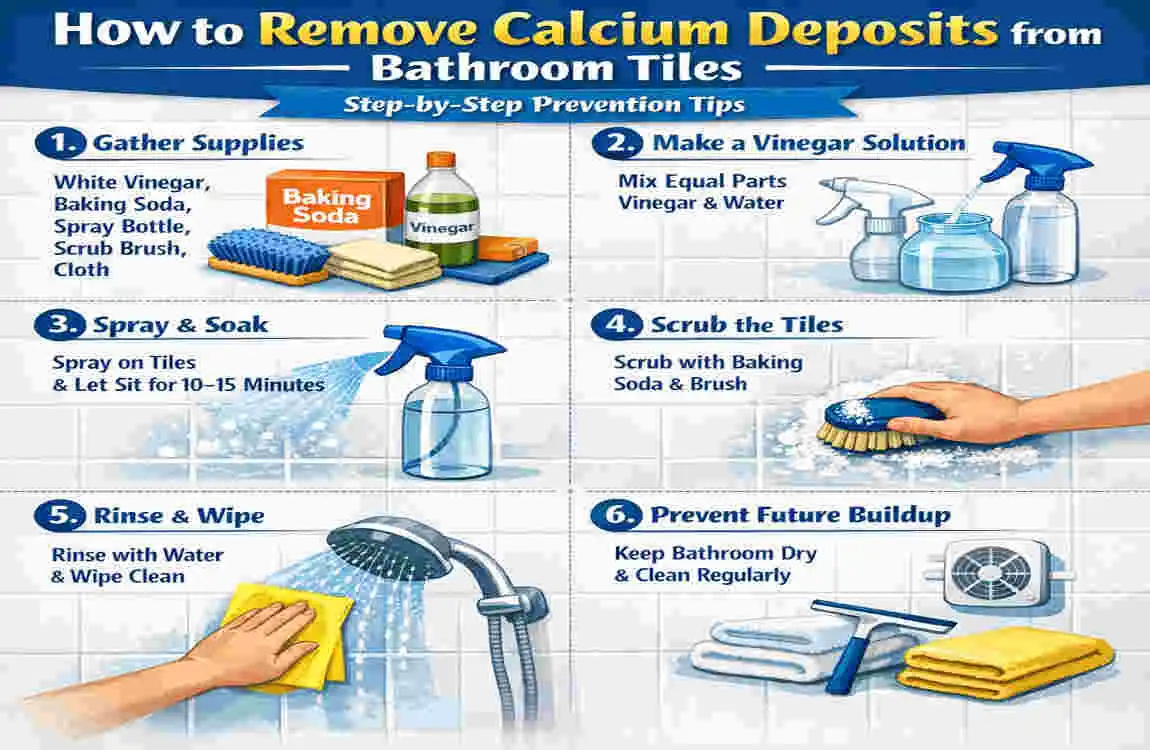
Let’s be honest—there are few things more annoying than turning on your shiny new faucet only to find a crusty, white, rock-like ring around the spout. It looks like someone spilled chalk dust and forgot to clean it up. That, my friend, is a calcium deposit, and it’s the uninvited guest that shows up at every party in homes with hard water.
Before you start panicking, take a deep breath. These mineral buildups—whether on your showerhead, coffee pot, or glass shower door—are completely normal, and they’re not a sign that your house is falling apart. They’re just a little stubborn, like that one friend who insists on telling the same story at every dinner party.
Why should you even care about calcium deposits?
Well, imagine trying to enjoy a hot shower, but the water sprays everywhere because your showerhead is clogged with little white rocks. It’s the same principle as trying to sip a milkshake through a straw full of dried smoothie—frustrating and a little gross.
Must Read
Beyond the annoyance, those deposits can actually ruin your appliances over time. Your coffee maker might start brewing slower, your dishwasher might leave a film on your glasses, and your kettle might whistle with a weird, chalky sound. Nobody wants their morning coffee to taste like a geology experiment.
Plus, let’s not forget the look of the stuff. A sparkling clean faucet or glass shower door just feels better, doesn’t it? It’s the difference between walking into a spa and walking into a damp basement.
The secret weapon: white vinegar (yes, the stuff in your pantry)
Here’s the best part: you don’t need to buy some fancy, expensive, chemically-smelling cleaner. The absolute best way to remove calcium deposits is with plain, cheap white vinegar. It’s like the Swiss Army knife of home cleaning—unassuming but incredibly effective.
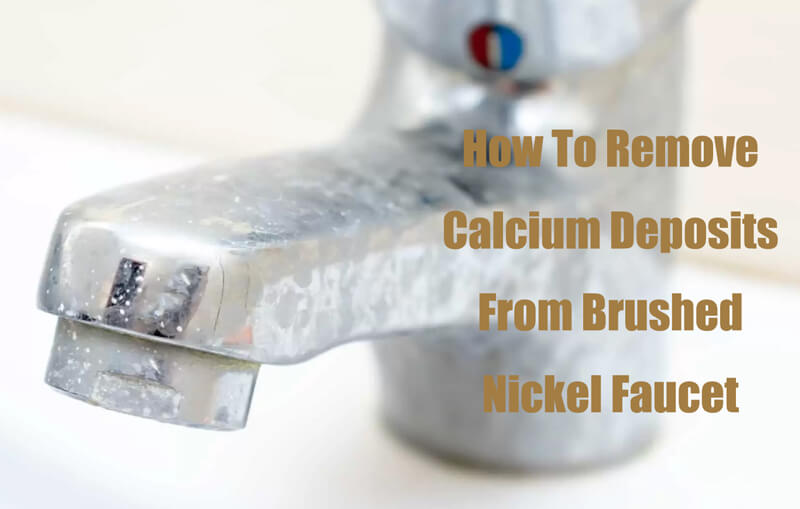 Calcium Removal From Faucets at Maggie Martinez blog
How does it work? Vinegar is acidic, and calcium deposits are alkaline. When they meet, it’s like a tiny science party where the rocks just dissolve. No scrubbing, no cursing at your faucet—just chemistry doing the heavy lifting.
For faucets and showerheads
Take a small plastic baggie and fill it with about half a cup of white vinegar. Use a rubber band to tie the baggie around your faucet or showerhead so the nozzle is completely submerged in the vinegar. Let it soak for about an hour—go watch a show or scroll through memes.
After that, remove the baggie, give the fixture a gentle scrub with an old toothbrush, and rinse it with water. You’ll literally watch the crusty white stuff slough off like old snake skin. It’s oddly satisfying.
 Ultimate Guide: How to Remove Calcium Deposits from Bathroom Tiles for
For glass shower doors and tiles
Mix equal parts white vinegar and warm water in a spray bottle. Spray it generously onto the glass or tiles, let it sit for ten minutes, then wipe with a microfiber cloth. If you have stubborn spots, use a non-scratch sponge.
Pro tip: after cleaning, keep a squeegee in the shower and give the door a quick wipe after every use. It’s a tiny effort that saves you from future “why is my door so cloudy?” panic attacks.
For your coffee maker and kettle
Fill your coffee maker’s water reservoir with equal parts water and white vinegar. Run a full brew cycle, then run two more cycles with just fresh water. Your coffee will taste like coffee again, not like a mineral spring.
For a kettle, boil a solution of half vinegar and half water, let it sit for 20 minutes, then pour it out and rinse. Your kettle will thank you by not sounding like a dying teapot every time you boil water.
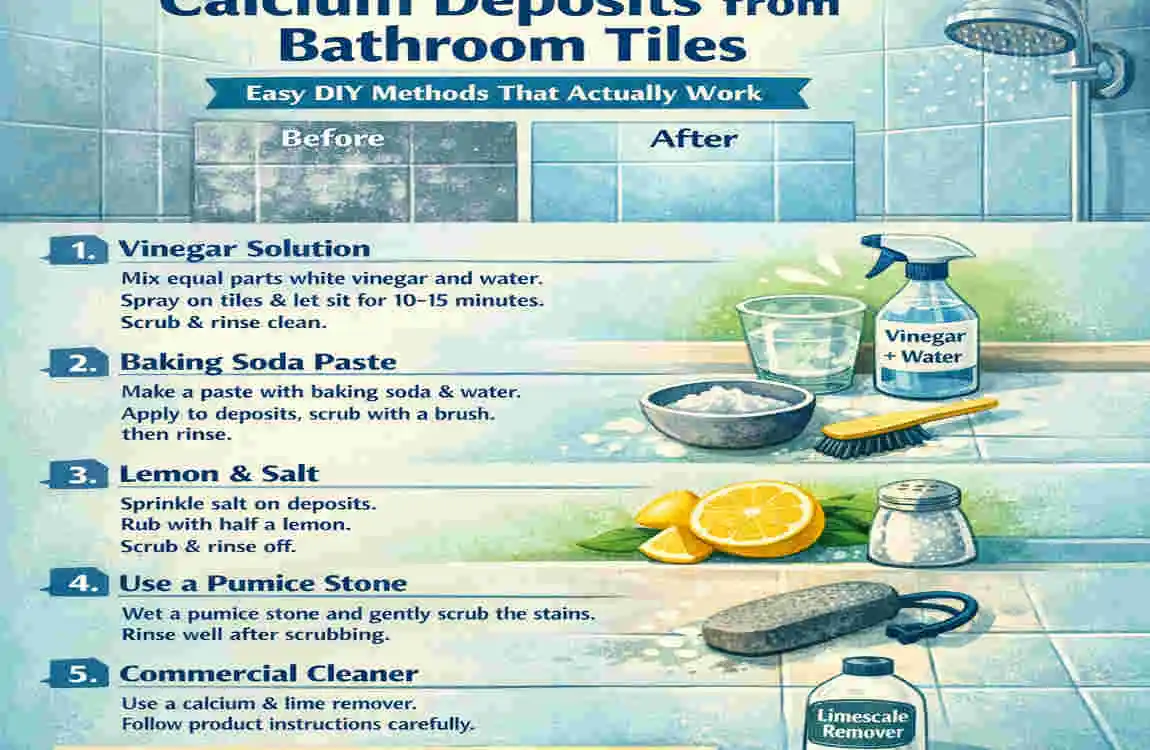 How to Remove Calcium Deposits from Bathroom Tiles: Easy DIY Methods
But wait—what about the smell?
Yes, vinegar smells like a pickle factory exploded in your kitchen. But the smell disappears completely once everything dries. If you really can’t stand it, add a few drops of essential oil (like lemon or lavender) to your vinegar solution. Voilà—you get a clean home and aromatherapy.
One more trick: lemon juice and baking soda
If you’re out of vinegar (or just want to feel like a mad scientist), make a paste with lemon juice and baking soda. It fizzes up like a volcano project from elementary school, and it works wonders on stubborn deposits on older faucets. Just apply the paste, let it sit for 15 minutes, and scrub gently.
The lemon also leaves a fresh, zesty scent that makes you feel like you’re cleaning a fancy café, not just your sink.
 How to Remove Calcium Deposits from Swimming Pool: Best 5 Tips
A word of caution for natural stone
If you have marble, granite, or limestone countertops, do not use vinegar. The acid can etch and dull the stone surface. For those materials, use a cleaner specifically designed for natural stone, or a mild dish soap and water solution. Think of vinegar like a sledgehammer—it works great on tough stuff, but not on delicate things.
So, when should you do this?
Make it a monthly ritual, like checking your smoke alarm batteries or pretending you’ll start a new hobby. Doing it regularly means you’ll never have to face a crusty faucet that looks like it belongs in a cave. It’s the difference between a quick wipe-down and a full-blown wrestling match with a rock.
And honestly, isn’t life too short to fight with minerals? You have better things to do—like drinking that now-perfectly-brewed coffee or enjoying a shower that actually sprays water where you want it.
So grab that bottle of vinegar, channel your inner kitchen chemist, and show those calcium deposits who’s boss. Your home will sparkle, your appliances will purr, and you’ll feel like a cleaning wizard.
