What Is The Best Water Softener Salt

So, you’ve bought a water softener. Congrats! You’re now the proud owner of a fancy salt-eating machine. But then you stare at the aisle full of salt bags at the store, and yo...
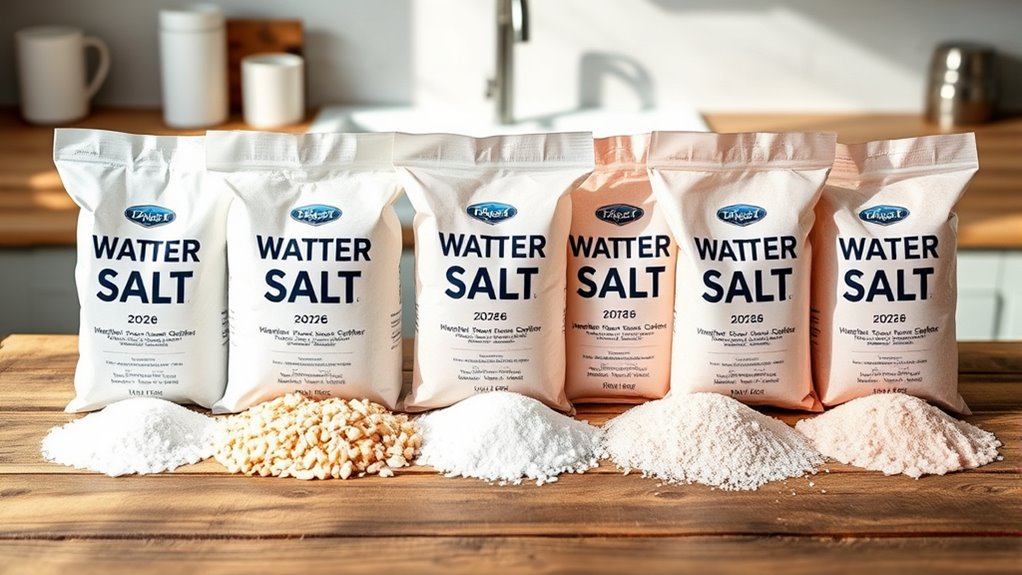
So, you’ve bought a water softener. Congrats! You’re now the proud owner of a fancy salt-eating machine. But then you stare at the aisle full of salt bags at the store, and your brain freezes. Which one do you actually pick?
It’s a real head-scratcher. Don’t worry—I’ve been there. Let’s grab a metaphorical coffee and sort this out together.
The Three Musketeers of Salt
First, know your enemies. I mean, your options. There are basically three main types: rock salt, solar salt, and evaporated salt. Each one has a personality.
Must Read
Rock salt is the rugged, cheap cousin. It comes straight from the ground, often looking like little gray pebbles. It’s the budget pick, but it leaves a lot of insoluble gunk behind.
That gunk? It builds up in your brine tank like bad cholesterol. You’ll be cleaning that tank more often than you want to. Fun fact: nobody wants to clean a brine tank more than once a year.
Next up: solar salt. This stuff is made by evaporating seawater. It comes in crystals or pellets, and it’s purer than rock salt. Less gunk, but still not perfect.
Solar salt can sometimes clump together. You know, like that friend who refuses to commit to plans. It’s reliable, but it needs a little extra attention.
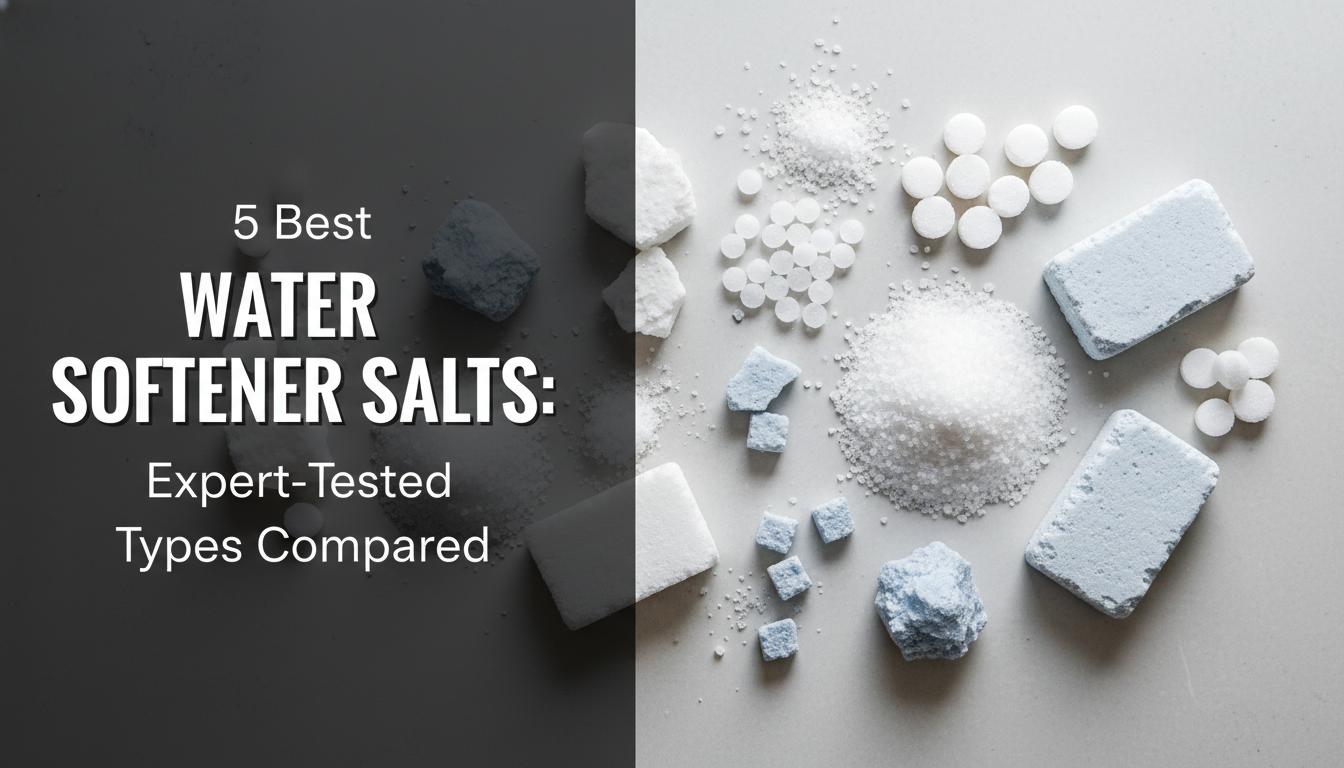 5 Best Water Softener Salts: Expert-Tested Types Compared
Finally, the fancy pants option: evaporated salt. This is the gold standard. It’s made by dissolving salt, then boiling off the water. It’s 99.9% pure. No jokes.
Evaporated salt is so clean, it barely leaves any residue. Your softener will thank you with quiet, efficient operation. Your pipes will party like it’s 1999.
Pellets, Cubes, or Crystals?
Wait, there’s more. Even within these types, you have shapes. Pellets are the most common for a reason. They flow smoothly, they dissolve well, and they don't form a solid bridge in your tank.
Bridging is when salt fuses into a hard crust. It’s like a salt igloo blocking your water. Pellets hate doing that. Go with pellets unless your manual says otherwise.
Crystals are cheaper but behave like toddlers. They’re messy, they clump, and they sometimes refuse to work. Cubes? Those are usually for big industrial systems. Skip them for home use.
 7 Best Salt for Your Water Softener System 2022 Comparison & Pros Cons
The Sneaky Additives
Now, look at the bag closely. Some salts have rust inhibitors or cleaning agents. They sound helpful, right?
Well, they can be. If your iron levels are high (like, orange-stained-toilets high), a salt with a rust inhibitor is smart. But for most of us, it’s overkill.
And those cleaning agents? They can sometimes make a mess in softer water. When in doubt, buy plain evaporated salt pellets without additives. Your softener is a minimalist; it likes simple things.
What About the Brand?
You see Morton, Diamond Crystal, and store brands. Honestly, it’s not a huge drama. The mineral makeup is what matters, not the logo.
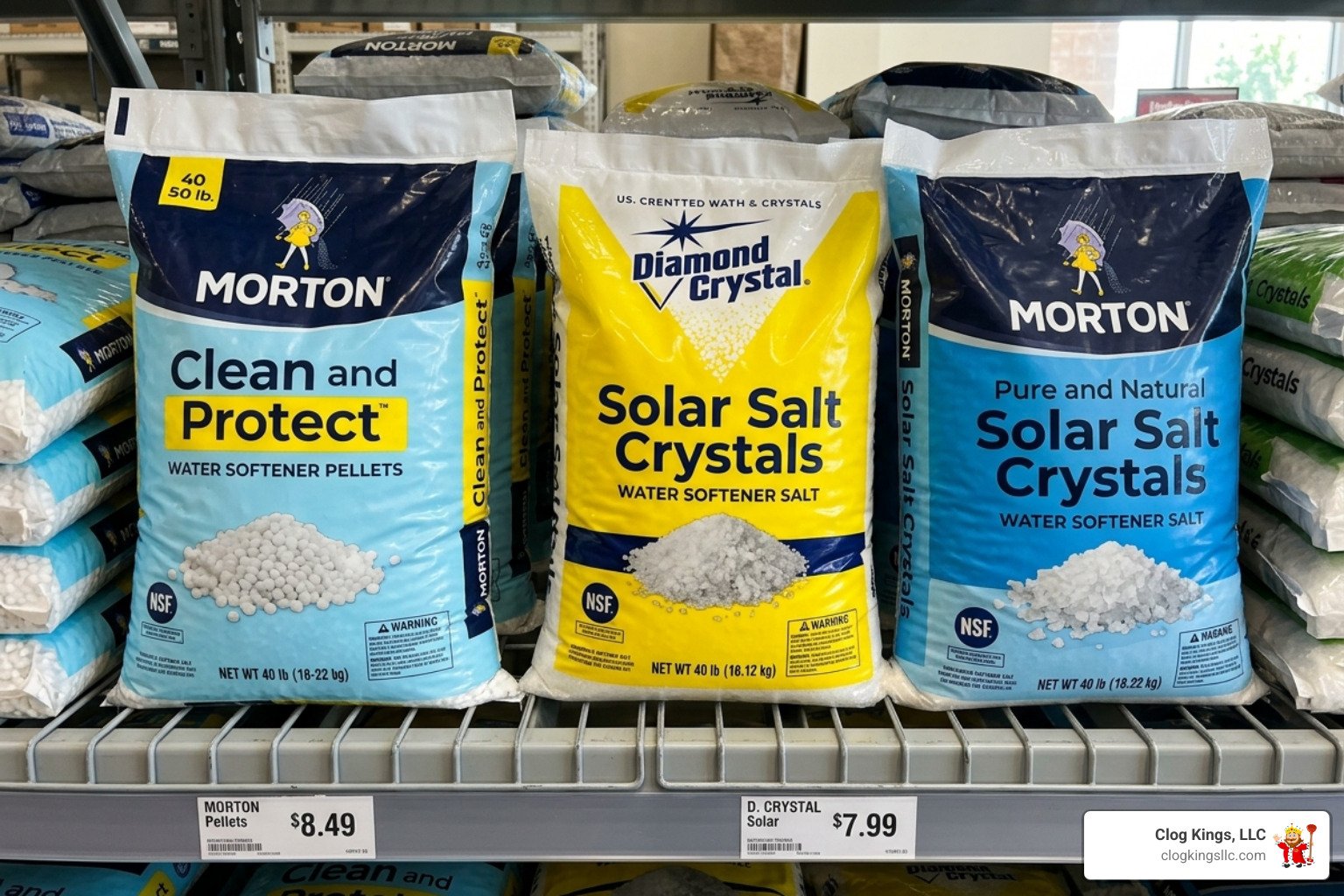 Best Water Softener Salt: Pellets, Crystals, and Blocks Compared – CLOG
But here’s a secret: store brands are often the same as name brands packaged differently. Check the purity percentage on the back. If it says 99.6% or higher, you’re golden.
Pay less, get the same clean water. Feel like a hero.
Yet Another Plot Twist: Potassium Chloride
Oh, you thought we were done? Ha! There’s also potassium chloride. It’s a salt substitute, often used by people on low-sodium diets.
It works, but it’s way more expensive. Like, three times the cost. And it doesn’t regenerate as efficiently. Only bother with this if you have a medical reason or a fancy garden that hates sodium.
Otherwise, stick to good old sodium chloride. Your wallet will hug you.
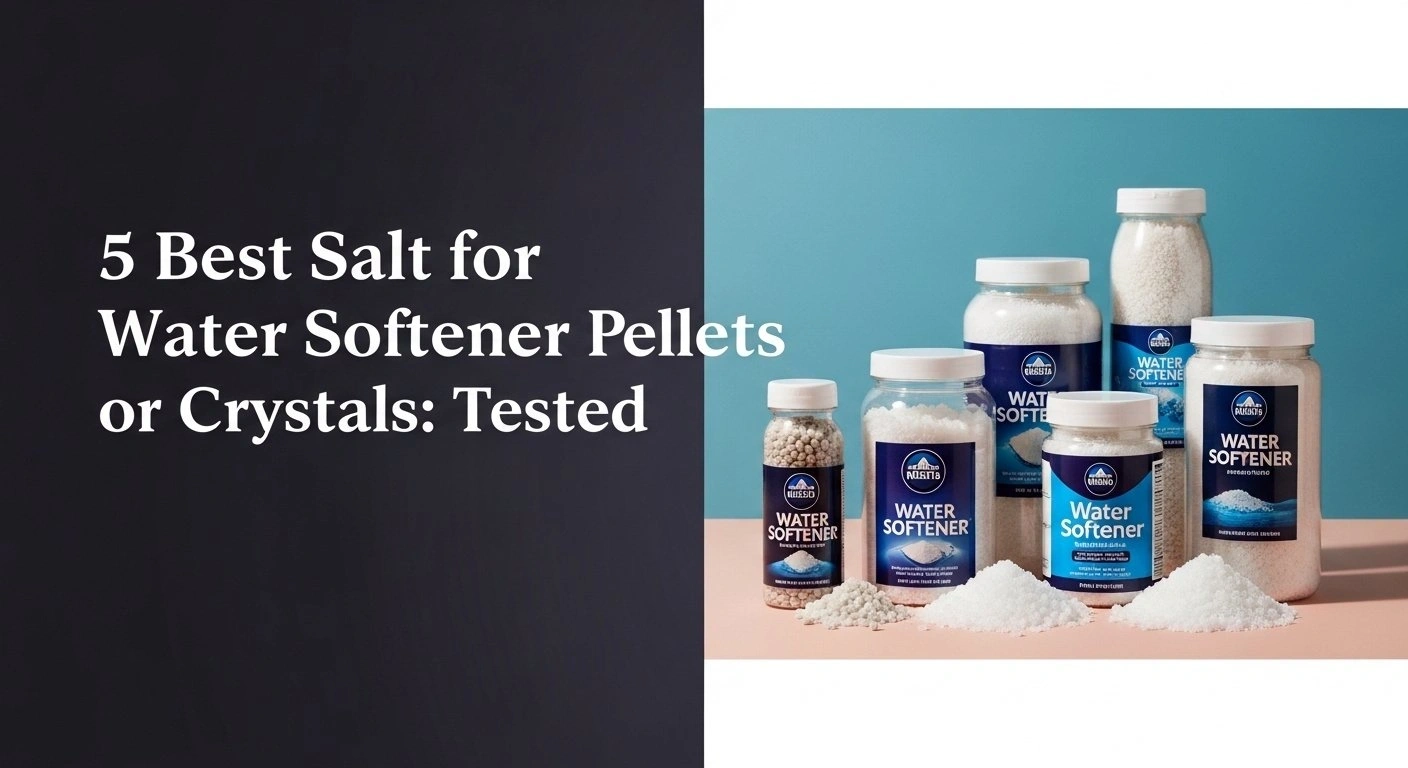 5 Best Salt For Water Softener Pellets Or Crystals: Tested
The Final Pour
So, what’s the verdict? The best water softener salt is high-purity evaporated salt in pellet form. That’s it. Plain and simple.
Look for “extra coarse” or “solar” if you want a middle ground. But honestly, the small extra cost for evaporated salt saves you from scrubbing gunk later. Pay now or pay later—with elbow grease.
One last thing: always keep the salt level above the water line. Not too full, not too low. Think of it like Goldilocks, but with salt.
Your softener isn’t picky. It just wants clean, consistent food. Give it that, and it’ll give you soft, silky water for years. No rust, no spots, no drama.
Now go forth and conquer that hardware store aisle. You’ve got this. And if you forget everything I said? Just grab the bag that says “pellets” and “99.9% pure.” Your future self—and your shower—will thank you.
