Best Reverse Osmosis System Under Sink

You know that moment when you’re pouring a glass of tap water and you swear you can taste the ghost of last night’s dinner, the plumbing, and maybe a faint whiff of chlorine?...

You know that moment when you’re pouring a glass of tap water and you swear you can taste the ghost of last night’s dinner, the plumbing, and maybe a faint whiff of chlorine? Welcome to the club. We’ve all been there, staring at a glass of liquid that’s supposed to be life-giving but feels more like a chemistry experiment. The solution, my friend, isn’t a fancy bottle from the store—it’s the reverse osmosis system under your sink.
Think of it as a secret superpower for your kitchen. These sleek little boxes hide away in the cabinet, quietly filtering out everything from lead and chlorine to those weird trace pharmaceuticals that somehow end up in municipal water. It’s like having a personal mountain spring, but without the hike. Plus, you never have to lug another 5-gallon jug from the grocery store again—your back will thank you immediately.
Here’s the science part, but keep it breezy: reverse osmosis uses a semi-permeable membrane to push water through at high pressure, leaving behind 99% of contaminants. It’s the same technology that turns seawater into drinking water on Navy ships. So, if it’s good enough for a submarine, it’s probably good enough for your morning coffee. Fun fact: The first RO systems were used in the 1950s to desalinate ocean water, meaning you’re basically living in the future every time you fill your glass.
Must Read
What to Look For: The Goldilocks Principle
Not all under-sink RO systems are created equal. You want one that’s extremely effective but doesn’t turn your faucet into a trickle. Look for a system with at least four stages of filtration—sediment, carbon block, the RO membrane, and a final polishing filter. That’s the sweet spot where you get pure water without waiting an hour for a pint.
Another crucial detail: flow rate. You don’t need industrial-grade speed, but aim for 50 to 75 gallons per day (GPD). That’s enough to fill a pitcher, cook pasta, and still have water for the cat. Brands like APEC Water Systems, iSpring, and the Home Master TMAFC-ERP are the rockstars here, often winning awards for reliability and taste. Consider them the Stanley Steemer of your sipping life—quietly efficient, never flashy.
And here’s a pro tip: check if the system includes a permeate pump. It sounds technical, but it basically makes the system more efficient, reducing water waste. Old-school RO systems used to dump 4 gallons down the drain for every 1 gallon you drank—a serious buzzkill. Modern units with a pump cut that to about 1:1. That’s not just eco-friendly; it’s wallet-friendly. Your inner sustainability nerd will high-five you.
 15 Best Reverse Osmosis Systems Under Sink for 2026 - Perfect Fit Living
Installation: Easier Than IKEA Furniture
I’ll be honest—I once tried to assemble a bookshelf and ended up sobbing into a pile of dowels. Under-sink RO systems are way simpler than that. Most come with color-coded tubes and a simple drill bit for the faucet hole. If you have a standard kitchen sink with an extra hole for soap or sprayer, you’re golden. If not, you might need to drill a new one, but that’s a 10-minute job, not a day-long crisis.
Still nervous? Many companies now offer “install it yourself” kits that include a saddle valve and push-fit connections. That means no soldering, no plumber’s putty, and no swearing. Just follow the manual like it’s a recipe for nachos. Fun fact: Most people install their RO system in under an hour, which is faster than the time you’ll save not debating about who’s buying the next case of bottled water.
If you rent your apartment, don’t fret. There are “countertop” RO systems that sit next to your sink, or ones that attach directly to the faucet in minutes. No permanent holes, no landlord drama. You can take it with you when you move—a nomadic water purifier. It’s the millennial upgrade to that dusty Brita pitcher you’ve been nursing for three years.
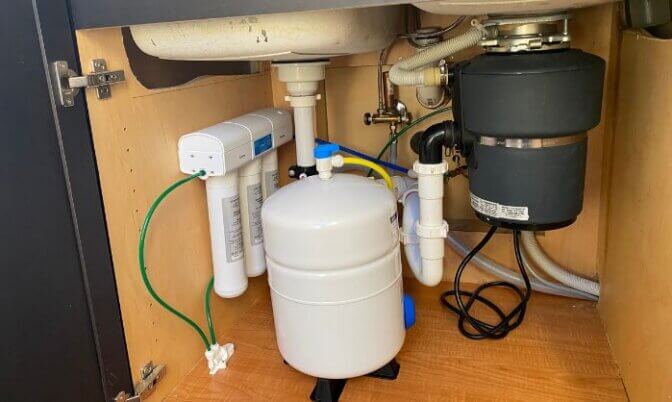 Why An Under Sink Reverse Osmosis System Is the Best
Living the Filtered Life: Taste and Texture
Once it’s installed, you’ll notice the difference immediately. The water tastes clean, almost slippery in a good way—like you’re drinking something that just woke up from a spa day. Your morning coffee will stop tasting like a forgotten ashtray. Ice cubes become translucent jewels instead of cloudy chunks of tap sediment. Seriously, it’s a vibe shift.
Cooking gets an upgrade too. Pasta, rice, and soups taste purer because they’re not absorbing chlorine or off-flavors. And if you’re a plant parent, your ferns and monsteras will thrive on RO water. It’s free of the salts and chemicals that make leaves brown at the edges. Your fiddle-leaf fig will literally thank you in leaf form.
For the cocktail enthusiasts out there: good water makes excellent ice. A classic negroni or a simple highball with RO water ice cubes? That’s the difference between a drink and an experience. Mad Men’s Don Draper would approve—though he’d probably use it for a scotch rocks, which is also fine.
:max_bytes(150000):strip_icc()/best-reverse-osmosis-systems-4586893-jay-wilde-b88c627b82da4a93827ca422b1ad9b8e.jpg) Our Top Reverse Osmosis System Picks You'll Want to Grab
Our Top Reverse Osmosis System Picks You'll Want to Grab
Pro Maintenance: Keep It Flowing
Don’t ghost your RO system after installation. Change the filters every 6 to 12 months depending on usage and water quality. Most systems have a little LED indicator or a push-button reminder. If you ignore it for two years, the system gets sluggish and the membrane can get gunked up—like not changing your showerhead, but worse for your kidneys.
Also, flush the system once a month. Many units have a tiny button that pushes water through the membrane to clean it. It takes 15 seconds and prevents bacteria from building up. Do it while you’re waiting for your coffee to brew. Multitasking at its finest. Think of it as the dental floss of home filtration: easy to skip, but you’ll regret it later.
And here’s a little cultural nod: in Japan, many homes have RO systems for their morning tea ceremony, believing the water’s purity unlocks subtle flavors. You don’t have to don a kimono to appreciate that. Just fill your kettle and feel cultured. It’s the small rituals, people.
 Under Sink Ro Connection at Mark Cox blog
One more fun fact: Astronauts on the International Space Station use a high-tech version of reverse osmosis to recycle their own urine into drinking water. So yes, you are one step away from space-age hydration, but with fewer tubes and more cabinet space. Use that knowledge however you want at your next dinner party—it’s a guaranteed conversation killer or starter.
A Short Reflection on Pouring
In the end, an under-sink RO system is not just a gadget. It’s a quiet commitment to noticing what goes into your body. Every sip becomes a small act of self-care, a deliberate choice over convenience. You stop reaching for plastic bottles because the water from your own tap feels better, tastes cleaner, and costs a penny per gallon.
There’s something deeply satisfying about knowing a glass of water is pure—without the paranoia, without the aftertaste. It’s like owning a secret: you’re drinking the same caliber of water as a luxury spa, but in your sweatpants. That, right there, is the ultimate modern luxury: a little luxury at home, no reservations required. So go ahead, pour yourself another glass. You’ve earned it.
