Is It Best To Use Distilled Water In A Humidifier

So, you’ve finally bought a humidifier. Maybe your skin feels like parchment, or your sinuses are staging a tiny protest every morning. You fill it up with tap water, flick it...

So, you’ve finally bought a humidifier. Maybe your skin feels like parchment, or your sinuses are staging a tiny protest every morning. You fill it up with tap water, flick it on, and ahh, sweet relief. But then, a few days later, a fine white dust starts appearing on your nightstand, like some kind of microscopic, powdery vandal. You've just met the infamous “white dust”—the ghost of your local water utility.
That white stuff is basically just minerals—calcium and magnesium—that tap water leaves behind when it evaporates. It’s the same gunk that turns your showerhead into a crusty fossil, except now it’s in your lungs. Okay, that sounds dramatic, but breathing in that fine particulate isn’t exactly a spa day for your respiratory system. Your furniture? It just looks like it lost a fight with a bag of flour.
The Case for the Pure Stuff
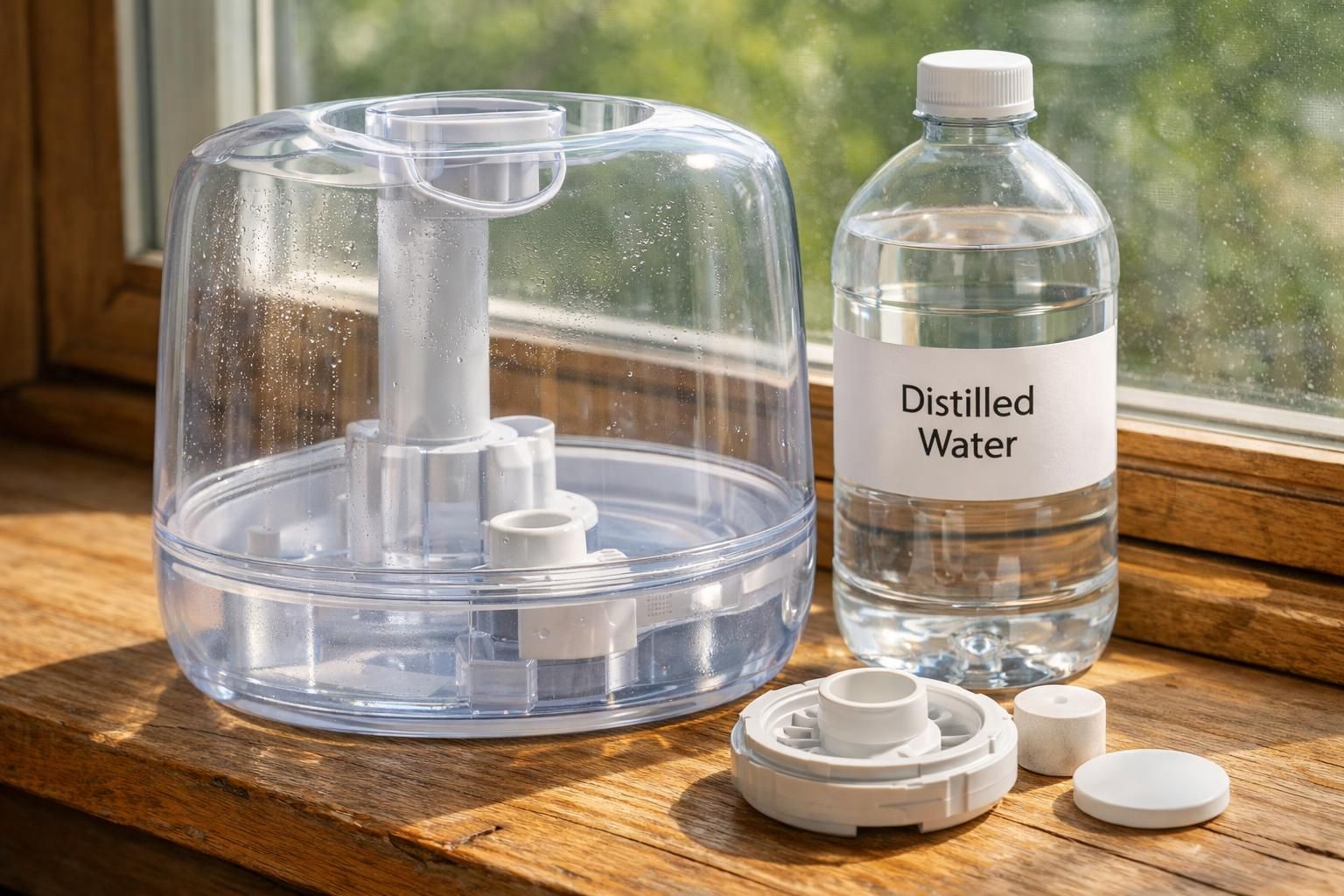
Enter distilled water: the shy, introverted cousin of tap water. It’s just water that’s been boiled into steam and then condensed back into liquid, leaving all the mineral drama behind. It’s essentially water that went to therapy and resolved its issues. When you use it in your humidifier, you get nothing but pure, invisible vapor.
Must Read
No white dust. No weird film on your electronics. No need to scrub the inside of your machine every three days like you’re exorcising a mineral demon. It’s like giving your humidifier a VIP pass where the club has no cover charge and the air is always clean.
But… Is It Actually Necessary?
Let’s be real. Not everyone needs distilled water. If you live in a place with soft water—like, say, you’re in a coastal city where the tap water tastes like a gentle mountain stream—you might be fine. I’ve got a buddy in Portland who uses tap water and his humidifier still looks like it just rolled off the factory line. He’s living the dream, and honestly, I’m a little jealous.
 Can You Use Tap Water in a Humidifier? (UK Guide + Hidden Risks)Can You
But if you’re in the Midwest or anywhere with "hard" water (which sounds like a tough, but ultimately brittle, personality), you know the struggle. That white dust will coat your nightstand, your phone charger, and—somehow—the cat. I once had a humidifier leave a chalky ring on my favorite book. The horror.
The Hidden Perks of Distilled
Using distilled water isn’t just about the white dust. It’s about longevity. Those mineral deposits aren’t just annoying—they destroy your humidifier’s insides. They clog the wicking filter, cake the ultrasonic plate, and make the fan work harder. It’s like feeding your car a diet of gravel and expecting it to purr.
 Clean Humidifier: Your Guide to Preventing Slime & Bacteria!
Plus, bacteria and mold love tap water minerals. They’re like tiny condo boards that thrive on the extra mineral content. Distilled water is sterile (or close to it), so your humidifier stays cleaner longer. You go from needing to deep-clean every weekend to maybe a quick rinse once a month. That’s a win for anyone who’d rather binge a show than scrub a water tank.
But What About the Cost?
Look, I’ll be honest: distilled water isn’t free. A gallon costs about a dollar at the store, plus you have to lug that heavy jug home like a pack mule. If your humidifier chugs through two gallons a night (and some of those big tank models do), that adds up. You might start feeling like you’re funding a small water-empire.
 Are You Supposed To Use Distilled Water In A Humidifier | Detroit Chinatown
Here’s a funny fix: if you’re cheap like me, you can buy a countertop water distiller for about $100. It plugs in, makes a gentle gurgling sound like a coffee pot, and produces a gallon every four hours. It’s basically a tiny, magical water-factory. Or, you can just buy jugs and pretend you’re a fancy barista who only uses filtered water for their “air latte.”
When Tap Water Is Fine (And You’re Fine)
Let’s not get snobby about this. If you have a cool-mist or evaporative humidifier—the kind with a wick that just sucks water up and blows air over it—tap water is often totally fine. The wick catches the minerals, turning them into a gross but harmless brown cake that you replace every season. It’s not elegant, but it works.
 Do You Have to Use Distilled Water in a Humidifier? Really?
Ultrasonic humidifiers, the ones that vibrate water into a fine mist, are the white-dust factories. Those are the ones that really benefit from distilled. If you own one, you’ve probably already texted a friend a photo of your dusty nightstand with a crying emoji. I see you.
The Verdict: Do You Need It?
So, is it best to use distilled water? Yes, for peace of mind and your machine’s health. But it’s not a must for everyone. If your tap water is soft, your humidifier doesn’t produce visible dust, and you’re okay with cleaning it more often, then skip the jugs. You’re saving money and the planet from one less plastic bottle.
But if you wake up to a fine white film on your glasses, or you’ve ever coughed a little cloud after breathing near the mist vent, then do yourself a favor: grab a gallon of distilled. Your lungs, your furniture, and your cat will thank you. And you get to feel like a fancy hydration guru. That’s a pretty good deal.
