Best Uv Disinfection Systems Industrial Water Air Surface

Remember that time your friend bought a “waterproof” watch and immediately tested it in a margarita? Yeah, that’s kind of how I felt when I first looked into UV disinfection....
Remember that time your friend bought a “waterproof” watch and immediately tested it in a margarita? Yeah, that’s kind of how I felt when I first looked into UV disinfection. Everyone promised a magic bullet for water, air, and surfaces, but the internet was a swamp of confusing specs. I dived in so you don’t have to drink the metaphorical margarita. Let’s cut through the hype and talk about the best UV disinfection systems for industry, shall we?
Here’s the thing—UV light isn’t new. It’s been killing microbes since the early 1900s. But today’s systems? They’re insanely more powerful and targeted. We’re not talking about a blacklight at a rave; we’re talking about UVC light at specific wavelengths that literally shreds the DNA of bacteria, viruses, and mold. For industrial settings, this is a game-changer because it works without chemicals. No slimy residues, no toxic smells—just pure, photon-based carnage.
Water: The Clear Winner in Industrial UV
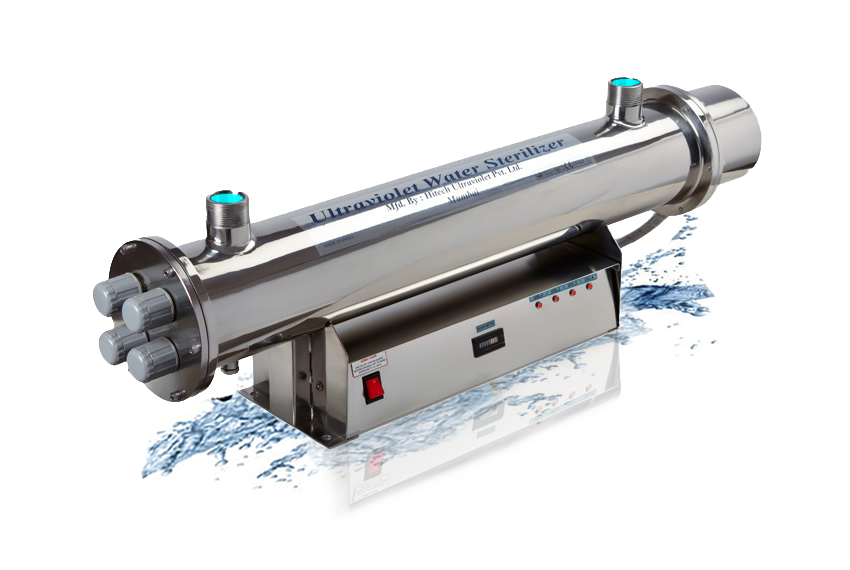
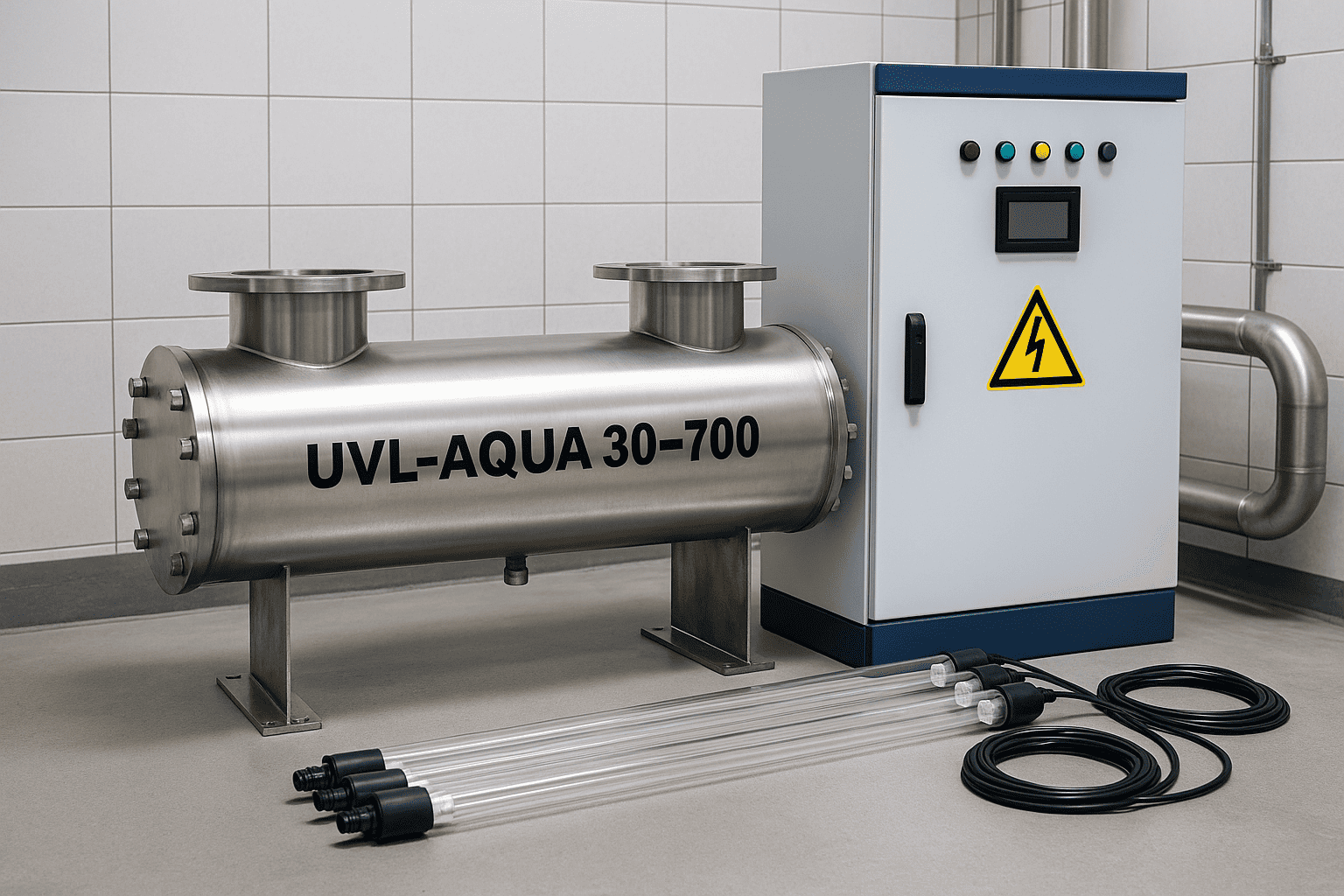
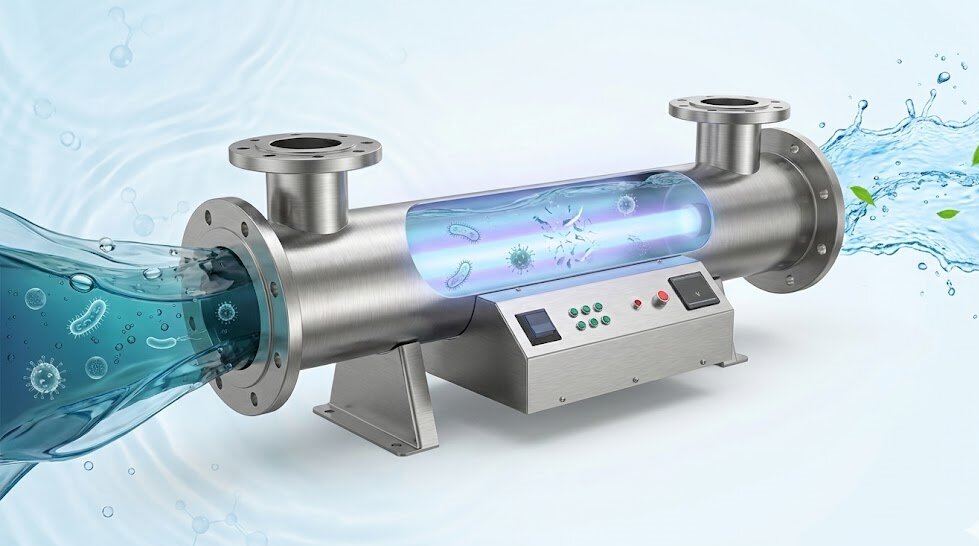
If you run anything from a food processing plant to a brewery, your water is a liability. Microbes love it. Enter industrial UV water disinfection systems—the big, serious units that sit in pipes and blast water as it flows past. These aren’t cute countertop filters; they’re beasts that handle thousands of gallons per hour.
Must Read
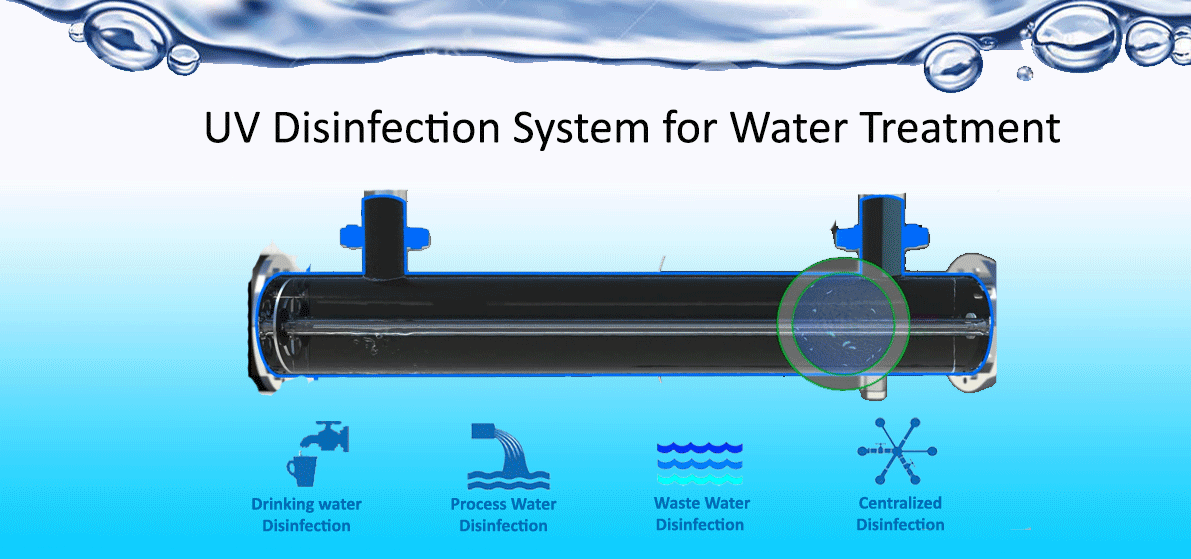
The best ones use low-pressure, high-output (LPHO) lamps or, for total overkill, medium-pressure lamps. Medium-pressure lamps emit a broader spectrum of UVC, which is awesome for killing tough pathogens like cryptosporidium. Just remember: UV only works if the water is clear—turbidity blocks the light. You’ll need a pre-filter unless you want a very expensive glowing tube of silt.
My favorite pick? Systems from Aquafine or TrojanUV. They’re the workhorses of the industry, built like tanks, and actually have self-cleaning wipers for the quartz sleeves. Because nobody has time to scrub a lightbulb in a high-pressure pipe, right? (Spoiler: you don’t.)
 UV Disinfection System in Industrial Facilities - UVL
Air: Cleaning What You Breathe
Now, let’s talk about the stuff floating around your head. UV air disinfection systems are often hidden inside HVAC ducts, which is both smart and slightly creepy. They shine UVC light right where the air circulates, frying airborne pathogens before they reach your lungs. For industrial spaces like factories or hospitals, this is non-negotiable.
The best systems use in-duct UV-C lamps with a high output, usually 254 nanometers. Some fancy models add photocatalytic oxidation (PCO) to break down VOCs and odors. But here’s the ironic part: if your airflow is too fast, the UV doesn’t have enough “contact time” to kill everything. So, you need a system designed for your duct size and fan speed. Don’t just bolt one on and hope for a miracle.
For standalone units (like in a warehouse corner), look for models with enclosed UV chambers that recirculate air multiple times. The SteriLumen or UVC Solutions units are solid—they’re overbuilt and actually tested. Just don’t stare at the light. It’s like looking at the sun, but worse for your retinas.
 TOC in Water Treatment: Meaning, Reduction Methods
Surfaces: The Trickiest Beast
Surface disinfection is where UV gets weird. You can’t just wave a wand and count it done. Industrial UV surface systems often come as mobile robots, ceiling-mounted fixtures, or conveyor-belt tunnels. They work beautifully on flat, clean surfaces, but shadows are the enemy. Anything that blocks the light—a crease, a label, a speck of dust—leaves a safe zone for germs.
The best approach is direct, high-intensity UV-C combined with 360-degree reflectors. Think of it like tanning, but for deadly bacteria. Systems from Xenex or LightStrike use pulsed xenon lamps that create a massive burst of broad-spectrum UV. They’re loud and dramatic, but they zap everything in a room in minutes.
 UV Water Sterilizer | Chemical-Free Water Disinfection System | PureShield
For continuous surfaces like conveyor belts, you need UVC LED arrays—they’re cooler, last longer, and turn on instantly. But they cost a fortune upfront. My advice? Only go LED if you need to sanitize thousands of items per hour and have the budget. Otherwise, stick to the old-school mercury lamps. They’re cheap and reliable, like a rusty pickup truck that never dies.
What Nobody Tells You About UV Systems
First, ozone. Some UV lamps produce ozone (smelly, toxic gas). You don’t want that in occupied spaces, so look for “ozone-free” models. Second, the lamps degrade over time—typically lose 15-20% output after 9,000 hours. Change them annually, no excuses. Third, safety. UVC can burn skin and blind you faster than you can say “oops.” Use interlocks, remote controls, or proper shielding.
I almost bought a used system from a dairy farm once. The salesman said, “It’s fine, just clean it with a hose!” That’s when I learned you never, ever hose an electrical UV system. Water plus high voltage equals sad fireworks. Always buy from a reputable vendor who includes installation support.
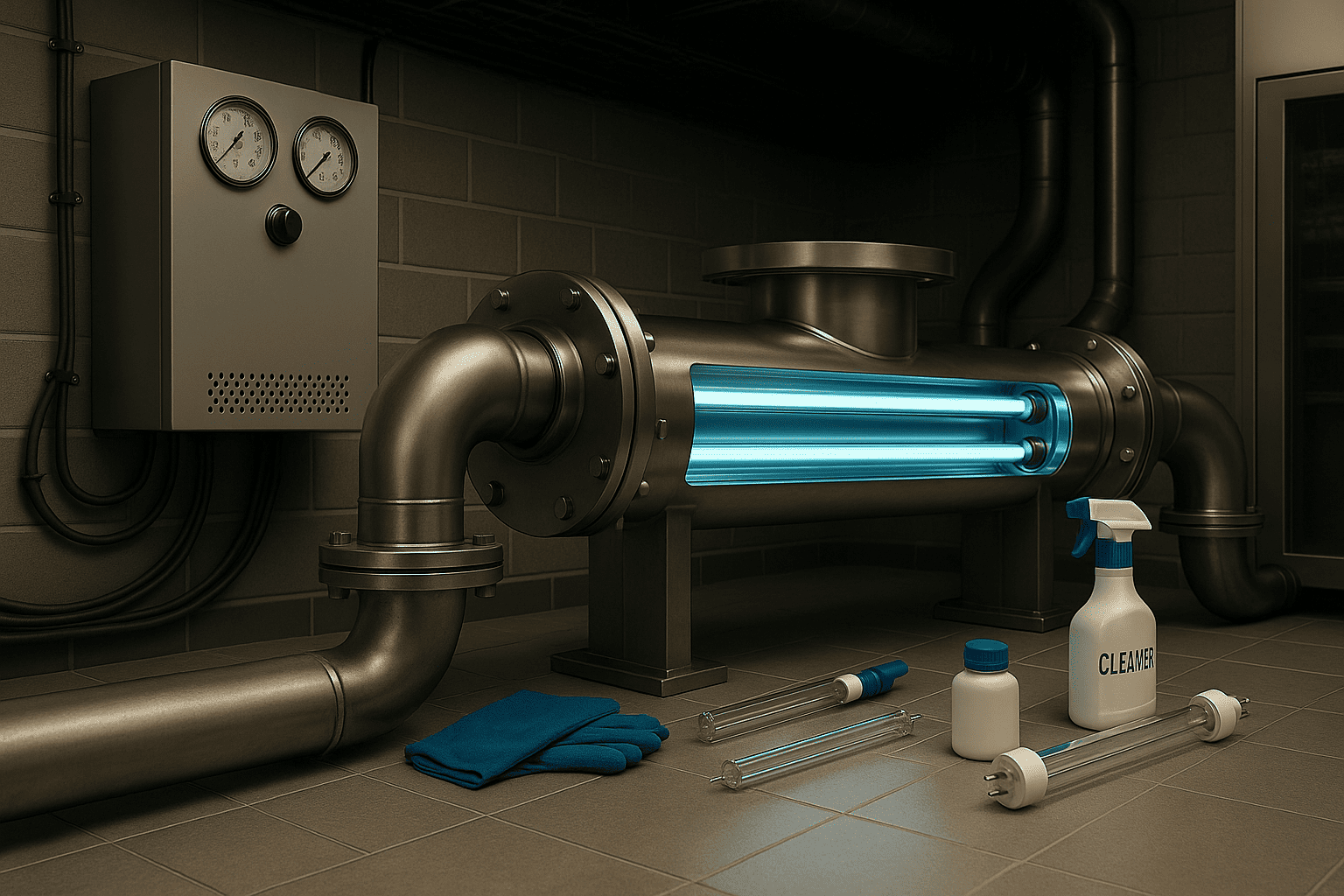 UV Disinfection System Maintenance in Wastewater - UVL
So, Which System Is Actually the Best?
There is no single champion. For water in high-flow industrial use, get a medium-pressure unit with auto-wipers. For air in ductwork, pick a low-pressure, high-output 254 nm lamp with proper contact time. For surfaces, use mobile pulsed-xenon robots for periodic deep cleans, and LED tunnels for continuous processing.
And here’s the secret sauce: pre-cleaning. UV is brilliant, but it’s not magic. Dirt hides microbes. You still need to scrub surfaces and filter water. UV is your finisher, not your main fighter. Treat it like a sniper—deadly accurate if you set things up right, but useless in a muddy brawl.
Now go forth and bathe your industry in invisible, death-dealing light. Just, uh, wear goggles. And don’t drink the margarita.
