Best Portable Water Softener

So, picture this: It’s my first time camping in the mountains, I’m feeling all Bear Grylls, and I fill my kettle from a pristine-looking stream. Ah, nature’s finest, I thought...

So, picture this: It’s my first time camping in the mountains, I’m feeling all Bear Grylls, and I fill my kettle from a pristine-looking stream. Ah, nature’s finest, I thought. Ten minutes later, I’m spitting out what looks like chalky sand, and my coffee tastes like a wet rock. That’s when I learned the hard way: “pristine” often means “full of calcium and magnesium.” That mineral-heavy flavor? That’s the calling card of hard water—and it’s a nightmare for your gear, your skin, and your morning brew.
That little disaster got me hooked on a weirdly specific topic: portable water softeners. You know, those compact little gadgets that promise to turn your mineral-laden disaster into a silky, soap-friendly dream. And honestly? They’re not just for campers or RVs anymore. If you’ve ever tried washing your hair in a hotel shower and felt like you’d rubbed it with sandpaper, you already know the struggle. A portable softener is basically a pocket-sized miracle worker—no plumber required.
Wait, why do I even need one?
Here’s the thing: hard water isn’t just about taste—it’s a tiny, crusty war on your appliances. That white scale buildup inside your coffee maker? That’s hard water leaving its calling card. It clogs shower heads, ruins the lather on your soap, and makes your laundry feel stiff even after a rinse cycle. In an RV or during a road trip? The same problem multiplies because you’re stuck with whatever water you find along the way.
Must Read
A portable water softener is your on-the-go bodyguard. It uses a resin (usually a special salt-free or salt-based exchange) to swap out those calcium and magnesium ions for gentler sodium or potassium ones. The result? Softer water that leaves your skin happy, your coffee tasting clean, and your pipes scale-free. No electricity, no permanent installation—just a clever little canister that does the heavy lifting. Yes, it’s that simple—and yes, I bought one the day after my chalky coffee incident.
The real-world champions (and their quirks)
Let’s talk brands, because not all softeners are created equal. The On The Go OTG4-DLSO is the heavyweight champion for RVs and large trips—it hooks right into your garden hose, uses salt to regenerate, and can soften up to 1,500 gallons. But it’s bulky; you won’t fit it in a backpack. On the flip side, the Pelican NaturalSelect NS3 is a slim, salt-free cartridge system that’s perfect for a tiny home or a weekend getaway. Pro tip: salt-based models need to be recharged with brine, so if you’re boondocking, a salt-free option might be less fussy.
:max_bytes(150000):strip_icc()/ProAqua--Portable-Water-Softener-d397e2c7af8b4ed299bdcb3afe08705e.jpg) The Best Water Softeners The Spruce Has Tested
The Best Water Softeners The Spruce Has Tested
Then there’s the budget-friendly AquaBliss SF100—it’s a showerhead filter that claims to soften water, but let’s be real: it’s more of a sediment and chlorine reducer than a true softener. It’s fine for your skin, but don’t expect it to save your coffee maker. For a true portable softener, you want something that connects before the point of use—like a whole-system cartridge that treats all your tap water. That’s the sweet spot for campers or tiny-home dwellers.
The awkward truth: it’s not all rainbows
I have to keep it real with you: portable water softeners aren’t magic. If you’re on extremely hard water (think 300+ ppm), a small cartridge might need regenerating every other day, which is a pain. And salt-based ones? They discharge brine water back into the environment—not ideal if you’re trying to leave no trace at a national park. Always check your local regulations before dumping anything, okay? Nobody wants to be that person who accidentally pollutes a creek.
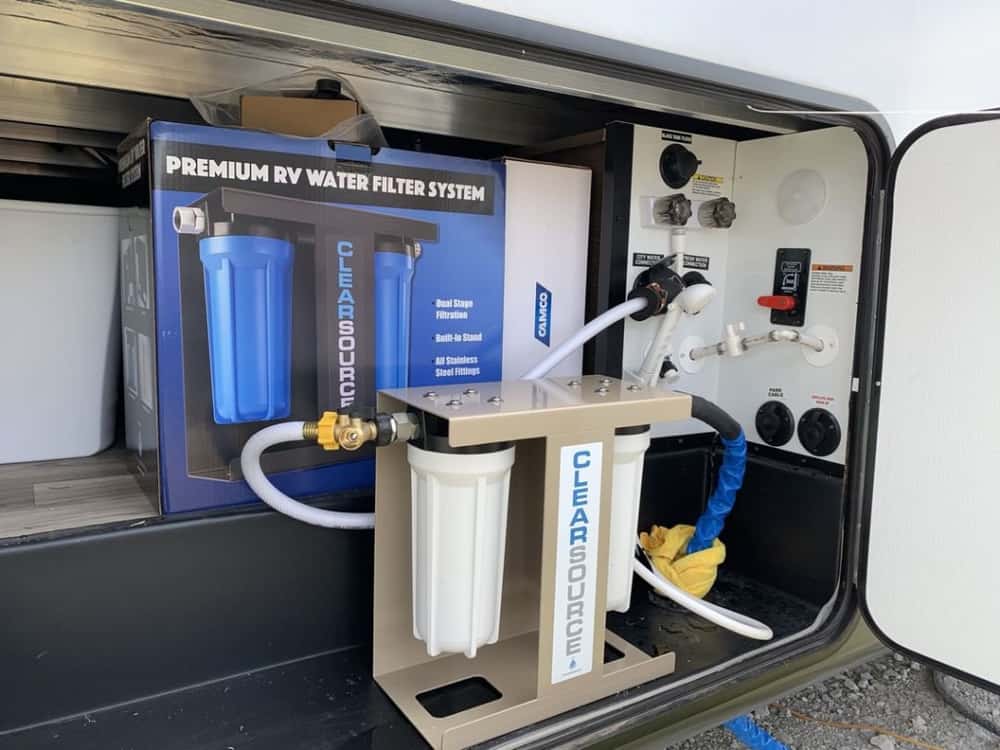
 The 7 Best RV Water Softeners 2026
Also, the price tag can sting—a good unit runs $100 to $300. But consider this: replacing a clogged water heater or coffee maker costs way more. And honestly, the first time you wash dishes with soft water and they actually squeak clean? Pure bliss. Just be ready to read the manual; some models need a specific pressure rate or a backflush kit. I once hooked mine up wrong and spent ten minutes chasing a geyser in my driveway. Learn from my mistakes, friend.
So, should you buy one?
If you’re an RV nomad, a van-lifer, or just someone who travels to places with sketchy well water, yes, absolutely. Look for one that fits your flow rate (usually 5-10 gallons per minute is fine) and matches your regeneration style. For road trips with minimal space, a salt-free cartridge like the Springwell CIPIO is compact and lasts months. But if you’re crashing at a friend’s cabin with a gnarly well? The salt-based On The Go models are your ticket.
Here’s my honest take: The best portable softener is the one you’ll actually use. Don’t overthink it. Grab a mid-priced model from a reputable brand (they look ugly but work), test it at home first, and enjoy that silky, scale-free life. And next time you’re staring at a mountain stream? Fill your bottle without fear—just run it through the softener first. Your coffee—and your hair—will thank you.