Minerals To Add To Reverse Osmosis Water

You know that feeling when you drink a glass of water and it tastes like nothing? Like, absolutely nothing? That’s the magic—and the curse—of reverse osmosis (RO) water. My bu...
You know that feeling when you drink a glass of water and it tastes like nothing? Like, absolutely nothing? That’s the magic—and the curse—of reverse osmosis (RO) water.
My buddy Dave spent $400 on a fancy RO system, then complained his water was “too clean.” He said it was like drinking a ghost. And he wasn’t wrong.
RO water is incredible for stripping out lead, chlorine, and weird tap funk. But it also strips out the good stuff—minerals that give water life and taste.
Must Read
Think of it like eating a plain, boiled potato when you could have one slathered in butter and salt. You need the extras.
The Big Three: Calcium, Magnesium, and Potassium
These are the rock stars of mineral water. Calcium is your bones’ best friend, but in water, it adds a smooth, creamy mouthfeel.
Ever wonder why store-bought spring water feels silky? Thank calcium. Without it, RO water feels like wearing wet socks—thin and slightly sad.
Magnesium is the chill cousin. It gives water a slight sweetness and helps you relax after a long day of chasing kids or spreadsheets.
Potassium is the unsung hero. It keeps your muscles happy and stops that mid-afternoon slump where you stare at the wall for ten minutes.
You can buy these as a drop set or a pre-mixed powder. Pro tip: Get a formula that balances all three, not just calcium. Your water will taste like a spa, not a chalk factory.
The Trace Minerals: Zinc, Silica, and Selenium
These are the nerd squad of minerals—tiny but mighty. Silica, for example, makes your hair and nails feel like superhero armor.
My sister-in-law, Karen, added silica to her RO water and swore her split ends vanished. I think it’s 30% science, 70% placebo, but she’s happy, so I’m not arguing.
Zinc is for your immune system. If you’re like me and catch every cold your toddler brings home, a little zinc in your glass is your new best friend.
Selenium is the quiet one. It helps your thyroid work without throwing a tantrum. You don’t need much—just a pinch, like salt on a chocolate chip cookie.
How to Add Minerals Without Feeling Like a Chemist
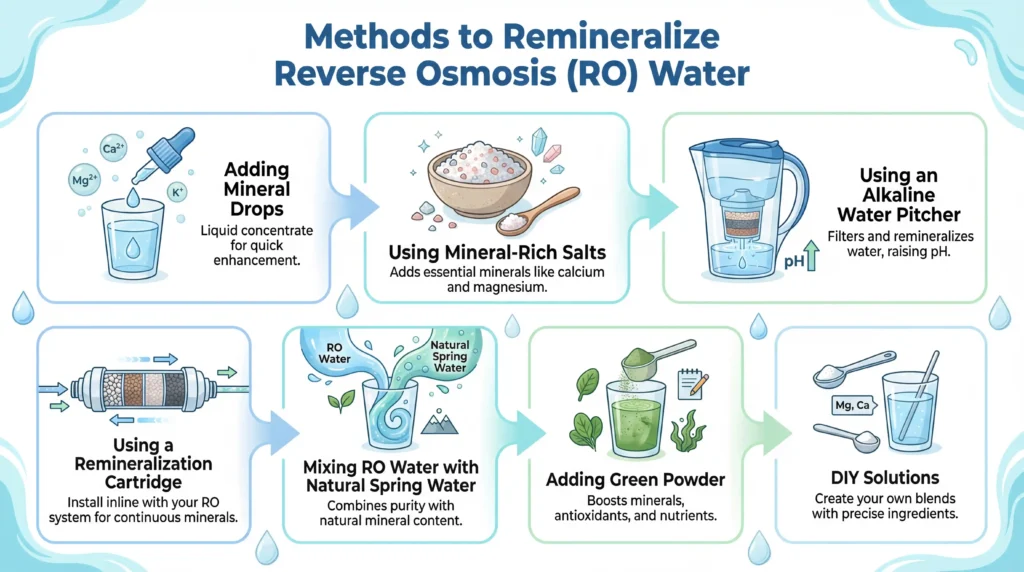
There are three ways to do this, and only one way that won’t make you cry. First, you can buy mineral drops. They come in little glass bottles and you add three drops per glass.
It’s like flavoring your water but with actual health benefits. I use a brand called “Trace Minerals” and I look like a mad scientist shaking my bottle.
 RO Water Filter PH Alkaline KDF Carbon RO Inline Water Filter – 3-Stage
Second, you can buy a remineralizing filter that attaches to your RO system. It adds minerals automatically, like a tiny robot bartender.
Third—and this is the lazy genius move—you can add a pinch of sea salt or Himalayan salt to your glass. Wait, before you gag: a super tiny pinch (like 1/16 of a teaspoon) adds 70+ trace minerals.
My neighbor, Greg, does this and swears his water tastes like a mountain spring after a rainstorm. I tried it, and honestly? It just tasted like slightly salty water. But Greg is a drama queen.
What About Pre-Bottled Mineral Water?
Sure, you could buy those fancy glass bottles at the store. But your wallet will weep. We’re talking $4 per liter for water that’s literally been inside a plastic bottle for six months.
Making your own mineralized RO water costs about 10 cents per gallon. That’s the difference between a daily latte and a daily mortgage payment.
Plus, you control the flavor. You want a zesty, citrusy mineral feel? Add a drop of lemon juice with your minerals. You want a smooth, neutral base? Skip the lemon and use a balanced formula.
The Pitfalls: Don’t Overdo It
Here’s where the fun ends and the lecture begins. You can over-mineralize your water, and your kidneys will send you a very angry text.
Too much calcium can make your water taste like chalk dust at a karate class. Too much magnesium? You might end up with a stomach that sounds like a washing machine on spin cycle.
Start with half the recommended dose. Taste it. Then adjust. Treat it like making pasta water—you want it salty enough to notice, not so salty you cry.
Final Thought: Your Water, Your Vibe
At the end of the day, RO water is a blank canvas. You can paint it however you like. Some people are fine with the “plain ghost” flavor—no judgment, really.
But if you want water that makes you feel alive, that slips down your throat with purpose, then add some minerals. It’s cheap, it’s easy, and it’s way better than that plastic bottle you bought at the airport.
So go ahead. Be a water snob. Your taste buds—and your bones—will thank you. And if anyone asks why you’re adding pink salt to your drinking water, just say, “I’m optimizing my life.” They’ll nod, confused, and go back to their soda.
