Eliminating Sulfur Smell From Well Water

So, you’ve moved to the country for the peace and quiet, and you turn on the tap for a nice, crisp glass of water. Instead, your kitchen smells like a dragon’s armpit after a...
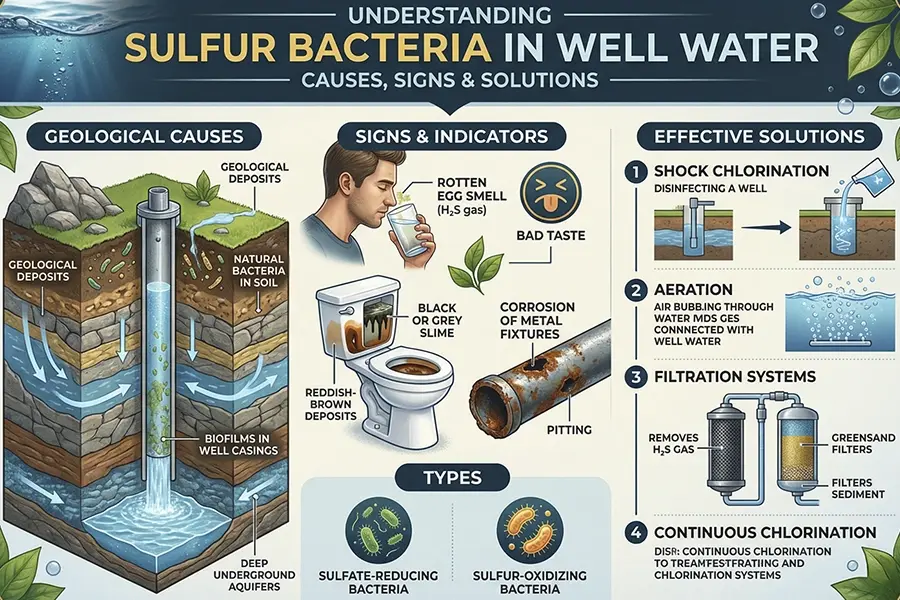
So, you’ve moved to the country for the peace and quiet, and you turn on the tap for a nice, crisp glass of water. Instead, your kitchen smells like a dragon’s armpit after a three-day bender. That, my friend, is the infamous sulfur smell—technically hydrogen sulfide gas, known to polite society as “that rotten egg funk.”
Relax. You don’t have to sell your farm and move to a high-rise condo with filtered water from Poland Spring. This smell is actually a solvable problem, and I’m about to be your plumber-with-a-sense-of-humor for the next few minutes.
Here’s the weird science: the sulfur smell isn’t coming from a dead mouse in your pipes (probably). It’s from sulfur bacteria living in your well or water heater. These little guys eat the natural sulfur in your groundwater and, as a thank-you gift, they burp out hydrogen sulfide gas.
Must Read
Think of it as your plumbing system having a very aggressive, very gassy roommate. The good news? You don’t need to evict the bacteria. You just need to neutralize their stinky emissions.
Step 1: Diagnose the Drama
Before you start buying expensive gadgets, let’s figure out who’s the culprit. Fill a glass of cold water from your tap. If it smells only when the water comes out hot, you’ve got a lazy water heater.
Your water heater’s anode rod (a sacrificial metal tube inside) can react with sulfate to create that gas. It’s like the rod is having a chemical argument with the water, and you’re stuck smelling the result. The fix is cheap and easy.
If the cold water smells like a rotten egg immediately, the problem is deeper—literally, in your well. In that case, skip the rod and brace yourself for bigger options. But don’t worry, we’ll get there.
The $20 Fix: The Sacrificial Anode Rod Trick
If hot water is your only nightmare, you’re in luck. Your water heater has a metal rod called an anode rod that attracts corrosive elements to protect the tank. That rod can also turn your water into farts.
You can replace that standard aluminum or magnesium rod with a zinc-aluminum alloy version. Zinc muzzles the sulfur bacteria. It’s like putting a mime in a room full of opera singers—the noise stops.
Cost? About twenty bucks. Labor? A Saturday afternoon and one YouTube tutorial. Pro tip: shut off the water heater and the gas or electricity, or you’ll become a human steam geyser. Not a good look.
Step 2: The "Shock" Treatment (Your Well’s Spa Day)
If the smell is coming from both taps—hot and cold—your well itself has a bacteria party going on. Your best move is what pros call “shock chlorination.” It sounds dramatic, like you’re about to waterboard your aquifer, but it’s just pouring a gallon of bleach down your well.
Here’s the surprising fact: you don’t use scented bleach. Use plain, unscented sodium hypochlorite. If you use “Fresh Lavender Burst” bleach, you’ll get lavender-scented rotten eggs, which is somehow worse.
Turn on every hose and faucet until you smell bleach coming out. Let it sit for 12 to 24 hours. Then flush, flush, flush until the chlorine is gone. Your water will be sterilized, and your neighbors will think you’ve opened a very aggressive laundromat.
 Your Ultimate Guide to Well Water Sulfur Smell Removal
The "But I Don’t Want to Smell Like a Pool" Alternative
If shocking the well sounds like a chemistry experiment you weren’t invited to, consider a continuous chlorinator. It’s a small pump that injects a tiny, safe amount of chlorine into your water line. It kills the sulfur bacteria before they can burp in your glass.
Yes, it requires a little maintenance—refilling the chlorine tank every month. But you can set it and forget it, like a slow cooker for clear, non-farty water. Plus, you’ll sound super technical when guests ask, “Why does your water taste like a hospital?”
You say, “It’s my continuous chlorination system. The aftertaste fades after twenty seconds.” They’ll be impressed, or they’ll never drink your water again. Either way, you win.
Step 3: The Fancy Gadget Play—Ozone and Aeration
For the truly fed-up homeowner, there’s aeration. This is the professional, handyman-equivalent of throwing your water into a washing machine with a shot of oxygen. It blasts the water with air, which oxidizes the sulfur gas and sends it down the drain before it reaches your sink.
Another trick: ozone generators. Ozone smells like a lightning storm (which is cool) and destroys the sulfur molecule instantly. It’s like giving your well water a superpower punch to the nose.
Downside? These systems cost between $1,000 and $5,000. But if you’ve been gagging every time you brush your teeth for three years, that price might feel like a steal.
One Weird Homeowner Trick That Actually Works
Before you spend a dime, try running the water for 30 seconds. Sometimes, sulfur gas is just sitting in the pipes after a long night. Let it gurgle out. If the smell vanishes after a short flush, you just need to install a simple “water hammer” arrestor or a simple air injector.
But if you run the water for a minute and it still smells like a broken sewer at a county fair, you’ve got a real problem. Don’t panic. Just call a local well specialist. They’ve seen worse—literally. I’m talking wells so sulfur-rich they could be used as a novelty smell museum.
The bottom line: Sulfur water is a hassle, but it’s not poison. You can drink it (though you’ll feel like you’re kissing a matchstick). The fix is almost always cheap and straightforward. And think of the upside: no one will ever try to steal your tap water at a party.
So go forth, well owner. Shock your system. Swap your rod. Buy a $5,000 ozone machine if you’re feeling fancy. Just know that once the smell is gone, you’ll miss it. Just kidding—you’ll be too busy enjoying that sweet, sweet unscented H2O. Cheers!
