Is Reverse Osmosis The Same As Distilled

So, you’re standing in the water aisle at the grocery store, staring at jugs labeled “Reverse Osmosis” and “Distilled.” It feels like a science pop quiz you didn’t study for,...
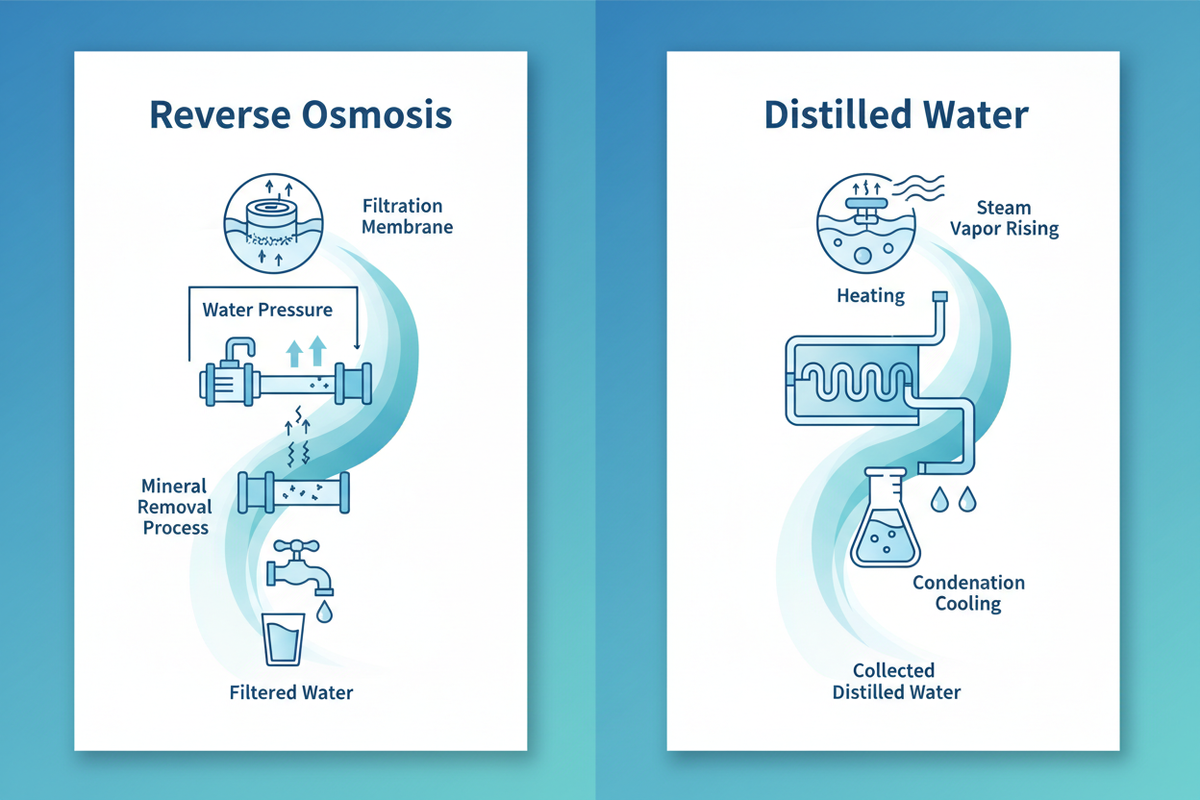
So, you’re standing in the water aisle at the grocery store, staring at jugs labeled “Reverse Osmosis” and “Distilled.” It feels like a science pop quiz you didn’t study for, right? Don’t worry—I’ve got your back, and I promise we’ll make this fun.
The Short Answer: Nope, They’re Not Twins
Reverse osmosis and distilled water are not the same thing, though they share a goal: making water super pure. Think of them as two different party tricks that both end with a sparkling clean dance floor.
Distilled water is like a steamy spa day for H2O. You boil it, catch the steam, and let it condense back into liquid, leaving minerals and gunk behind.
Must Read
Reverse osmosis is more like a high-pressure bodyguard for your water. It forces water through a special membrane that blocks almost everything except the water molecules themselves.
Let’s Break It Down (Without the Headache)
Distillation relies on heat—lots of it. You boil water until it turns to vapor, and then you cool that vapor back into a pristine liquid. It’s ancient, reliable, and honestly a bit dramatic (in a good way).
Reverse osmosis, or RO, uses pressure and a semi-permeable membrane. Imagine a microscopic bouncer at a club who only lets the tiny water molecules through, while salts, bacteria, and even some viruses get turned away at the door.
Both processes remove over 99% of impurities, but they do it differently. Distillation vaporizes and re-condenses; RO filters under pressure. The result? Two different flavors of purity.
What This Means for Your Water Glass (and Your Life)
Distilled water is famously flat and “empty” tasting because it has no minerals. It’s great for steam irons and car batteries, but drinking it long-term? Some folks say it feels like drinking a cloud—literally nothing there.
Reverse osmosis water, on the other hand, often retains a tiny bit of dissolved solids (like a whisper of calcium), so it can taste smoother and more refreshing. You’ll actually want to gulp it.
Here’s the kicker: which one is “better” depends on your vibe. If you’re a science nerd who loves watching steam rise, distillation is your jam. If you’re a convenience lover who wants clean water on tap, RO systems are modern marvels.
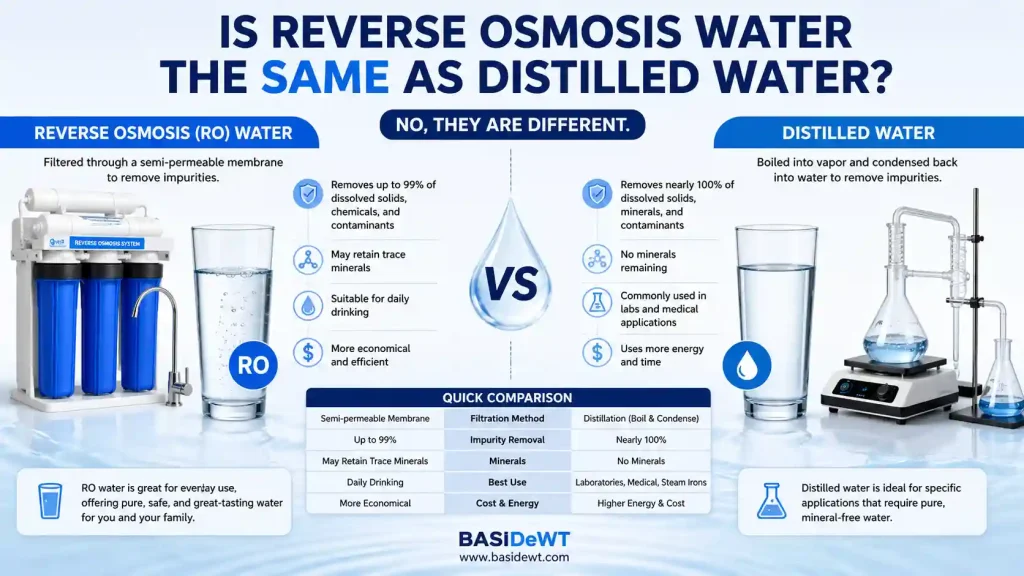 Is Reverse Osmosis Water the Same as Distilled Water? - Basidewt-Best
The Fun Twist: They Can Be Best Friends
Some water nerds actually use both! They’ll run water through RO first, then distill the result for ultra-pure lab-grade stuff. It’s like giving your water a double VIP treatment.
And here’s the truly inspiring part: understanding this isn’t about being a water snob. It’s about realizing that even something as simple as water has layers of wonder to explore.
Why This Makes Life More Fun
Next time you’re at a dinner party, you can casually drop, “You know, reverse osmosis isn’t the same as distilled—one uses pressure, the other uses steam!” Watch the jaws drop. You’ll be the water wizard.
Or try a taste test at home: buy a bottle of each and sip them side-by-side. Notice the difference. It’s like comparing a fresh spring rain to a silent, foggy morning. Both are beautiful, just different.
The real magic? You now have a tiny superpower: the ability to choose. You know what’s in your glass, and that’s a gift of curiosity.
Your Uplifting Takeaway
So, reverse osmosis is not the same as distilled. But that’s fantastic news—it means our world is full of clever solutions for everyday things. Water, that humble liquid, has so many stories to tell if we just ask.
Inspired yet? Good. Go explore something else you’ve been curious about. Whether it’s the pH of your coffee or the secret behind a perfect ice cube, every answer opens a new door. Stay thirsty for knowledge—literally and figuratively.
