Distilled Water Vs Reverse Osmosis Water

So, You’re Thirsty for the Truth? Ever stood in the water aisle, staring at two clear jugs, feeling a bit like a lost puppy? You’re not alone. Distilled water and reverse osmo...
So, You’re Thirsty for the Truth?
Ever stood in the water aisle, staring at two clear jugs, feeling a bit like a lost puppy? You’re not alone. Distilled water and reverse osmosis water are the two big players in the “pure water” game. But which one is actually worth your time (and your money)?
Let’s dive in, nice and easy, like a splash into a cool pool. No lab coats required today.
The Basics: What’s the Big Deal?
Think of your tap water as a busy city park. It’s got minerals, tiny particles, and maybe a few unwanted guests like chlorine or lead. Both distillation and reverse osmosis (RO) are like a fancy security team kicking those guests out.
Must Read
They want the same result: ultra-pure H₂O. But, and this is the fun part, they do it in totally different ways.
Distilled Water: The Old-School Steamer
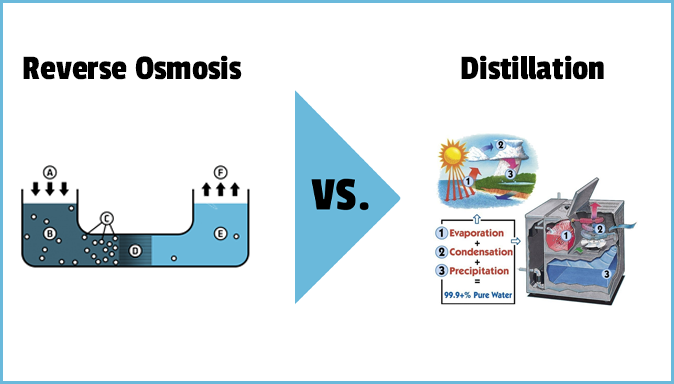
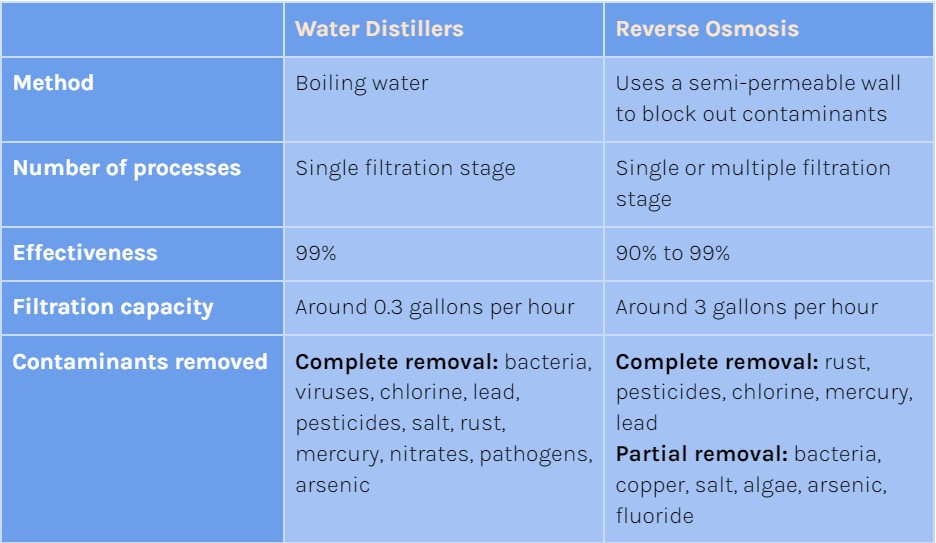
Distillation is the slow cooker of water purification. You boil the water until it turns into steam. The steam leaves all the bad stuff—minerals, bacteria, heavy metals—behind. Then you condense that steam back into liquid water.
It’s simple, almost poetic. It mimics how nature makes rain, just on your countertop. The result? Water so pure it’s practically naked.
But here’s the catch: it’s thirsty work. It takes a lot of energy to boil all that water, and it’s slow. You’ll be waiting a while for a single glass.
Reverse Osmosis Water: The Fancy Filter
Now, reverse osmosis is the smart gadget of the water world. It uses pressure to push water through a super-tiny membrane. Think of it as a microscopic bouncer that only lets water molecules slip through. Everything else—even itsy-bitsy contaminants—gets kicked out.
It’s fast, efficient, and usually sits under your sink. You turn the tap, and boom, you get clean water instantly. Pretty cool, right?
The downside? It wastes some water during the process. For every gallon of pure water, you might lose a couple of gallons down the drain. It’s the price you pay for convenience.
Which One Wins the Taste Test?
Honestly? They both taste a bit… flat. When you remove all those natural minerals like calcium and magnesium, water loses its “zing.” It’s like listening to a song with no bass.
Some people love that blank-slate taste. Others say it feels like drinking nothing. Ever licked a clean spoon? It’s a similar vibe.
If you want that crisp, refreshing mountain-spring taste? You’ll actually miss the minerals. Pure water is a silent friend, not a party guest.
 What do you use distilled water for? - Dr Alice Williams
Is One “Better” for Your Health?
Here’s where things get a little sticky. Both methods get rid of bad stuff like lead, arsenic, and fluoride. That’s a win for your body. But they also strip out the good minerals.
So, should you worry? Probably not. Most of your daily minerals come from food, not water. A handful of spinach has more calcium than a gallon of tap water.
The real danger is if you drink only this pure water for months. Then, your body might leach its own minerals to balance things out. But for everyday use? You’re safe. Just eat your veggies.
The Fun Comparison: Car Wash or Rain?
Think of distilled water like a thunderstorm. It’s a natural, powerful cleanse that happens in dramatic fashion (boiling!). It’s thorough but temperamental.
Reverse osmosis is like an automatic car wash. You put your car in, and a precise machine blasts every spec of dirt off. Fast, consistent, but uses a bit more water than you’d like.
You choose the style. Both clean the car. Both get the job done.
So, Which One Should You Pick?
If you’re a patient minimalist who likes the idea of a natural process, grab a countertop distiller. It’s great for filling a humidifier or watering sensitive plants (they hate minerals). Just be ready to wait.
If you’re a busy bee who wants clean water on demand, a reverse osmosis system is your jam. It’s perfect for your kitchen tap, especially if you make coffee or tea. Way better than tap water for a clean brew.
Personally? I keep a little distiller for my bedroom humidifier (no white dust!) and an RO filter for my drinking water. Best of both worlds, you know?
A Final, Chill Thought
At the end of the day, both are just water. They are great tools if you live somewhere with funky tap water or have specific needs. But don’t stress. A Brita filter is perfectly fine too.
The coolest thing is that we get to choose. Science gave us two totally different ways to make a sip of water clean. That’s pretty rad, isn’t it? So, grab a glass of whatever makes you smile, and stay hydrated, friend.
