How Do You Turn Off The Hot Water Supply

So, you’ve finally decided to fix that drippy faucet. Or maybe you’re about to install a new showerhead that promises to massage your back like a tiny, well-paid octopus. But...
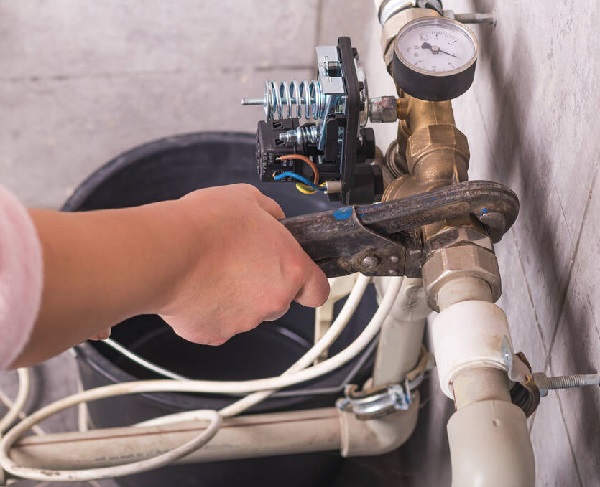
So, you’ve finally decided to fix that drippy faucet. Or maybe you’re about to install a new showerhead that promises to massage your back like a tiny, well-paid octopus. But then, a cold dread creeps in: “How do I turn off the hot water supply without flooding my basement?” Don’t panic. You are about to become a plumbing detective, and this is your first clue.
The Great Hot Water Heist: Locating the Target
First, you need to understand that hot water doesn't magically appear from a tiny dragon living under your sink. It comes from a big, metal cylinder—your water heater—which is usually hiding in the garage, basement, or a closet like a teenage gamer avoiding chores. If you live in an apartment, your heater might be a shared beast in a locked utility room. Sorry, but you’ll have to sweet-talk the super for that one.
Now, approach your water heater. Give it a respectful nod. It has heated your socks and your bathwater for years without thanks. On this tank, you will find two important valves, and mixing them up is like mistaking salt for sugar in a cake—disastrous. One is a gas or electric control (leave that alone for now), and the other is the star of our show: the cold water inlet valve.
Must Read
The Golden Rule: Cold In, Hot Out
Here’s the surprising fact that saves you from scalding: You never turn off the hot water output. That pipe carries steaming, pressurized water that will burn you faster than a bad breakup. Instead, you kill the source. The cold water pipe that feeds into the tank. Think of it like shutting down a water park—you don’t drain the slides; you stop the pump at the top.
Find the pipe on top or side of the heater that feels cool to the touch (use your knuckles first; do not be a hero). Follow it until you see a brightly colored handle, usually red or blue. This is your valve. If it’s a lever, turn it 90 degrees until it’s perpendicular to the pipe. If it’s a wheel, turn it clockwise until it stops—righty-tighty is your new best friend.
When the Valve Plays Hide-and-Seek (Or Decides to Break)
Ah, the classic plot twist. You find the valve, but it’s a rusty, ancient relic from 1987. You twist, you grunt, you sweat—and nothing happens. This is where the casual “fixer-upper” becomes a comedy of errors. Stop twisting before you snap the handle off and create a real gusher. Surprising fact: Most home flooding emergencies start with a homeowner who “just wanted to tighten it a little more.”
If the valve is stuck, grab a pair of pliers and gently wiggle the handle. If it still won’t budge, you have two options: call a plumber or pull the entire supply line. Do not choose option two while holding a coffee. Option one is smarter, but if you’re stubborn, you can shut off the main water valve to your entire house. That’s the nuclear option—you’ll kill the cold water too, so flush your toilet and fill a kettle before you do it.
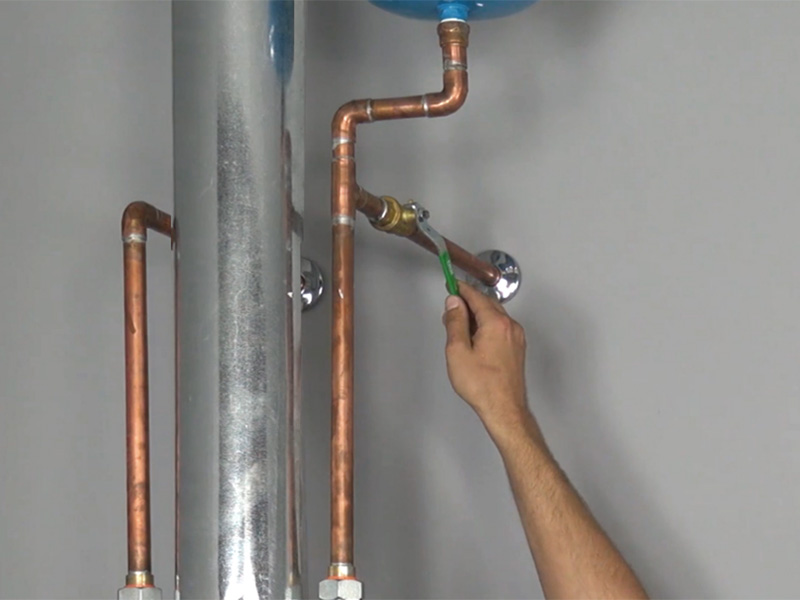 How to Turn a Water Heater On & Off | A. O. Smith
A Warning About Gas Heaters (Or, Please Don’t Explode)
Here’s where we separate the pros from the pyromaniacs. If you have a gas water heater, turning off the cold water doesn’t turn off the gas. The burner will still try to heat an empty tank, which is like putting a pot on the stove and forgetting to add water. It can damage the tank or, in worst-case scenarios, create a pressure bomb. To be safe, after you shut the cold water, also turn the gas knob to “Pilot” or “Off.”
Wait—did you just smell gas? No, that’s your anxiety. But if you do, step away, don’t flip any switches, and call a professional. Your water heater is not a training montage from a 90s action movie.
The Final Step: Draining the Beast (If You Must)
So the water is off. Great. But the tank is still full of hot water, lurking like a passive-aggressive ex. If you’re replacing the heater or fixing something below it, you need to drain it. Hook a garden hose to the drain valve near the bottom of the tank. Run the hose outside or into a floor drain. Open the valve and listen to the gurgle of shame as the water leaves.
Here’s a pro tip: open a hot water faucet in your bathroom first. This lets air into the system, so the water doesn’t vacuum-lock and refuse to drain. It’s the plumbing equivalent of saying “open sesame” but with less magic and more dribbling. Be patient—draining a 40-gallon tank takes about 20 minutes, or the length of one and a half episodes of your favorite sitcom.
And when you’re done, remember to close the drain valve. Then, slowly open your cold water valve again. Listen for the hiss. If you hear a geyser or a whistle, you did something wrong. If you hear nothing but silence, congratulations. You have tamed the hot water beast. Now go wash your hands—cold, obviously.
