Difference Between Purified And Distilled

You’re standing in the grocery aisle, staring at two identical-looking plastic jugs. One says “Purified Water,” the other “Distilled Water.” Your brain does a little glitch, a...
You’re standing in the grocery aisle, staring at two identical-looking plastic jugs. One says “Purified Water,” the other “Distilled Water.” Your brain does a little glitch, and you wonder: Are they the same? Spoiler alert: they are not, and the difference is way more interesting than you’d think.
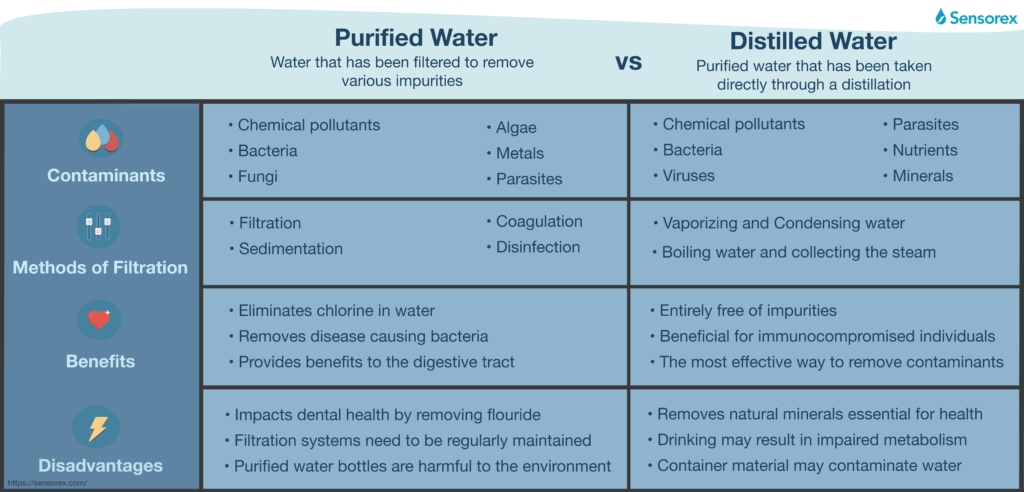
Let’s clear the air—or rather, the water. Both processes aim to remove impurities, but they do so in completely opposite ways. Think of purified water as a high-tech spa day for your tap water, while distilled water is more like a dramatic, transformative retreat.
Purified water goes through multiple filters—carbon, reverse osmosis, or UV light—to strip away chemicals, bacteria, and even that faint municipal swimming pool taste. It’s the cool minimalist of the water world: efficient, modern, and clean. About 60% of bottled water sold in the U.S. is purified, so you’ve probably been drinking it forever without even knowing.
Must Read
Distilled water takes the long way home. It’s boiled into steam, then cooled back into liquid, leaving behind almost everything—minerals, heavy metals, and even microscopic lounge lizards. The result is water so pure it’s practically scientifically empty. Fun fact: distilled water can pull minerals out of your body if you drink it exclusively, which is why most docs say don’t make it your daily go-to.
Here’s where it gets practical: you wouldn’t use a sledgehammer to hang a picture, so you shouldn’t use distilled water to make your morning coffee. Purified water is your all-star for drinking, cooking, and watering your sourdough starter. It keeps you hydrated without taking your body’s mineral reserves hostage.
Distilled water, however, is the unsung hero of your appliances. That steam iron that spits out chalky white residue? That’s mineral buildup. Use distilled, and your clothes stay crisp. Your car’s battery, your humidifier, even your beloved espresso machine—they all thank you when you feed them distilled. It’s like giving them a mineral-free diet to extend their lives.
Pop culture check: remember the scene in Breaking Bad where they cook meth in a desert RV? They used distilled water because it’s free of impurities that could mess up their chemistry. For us normals, it’s less about illicit recipes and more about keeping your baby’s formula safe—distilled is recommended for mixing formula because your baby’s immune system is still learning the ropes.
Taste test time. If you’re a flavor-forward water snob (we see you, San Pellegrino fans), purified water wins by a landslide. Distilled can taste flat or “stale” because it lacks the minerals that give water body. Purified keeps a light mineral profile if filtered gently, making it crisp and refreshing.
But here’s the twist: the health community is split. Some wellness influencers swear by distilled for “deep cellular detox,” while others say it’s a fast track to electrolyte imbalance. The smart middle ground is: drink purified for hydration, use distilled for everything that touches metal or electronics. You’re not a lab rat; you’re a human who enjoys good coffee and iron-free shirts.
Let’s get geeky for a second. Did you know that distilled water is used in hospitals for dialysis? It has to be so pure that even a speck of copper could be dangerous. That’s why distilled is considered the “gold standard” of pure water—but for daily life, it’s overkill. It’s like taking a Formula 1 car to pick up groceries.
Practical tip: if you’re on a budget, a simple water filter pitcher gives you purified water for pennies per gallon. For distilled water, you can buy it by the gallon at the drugstore, or invest in a countertop distiller (looks like a spaceship, works like magic). Either way, label reading becomes your new party trick.
 Water Showdown: Purified vs. Distilled - Mr Water Distiller
Cultural cameo: in Japan, distilled water is often used in kōdō (incense ceremony) to preserve delicate wooden tools. Meanwhile, purified water is the base for their vending-machine teas. Age-old wisdom meets modern convenience—both have their place, one ceremony at a time.
One final myth buster: boiling tap water does not make it distilled or purified. Boiling kills germs, but it doesn’t remove heavy metals, pesticides, or that weird aftertaste. Think of it as a light rinse for your water, not a full detox.
So, next time you’re at the store, remember this: purified is for you, distilled is for your stuff. Grab a jug of purified for sipping, and a small bottle of distilled for your humidifier or the iron. Your body and your appliances will send you a thank-you note—probably in the form of better health and no scale buildup.
Quick Cheat Sheet
Drink purified—it’s balanced, tasty, and supports your mineral levels. Use distilled—for baby formula, CPAP machines, car batteries, and steam irons. That’s the whole enchilada.
A Fun Little Fact
NASA uses reverse osmosis (purified) water for astronauts on the ISS because it’s efficient. But when they stored water for the Apollo moon missions, they used distilled to avoid any chemical reactions in zero gravity. Space water, y’all.
Wrap your head around this: in some Indonesian villages, people collect rainwater (which is technically distilled by nature) for drinking. It’s the same principle, minus the energy bill. Mother Nature was the original distiller—she just takes a little longer.
At the end of the day, water is still water. The difference between purified and distilled isn’t about good or bad—it’s about fit. It’s like knowing when to wear sneakers vs. loafers. One keeps you moving, the other keeps you polished. Both have their moment.
So drink up. Your body is mostly water anyway, and it deserves to know what it’s getting. Whether you choose purified or distilled, you’re already winning—because, honestly, you just drank more water. And that, my friend, is the real health hack.
