Plumber To Install Reverse Osmosis System

Okay, friend. Let’s talk about water. Specifically, the fancy water that comes from a reverse osmosis system. You know the kind—the stuff that makes your tap water taste like...

Okay, friend. Let’s talk about water. Specifically, the fancy water that comes from a reverse osmosis system. You know the kind—the stuff that makes your tap water taste like it flew first-class from a mountain spring. You’ve probably seen the ads, or maybe your neighbor won’t shut up about how clear their ice cubes are.
So, you decided you want one. Great choice! Now comes the part where you stare at the box and realize you have to install it. That’s when the panic sets in. Because let’s be honest—you and plumbing tools have a complicated relationship.
You shouldn’t do this alone. I mean it. Unless you enjoy cleaning up a water-sprayed kitchen floor at 11 p.m. on a Tuesday.
Must Read
The Honest Truth About Your DIY Skills
We all have that one friend who says, “I’ll just watch a YouTube video and save $200.” That friend is currently knee-deep in a puddle, holding a wrench they don’t know how to use. Don’t be that friend.
Reverse osmosis systems aren’t like swapping a showerhead. They involve drilling into your countertop or sink, cutting copper pipes, and connecting a tiny drain tube that looks like it belongs on a medical device. One wrong twist and you’ve got a mini fountain in your cabinet.
And then there’s the pressure. Not the emotional kind (though that’s real too). I mean the water pressure in your pipes. Mess that up and your new system just sits there, sulking, refusing to filter anything.
Why You Should Call a Real Plumber
Plumbers have seen it all. They’ve installed these systems in old houses with weird pipes. They know which fittings actually fit, and they have a special tool for those tight spots under the sink that you can’t even see without a mirror. It’s basically magic.
Plus, they carry the right parts. You know that one random brass adapter you forgot to buy? Yeah. They have three of them in their truck. They’ll have your system humming in about two hours while you stand there nodding and looking impressed.
Let’s talk about the biggest risk: leaks. A tiny drip under your sink that goes unnoticed for weeks? That’s not a drip. That’s a future moldy cabinet and a $500 repair. A plumber will pressure-test everything. They’ll leave your space dry and clean.
The Real Fun Stuff: What the Plumber Actually Does
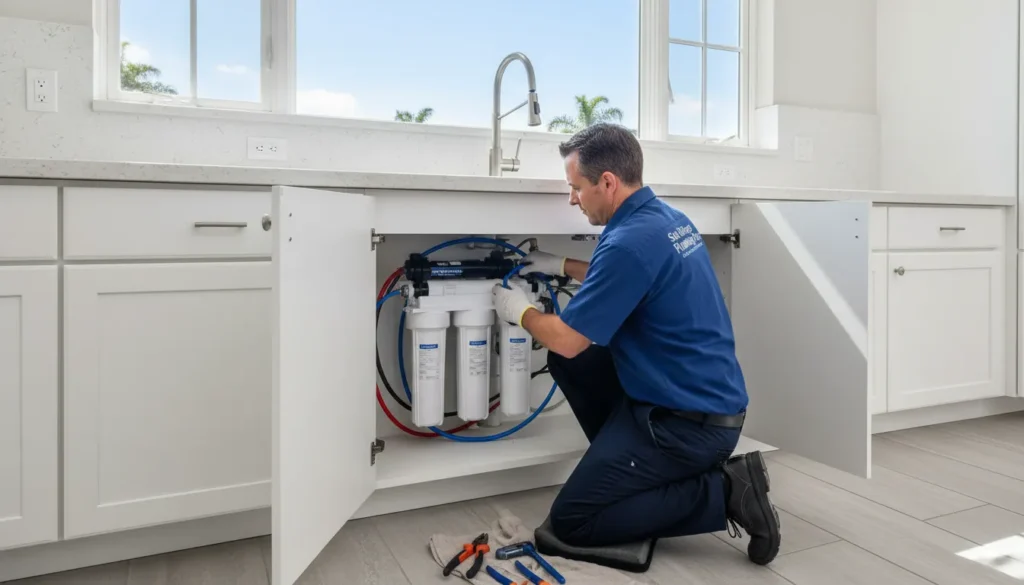
First, they find the perfect spot. They don’t just shove the tank in there. They measure, they wiggle, they contemplate life for a second. Then they make a neat hole in your countertop if you’re getting a dedicated faucet. It’s surgical precision.
 Reverse Osmosis vs Whole House Water Filtration San Diego | Repipe Home
They connect the feed line to your cold water pipe. This is the part that scares me. They use a special valve that doesn’t require soldering. It’s called a saddle valve or a self-piercing valve, and it looks simple—but it’s the number one place where amateurs turn a small job into a flood.
Then they run that tiny, skinny drain line to your sink drain. They drill a small hole or use a clamp. If you did this, you’d probably drop the clip down the garbage disposal. They don’t.
Then Comes the Nervy Part: The Filter Housings
You have to connect the filter canisters in the right order. There’s a sediment filter, a carbon block, and then the reverse osmosis membrane. Sounds like a science experiment, doesn’t it? A plumber does this with their eyes closed. They change O-rings and hand-tighten everything. You’d probably overtighten and crack the plastic.
Finally, they hook it all up, turn the water on slowly, and check for leaks. They watch, they wait, they adjust. It’s meditative. Meanwhile, you’re pacing in the living room, hoping you don’t hear a gurgle.
The Aftermath—and Why You’ll Love It
The plumber leaves. Your sink now has a sleek little faucet that looks like it belongs in a hi-tech kitchen. You pour a glass of water. It tastes clean. Like, almost suspiciously clean. No chlorine. No weird aftertaste. You will become that neighbor now. Sorry about that.
Your coffee will taste better. Your ice cubes will be crystal clear. You’ll start offering water to guests with a smug little smile. And every time you use that water, you’ll remember the plumber who saved you from a weekend of swearing and a wet sock.
So here’s the deal: call a plumber. It’s worth every penny. Your sanity, your dry cabinets, and your taste buds will thank you.
Now go enjoy that fancy water. You’ve earned it. And maybe tip your plumber with a coffee—they have good taste too.
