What Water Should You Use In A Humidifier

So, you’ve finally bought a humidifier. Congratulations! You’re taking a huge step toward not feeling like a human raisin every morning. But now comes the tricky part: figurin...

So, you’ve finally bought a humidifier. Congratulations! You’re taking a huge step toward not feeling like a human raisin every morning. But now comes the tricky part: figuring out what water to actually pour into the thing. Don’t panic—I’ve got your back.
The Short Answer: Distilled Water is Best (But Don’t Freak Out)
If you want your humidifier to live a long, happy life—and keep your lungs from throwing a tantrum—distilled water is the gold standard. It’s like giving your machine a spa day, every single day. Why? Because distilled water has been boiled into steam and then condensed back into liquid, leaving all the nasty minerals behind.
Those minerals? They’re the same stuff that turns your kettle into a chalky mess. In a humidifier, they become white dust—a fine, gritty powder that settles on your furniture like annoying, uninvited confetti. Distilled water skips that drama entirely.
Must Read
Wait, Can I Use Tap Water? (The Honest Truth)
Sure, you can use tap water. Millions of people do it every day, and their humidifiers don’t immediately burst into flames. But here’s the catch: tap water is full of minerals, chlorine, and other fun stuff your local water treatment plant added for safety. That stuff doesn’t evaporate—it sticks around and creates scale (crusty, white buildup) inside your machine.
Over time, that scale can clog the wick, block the fan, or even grow bacteria you don’t want to be breathing. Plus, if you have hard water, you’ll be scrubbing your humidifier every three days. Who has time for that? Not you. You’ve got Netflix to watch.
But Isn’t Distilled Water Expensive?
Let’s do some math, friend. A gallon of distilled water at the grocery store costs about $1.50. A nice humidifier runs you $40–$100. If you use tap water and the thing breaks in six months, you’ll spend more on a replacement than you would on distilled water for a whole year. Plus, your lungs will thank you for not spraying mineral particles into the air. That’s a win-win.
And if you’re feeling fancy, you can buy a home distiller for about $100. It’s like having a tiny water factory on your countertop. You’ll feel like a science wizard every time you fill your humidifier.
What About Filtered Water? (The Middle Child)
Filtered water—from a Brita, PUR, or your fridge dispenser—is better than tap water, but it’s not perfect. Most filters remove chlorine and some minerals, but they rarely get rid of all the calcium and magnesium that cause white dust. Think of it as the “meh” option: it’ll work, but you’ll still need to clean your humidifier more often.
If you’re in a pinch and the store is closed, filtered water is totally fine for a day or two. Just don’t make it a habit. Your humidifier will start giving you side-eye.
Is Boiled Water a Good Idea?
No. Just… no. Boiling tap water kills bacteria, sure, but it concentrates the minerals. So you’re now pouring water that’s even harder into your machine. That’s like using a fire extinguisher to put out a candle, but the extinguisher is full of gasoline. Please don’t do it.
Cooled boiled water? Still not great. The minerals are still there, just waiting to form a crusty layer on your humidifier’s heart. Stick with distilled or filtered.
And What About Bottled Water? (The Overachiever)
Bottled spring water or “drinking water” is often just glorified tap water with a fancy label. Some brands even add minerals for taste—which, in a humidifier, equals more white dust. Check the label. If it says “mineral water,” “spring water,” or “alkaline,” it’s probably not ideal. You want water that’s so boring it makes a plain cracker look exciting.
The one exception: purified bottled water, which is essentially the same as distilled. If you see “distillation” or “reverse osmosis” on the label, you’re golden. Otherwise, save that fancy Evian for your own drinking glass. Your humidifier doesn’t care about “natural electrolytes.”
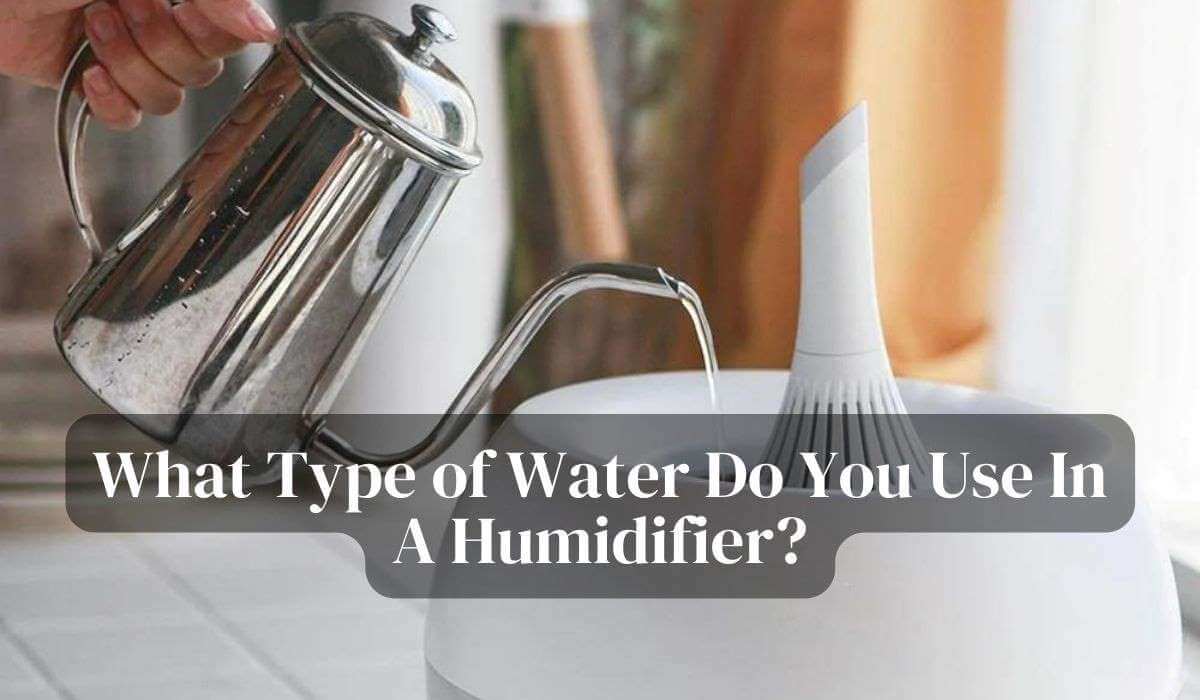 What Type Of Water Do You Use In A Humidifier?
Pro Tip: The “White Dust” Test
Not sure if your water is humidifier-friendly? Do this: fill a clean glass with cold water, drop in a few ice cubes, and let it sit for ten minutes. Look at the outside of the glass. If you see a white, powdery ring where the water touched, that’s mineral residue. That exact stuff will end up on your nightstand (and in your sinuses) if you use that water in your humidifier.
If the glass stays clear? You’re probably using decent water. But still—distilled is safest. I’m not saying you should become a water snob, but… well, actually I am. Be a water snob. Your machine deserves it.
Can I Use Humidifier Additives or Oils?
Whoa there, sparky. Stop. Most humidifiers are designed for water only. Adding essential oils, Vicks vapor drops, or those “fragrance discs” can void your warranty, gunk up the internals, and even release chemicals you don’t want floating around. If you want a scented room, buy a diffuser. Leave the humidifier to do its one job: adding moisture.
Your humidifier is a simple, honest machine. Don’t corrupt it with lavender dreams and peppermint fantasies. It’s not that kind of party.
The Fun Part: What to Do If You’re Lazy (We’ve All Been There)
Look, I get it. Running to the store for distilled water every week is a chore. If you’re feeling super lazy, at least buy a demineralization cartridge or a “humidifier cleaning filter” that fits inside your machine. These little gadgets absorb minerals like a sponge, and they cost about $10 for a pack of three. They’ll make tap water behave almost like distilled.
Or, if you have a cool-mist (ultrasonic) humidifier, you can use a “water softening” product specifically made for humidifiers. But read the manual first! Some manufacturers will void your warranty if you use anything other than distilled. They’re like that one strict teacher who checks for gum under the desks.
One Last Thing: Clean Your Humidifier, Please
Even if you use the most perfect, angel-tear-quality distilled water, you still need to clean the tank. Mold and bacteria can grow in standing water, especially if you leave it sitting for a week. Once a week, dump out any leftover water, rinse the tank with a bit of white vinegar, and let it air dry.
Think of it as a little Friday ritual. Pour a glass of wine, scrub the humidifier, and feel like an adult who has their life together. It’s strangely satisfying. I promise.
The Uplifting Conclusion
So here’s the deal: you don’t have to be perfect. If you use tap water once in a while, the world won’t end. But if you want your humidifier to run smoothly, your air to stay clean, and your morning sinuses to feel like a gentle cloud, go with distilled water. It’s cheap, it’s easy, and it makes you feel like a genius for thinking ahead.
And hey, every time you fill that gleaming white machine with pure, mineral-free water, imagine your future self waking up with skin so hydrated it glows, breathing air so fresh you’ll think you’re in a forest (a very clean, mineral-free forest). You’ve got this. Now go pour that water, smile at your little machine, and enjoy the peaceful hum of victory. You deserve it.
