Is Distilled And Deionized Water The Same

Hey there, curious mind! Have you ever stood in a store aisle, staring at a bottle of distilled water next to a jug of deionized water, wondering if they’re secretly the same...
Hey there, curious mind! Have you ever stood in a store aisle, staring at a bottle of distilled water next to a jug of deionized water, wondering if they’re secretly the same thing? You’re not alone—it’s a question that pops up more than you’d think, and the answer is surprisingly fun.
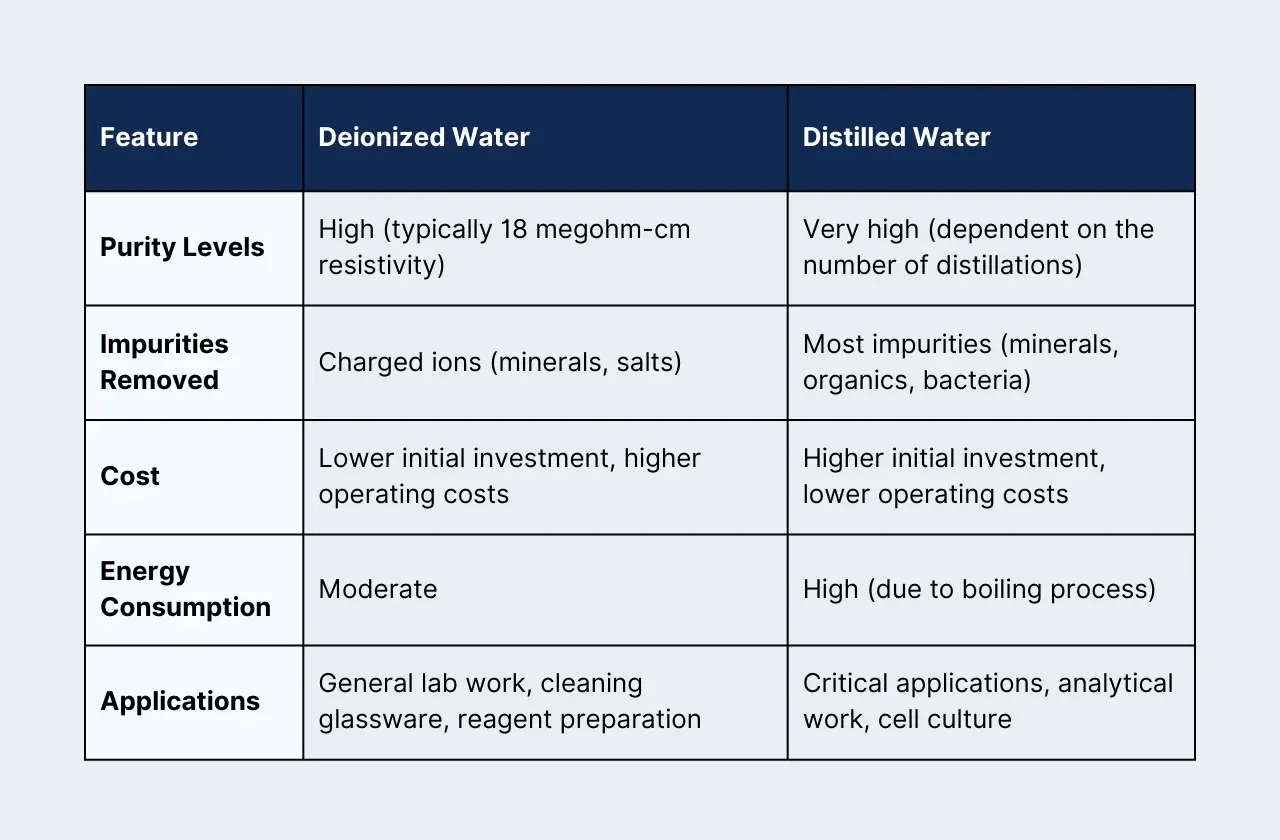
Let’s clear up the confusion right now: distilled and deionized water are not the same, but they share a cool mission. Both are ultrapure versions of H2O, stripped of minerals and impurities. Think of them as cousins who both love cleanliness, but each takes a completely different path to get there.
How Distilled Water Gets Its Sparkle
Distilled water is the old-school hero. It’s made by boiling water into steam, then cooling that steam back into liquid—leaving minerals, bacteria, and other stuff behind. It’s like giving water a spa day: heat it up, let it sweat, and catch the pure, glistening vapor.
Must Read
The result? Water so clean it’s used in steam irons, car batteries, and even CPAP machines. But here’s the kicker: distillation removes most impurities, but it doesn’t zap every single ion. Some tiny, charged particles might still hitch a ride in the steam.
Deionized Water: The Ion-Slaying Ninja
Now, meet deionized water—the modern, high-tech cousin. Instead of boiling, it passes water through special resins that act like magnets, yanking out dissolved salts and ions. Imagine a bouncer at a club who only lets neutral molecules through, and you’ve got the idea.
Deionization is so thorough that it can remove 99.9% of ions, making water extremely pure. This is why labs use it for experiments, and why car detailers swear by it for spot-free rinses. But here’s a plot twist: deionized water might still contain tiny bacteria or organic compounds, since the resin doesn’t catch everything.
The Big Difference: How They Clean
So, distillation uses heat to separate water from contaminants, while deionization uses chemical attraction to snatch away charged particles. One is a steamy, old-fashioned method; the other is a sleek, magnetic process.
Think of it like cleaning your room: distillation is like tossing everything in the washing machine, while deionization is like using a lint roller to pick up every speck of dust. Both get the job done, but they target different messes.
 Distilled Water Vs. Deionized Water — Microbe Online
Which One Should You Actually Use?
For your coffee maker or humidifier? Distilled water is your best buddy—it’s easy to buy and works perfectly. But if you’re mixing lab chemicals or washing a car without streaks, go for deionized water—it leaves zero mineral spots.
And here’s a secret: many places sell deionized-distilled water, which is both boiled and ion-scrubbed. That’s the superhero combo, but honestly, for everyday life, either one will keep your appliances happy and your science projects on point.
Why This Makes Life More Fun
Knowing the difference isn’t just trivia—it’s a superpower. Next time you’re at the store, you’ll feel like a secret agent who deciphers the label code. Plus, you can wow your friends at parties: “Actually, distilled and deionized water are different because…” (Trust me, it’s a crowd-pleaser.)
This little nugget of knowledge even turn chores into adventures. Pouring distilled water into your iron? You’re not just steaming clothes—you’re using ancient boiling wisdom. Rinsing your car with deionized water? You’re wielding chemistry to beat gravity’s water spots.
Your Uplifting Takeaway
So, are distilled and deionized water the same? No, but they’re both beautiful examples of how humans love to purify and improve things. Every drop of pure water is a tiny victory over chaos—a reminder that science can be playful and powerful.
Here’s my challenge to you: the next time you take a sip of tap water, think about all the hidden minerals and ions dancing inside it. Then smile, because you now know the secret paths to make them disappear. Stay curious, keep learning, and remember—the purest things in life are worth exploring. Go learn one more fun fact today!
