Rheem Water Softener Bypass Valve Position

Okay, let’s be real. Your Rheem water softener’s bypass valve might not be the most exciting thing in your laundry room. But if you’ve ever stared at those little arrows and f...
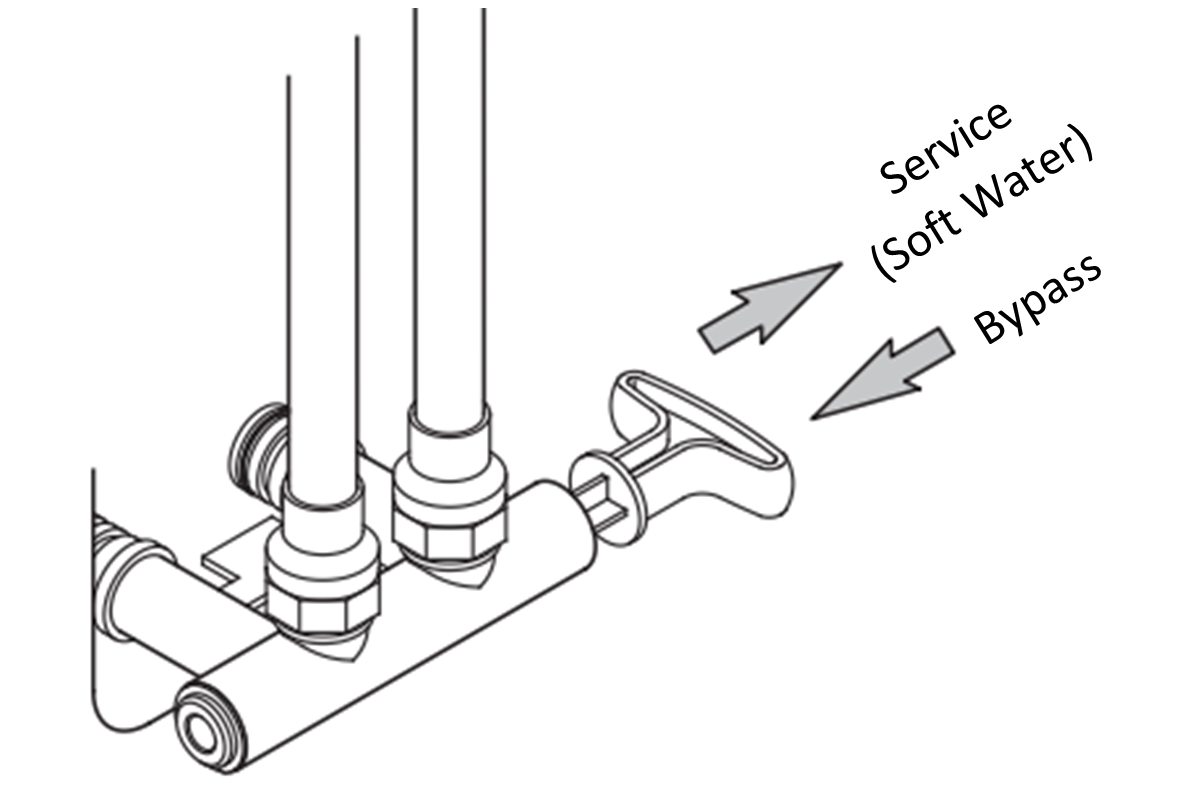
Okay, let’s be real. Your Rheem water softener’s bypass valve might not be the most exciting thing in your laundry room. But if you’ve ever stared at those little arrows and felt a wave of panic? I feel you, friend. I’ve been there. Standing there with a wrench, sweating, wondering if I’m about to flood the entire basement.
Let’s fix that. Think of me as your water-softener-savvy buddy, here to demystify this thing over a strong cup of coffee. No judgment. Just the truth about which way to turn that little handle.
Why Do We Even Have This Thing?
First, a quick pep talk. Your bypass valve isn’t a villain. It’s actually your hero in disguise. It’s the little plastic lever (or knob) that lets you ignore your softener when you need to.
Must Read
Think of it like a detour for your water. Instead of going through the expensive resin tank, the water just cruises right past. Straight to your pipes. Why would you want that? Glad you asked.
The Two Sacred Positions
Your Rheem valve has exactly two jobs. Service and Bypass. That’s it. No secret third option. No “sorta soft” setting. You are either in soft-water paradise, or you’re in hard-water, get-this-soap-off-my-skin territory.
In Service mode, the handle is aligned with the pipe. Water flows through the softener. Your hair feels silky. Your dishes sparkle. Life is good. This is the position you want 99% of the time.
In Bypass mode, the handle is perpendicular. It’s crossing the pipe like a roadblock. Water takes the shortcut. You get hard, unfiltered water. Your soap won’t lather. Welcome to the jungle.
When Should You Flip to Bypass?
Good question. You don’t just flip it for fun. You flip it because you have to. Don’t touch that handle unless you have a good reason. What are those reasons? Let’s list ‘em over our imaginary coffee.
You’re moving the softener. Dragging a heavy, water-logged tank across the floor is a nightmare. Turn it to bypass first. Empty the lines. Save your back.
You’re working on the plumbing. If you’re soldering copper or fixing a leak, you don’t want soft water spraying everywhere. Bypass is your shutdown button. Use it.
Your water tastes salty. This is a big one. If your ice cubes suddenly taste like the ocean, your softener is having a moment. Flip to bypass immediately. Then call a plumber. Don’t drink salty water.
The Scary “In Between” Position
Here’s where the drama happens. Some Rheem valves have a little notch. A little “middle” spot. It’s called the diagnostic or service port. Do not leave it there.
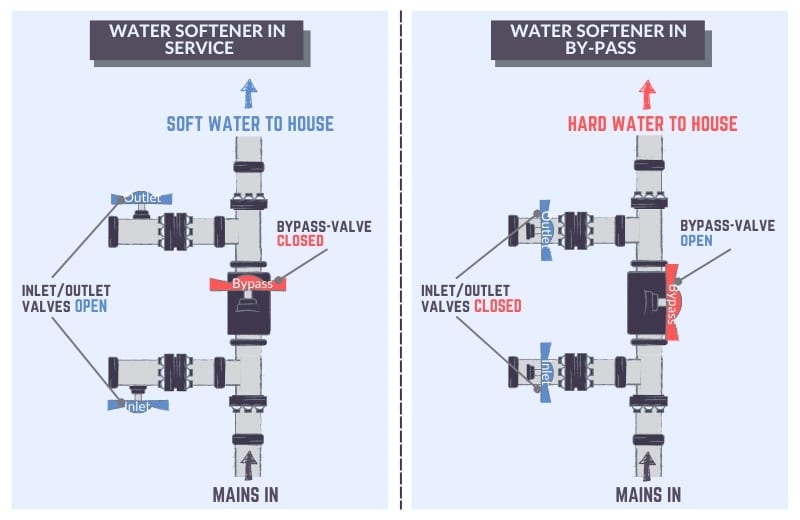 How to Bypass a Water Softener (Diagram Included)
That little half-turn position is for testing water pressure. It’s not a setting. If you park your handle in the middle, you’ll get a mix of hard and soft water. It won’t hurt anything, but it will confuse you. Your hair will feel weird. Just pick a side.
How to Tell You Did It Right
So you turned the handle. You’re sweating. How do you know you’re in the right spot? Easy. Check your faucet. If the water tastes normal and your hands feel slippery with soap? You’re in Service. You did great.
If the water suddenly tastes like tap water from 1998? You’re in Bypass. That’s not a failure. That’s just the wrong mode for daily life. Flip it back. No shame.
Pro tip: Listen. Bypass mode often makes a different sound. A higher-pitched whine. A gurgle. If it sounds weird, it probably is weird.
The “Oops” Moment
Let’s be honest. We’ve all accidentally left the bypass on. I did it for three days once. My dishes looked like they had water spots from a horror movie. My skin felt like sandpaper.
And you know what? The world didn’t end. You just turn it back to Service and wait an hour. The resin will recharge. You’ll forgive yourself. It’s a softener, not a heart monitor.
One Final Coffee-Time Tip
Mark your valve. Seriously. Get a little piece of tape. Write “SERVICE” on one side. Write “BYPASS” on the other. You’ll thank me at 2 AM when you’re half-asleep and hear a weird noise.
Also, practice flipping it once a year. Don’t force it. If it’s stuck, don’t yank it with pliers. Use a little silicone spray. A stuck valve is just a future plumbing disaster waiting to happen.
So there you go. Your Rheem bypass valve isn’t a mystery anymore. It’s just a little plastic switch between convenience and chaos. And now you’re in charge. Go forth. Drink soft water. You earned it.
