Zero Water Replacement Filter Instructions

There’s a quiet, almost meditative ritual that comes with swapping out a Zero Water filter. It’s not quite as dramatic as changing the oil in a classic car, but it’s close—thi...

There’s a quiet, almost meditative ritual that comes with swapping out a Zero Water filter. It’s not quite as dramatic as changing the oil in a classic car, but it’s close—think of it as a hydration tune-up for your daily life. You know that moment when the meter hits 006, and your water suddenly tastes less like a mountain spring and more like a forgotten garden hose? That’s your cue. The filter replacement is the simplest luxury you can give your taste buds.
The Telltale Signs It’s Time
The Zero Water pitcher doesn’t play hard to get. Its built-in TDS meter (total dissolved solids, for the science-curious) is your honest, digital best friend. When it reads 006 or higher, your filter is officially waving a white flag. Some people wait until it hits 050, but that’s like letting your phone die completely before charging it—technically fine, but not the optimal zen experience.
A second sign is texture. If your water feels a bit “flat” or develops a faint, earthy aftertaste that isn’t quite right, the ion-exchange resin inside the filter is exhausted. It’s not a health risk—just a signal that the filter’s magnetic, charged particles have finished their dance with impurities. Think of it as a party that ended at 2 a.m. The guests (contaminants) have left, but the cleanup crew (your filter) needs a break.
Must Read
How to Swap Without the Stress
The process is absurdly easy, and you can do it while half-asleep on a Monday morning. First, twist the old filter counterclockwise—it should pop off with a satisfying, gentle click. Discard it without guilt; it has served its noble purpose. Then, rinse the new filter under cool tap water for about 15 seconds. This activates the carbon block and wakes up the resin, like splashing water on your own face before a big day.
Insert the fresh filter into the top reservoir, twisting it clockwise until it locks snugly. Don’t force it—if it fights you, you’re probably cross-threading it. Pro tip: run two full pitchers of water through the new filter and discard them. Yes, it feels wasteful, but those first rounds flush out any loose carbon dust and stabilize the pH balance. After that, your water is at peak performance—smooth, neutral, and ready for sipping.
Cultural Wisdom and Water Myths
Filter swapping has a long, quiet history. The ancient Greeks used porous clay vessels to purify water; the Romans boiled it with herbs. Today, we have an entire industry built around the “crisp pour,” and Zero Water’s five-stage filter is essentially a laboratory in a plastic cylinder. Fun fact: a single Zero Water filter can remove about 99% of dissolved solids, which is more aggressive than your standard Brita or Pur. This is why the water feels so different—it’s practically distilled.
There’s a cultural irony here: we spend billions on bottled artisanal waters, yet the zero-filtered water from your kitchen tap is often purer than anything in a glass bottle. It’s a quiet rebellion against the marketing machine. The next time you pour a glass, imagine you’re drinking from a high-tech fountain in a Scandinavian spa—because, chemically, you kind of are.
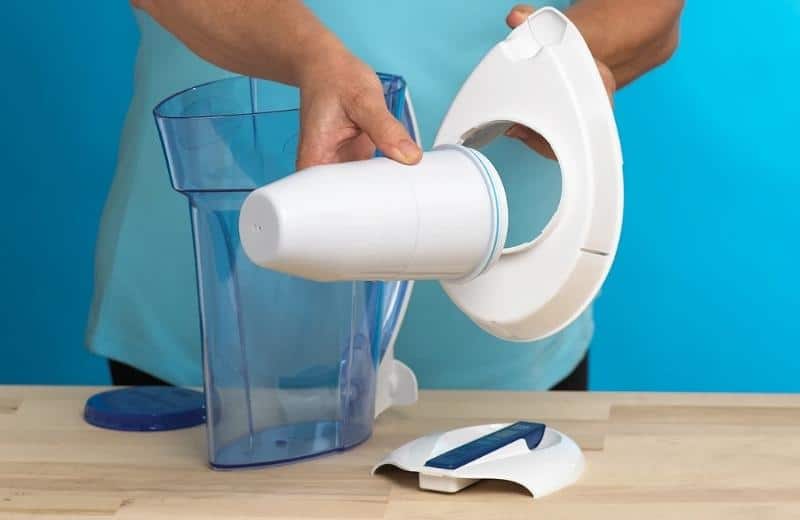 How to Change a Zero Water Filter (Easy Step-by-Step Guide)
Practical Tips for the Long Haul
Don’t store your filters in the fridge—they absorb odors like a sponge, and your water will taste like last week’s leftover curry. Keep them in a cool, dark cabinet, preferably sealed in their original packaging. Life hack: write the installation date on the filter’s side with a Sharpie. It sounds obsessive, but when you’re three months in and can’t remember when you last swapped, that little scribble is a lifesaver.
If you live in a hard-water area (hello, Midwest and Southwest), your filter might last only three to four weeks instead of the promised two months. That’s normal—minerals like calcium and magnesium wear out the resin faster. Embrace the shorter lifespan as a sign that you’re drinking truly clean water. It’s a small price for not having scale in your kettle or that weird, metallic tang in your morning coffee.
The Filter as a Metaphor
There’s something quietly profound about replacing a water filter. It’s a weekly or monthly reset, a small act of maintenance that keeps your life flowing smoothly. We don’t think about it often, but water is the one thing we consume that touches every cell in our body. By honoring that process—by twisting off the old and clicking in the new—you’re giving yourself permission to start fresh. It’s a tiny, practical ritual that says, “I care about what goes inside me.”
So next time you hear that satisfying click of a new filter locking into place, take a second to appreciate it. Your water will taste like a quiet morning in the mountains, and your afternoon will feel a little lighter. Cheers to the simple, filtered life. In a world that’s constantly noisy, your Zero Water pitcher just became your silent, trustworthy ally.
