Water Treatment Processes For Drinking Water

Picture this: It’s a sweltering summer afternoon, and you’re dying of thirst. You stumble to the kitchen sink, twist the faucet, and catch that clear, cold cascade in a glass....
Picture this: It’s a sweltering summer afternoon, and you’re dying of thirst. You stumble to the kitchen sink, twist the faucet, and catch that clear, cold cascade in a glass. You chug it down without a second thought. But have you ever stopped to wonder what that water went through just to get to your lips? Spoiler: it’s a lot grosser—and way more fascinating—than you think.
Your tap water didn’t just magically appear. It started its life as something far less appealing: maybe a murky river, a muddy lake, or a deep underground aquifer. Before it hit your glass, it went through a series of treatments that would make a sci-fi movie jealous. And I’m not exaggerating—it’s basically a liquid makeover.
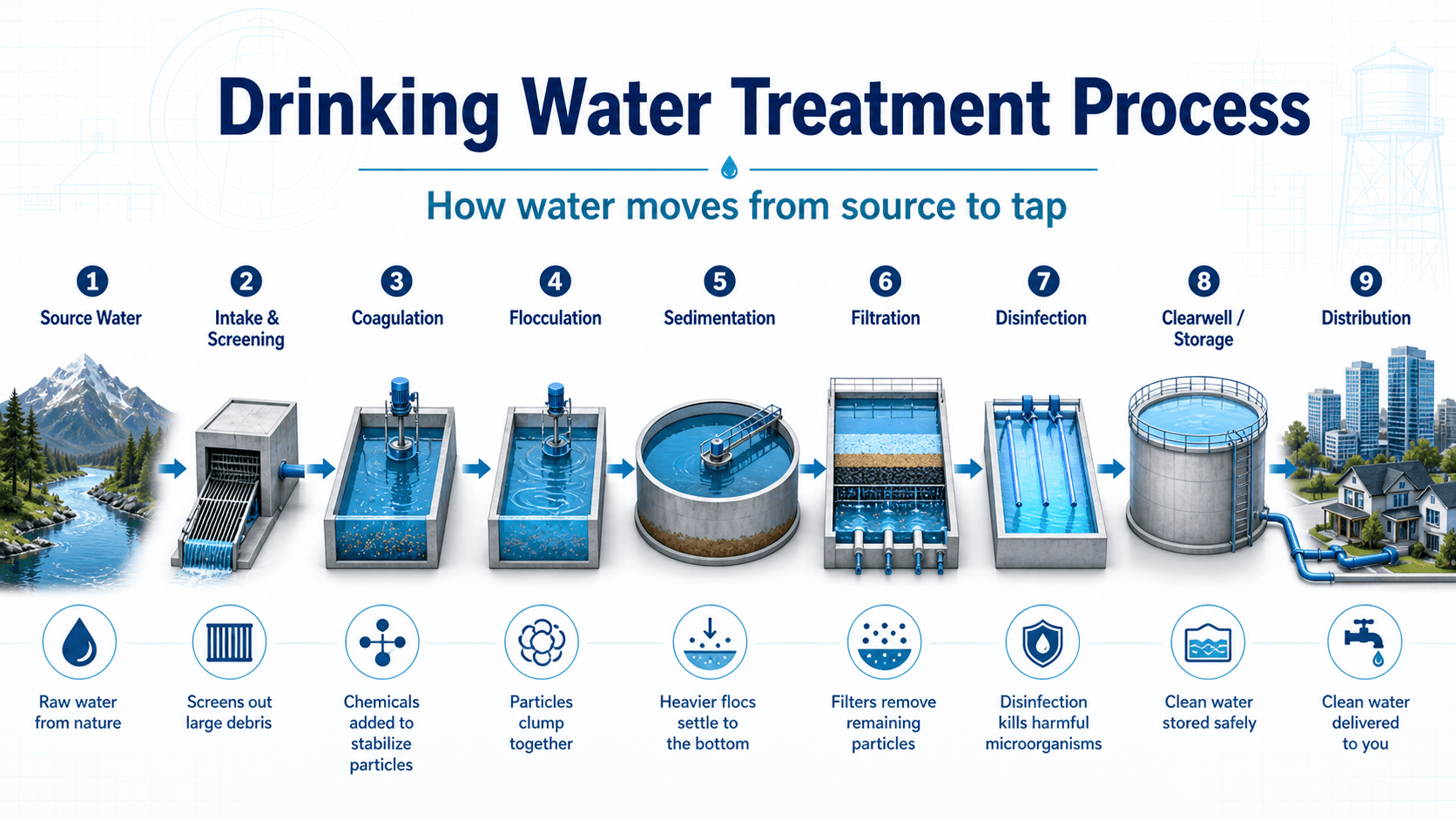
Step 1: Coagulation and Flocculation — The “Jello” Trick
First up, the water gets hit with some seriously clever chemistry. Chemicals like alum or ferric chloride are added to the raw water. These guys act like magnets, glomming onto dirt, bacteria, and other floating nasties.
Must Read
This creates sticky clumps called “floc,” which kind of look like tiny, disgusting snowflakes. I know, not the prettiest image, but bear with me—this is where the magic starts. The floc is heavy enough to start sinking, and that’s exactly what we want.
Step 2: Sedimentation — Letting the Mud Settle
Now the water flows into a big, quiet basin. Here, it just chills out for a few hours. Gravity does the heavy lifting, pulling those clumps of floc down to the bottom.
It’s like letting a muddy puddle sit still until the dirt settles. Only here, the “dirt” is a concentrated sludge of everything you’d rather not drink. The clear water on top gets skimmed off and sent to the next stage. Simple, right? But don’t get too comfortable.
Step 3: Filtration — Through Sand, Charcoal, and Lies
This is where it gets personal. The water trickles down through layers of sand, gravel, and activated carbon. Think of it like a really expensive Brita filter, but the size of a swimming pool.
The sand catches any leftover particles. The carbon—yes, that’s often charcoal from burnt coconut shells or coal—adsorbs chemicals and bad tastes. By the time the water hits the bottom, it’s clear and odorless. But we’re not done yet. (You didn’t think we’d skip the bleach, did you?)
Step 4: Disinfection — The Zombie Apocalypse for Germs
Here comes the heavy artillery: chlorine, chloramine, or ultraviolet light. This step is non-negotiable because despite all the filtering, a few hardy bacteria and viruses might still be partying in the water.
Chlorine is the old reliable—it kills germs on contact and leaves a tiny residual in the water to protect it all the way to your house. Yes, that faint “pool smell” is a good sign. It means the water is safe, not contaminated. Ironic, right?
 Drinking Water Treatment Process at Sandra Slavin blog
Step 5: pH Adjustment and Fluoridation — The Fine-Tuning
At this point, the water might be a little too acidic or too hard, so they add lime or soda ash to balance the pH. Why? Because acidic water can corrode your pipes, and nobody wants rust-flavored tea.
Oh, and they often add fluoride for your teeth. That’s right—the same stuff that makes toothpaste work is deliberately added to your tap. Conspiracy theorists hate this one simple trick. But science says it prevents cavities, so… thanks, water plant?
Step 6: Storage and Distribution — The Final Lap
Now the water is ready to go. It’s stored in giant, clean tanks or reservoirs, then pumped through a network of pipes that snake under your city. The journey from the plant to your glass can take hours—or even days.
That’s why they keep a tiny bit of chlorine in it. It’s like a security guard that rides along with the water, making sure no new germs crash the party. By the time you turn the tap, that water has traveled miles and passed dozens of quality tests.
But wait—what about “raw” water or “spring” water?
You’ve probably seen those bougie bottled waters that boast “untreated” or “raw.” Let’s be real: they’re taking a gamble. Untreated water can carry parasites, bacteria, and agricultural runoff. Your tap water, by law, has to meet rigorous health standards. That $5 bottle of mountain dew? It’s probably just treated tap water with marketing.
So next time you take a sip, give a little nod to the engineers and chemists who made it possible. Your water has literally been through hell and back—coagulated, settled, filtered, disinfected, and balanced—just so you can hydrate without thinking.
And if that doesn’t make you appreciate the tap, I don’t know what will. Now go ahead, refill that glass. You’ve earned it.
