Commercial Reverse Osmosis System Houston Tx

Last Tuesday, I watched my buddy Greg pour a glass of tap water at his diner in Katy, take one sip, and wince like he’d just bitten into a lemon. “Tastes like a swimming pool,...

Last Tuesday, I watched my buddy Greg pour a glass of tap water at his diner in Katy, take one sip, and wince like he’d just bitten into a lemon. “Tastes like a swimming pool,” he grumbled, dumping it down the sink. That moment—when your own water betrays you—is the exact reason we’re here today.
Greg runs a bustling breakfast spot, and his customers were starting to complain about that chlorine aftertaste in their coffee and iced tea. He tried pitchers and fridge filters, but nothing could keep up with the volume. Sound familiar? That’s when I told him about the commercial reverse osmosis system his neighbor uses, and his face went from “ugh” to “oh.”
Let’s be real: Houston water is famous for being hard, mineral-heavy, and occasionally tasting like a chemistry experiment. It’s not your fault—it’s the city’s groundwater and treatment process. But you don’t have to serve that to your paying customers or your family.
Must Read
What Actually Is a Commercial RO System?
Think of it as a super-powered, industrial-strength Brita on steroids. It forces water through a semipermeable membrane that catches 99% of contaminants: chlorine, lead, arsenic, fluoride, and even those weird floaties you sometimes see. Your water comes out cleaner than most bottled brands.
And no, it won’t turn your tap into a desert. Modern systems have flow rates that can fill a pitcher in seconds or a sink in a blink. For a Houston restaurant like Greg’s, that means happy customers and fewer plumbing repairs from scale buildup.
Side note: If you’ve ever had to descale your coffee machine every two weeks, you already know the pain. An RO system saves you that headache—and the vinegar smell.
Why Houston Businesses Need This (Yes, Especially Yours)
Houston’s water comes from a mix of surface water and well water, and the well water is legendarily hard. That white crust on your faucets? That’s calcium and magnesium trying to build a tiny fortress. A commercial RO system strips those out, so your ice machines stop looking like they’re covered in snow.
Beyond taste, there’s also the equipment protection factor. Every drop of hard water that runs through your espresso machine, dishwasher, or boiler shortens its lifespan. Greg’s diner saved over $800 in repairs in the first year alone—his plumber was shocked.
And yes, I’m talking to you, restaurant owners, coffee shop managers, and small business folks who think “it’s fine.” It’s not fine. Your water is literally costing you money and reputation.
The “Houston” Version of RO Isn’t One-Size-Fits-All
A good commercial system isn’t a generic box you order from Amazon and hope for the best. In Houston, you need one that handles high flow rates and local sediment loads. Many systems come with pre-filters just for that brownish stuff that shows up during heavy rain.
Installation is key, too. You want a pro who knows where to tap into your existing plumbing without turning your kitchen into a construction zone. Most Houston companies can do it in under four hours, including a fancy “flush” cycle to get the system ready.
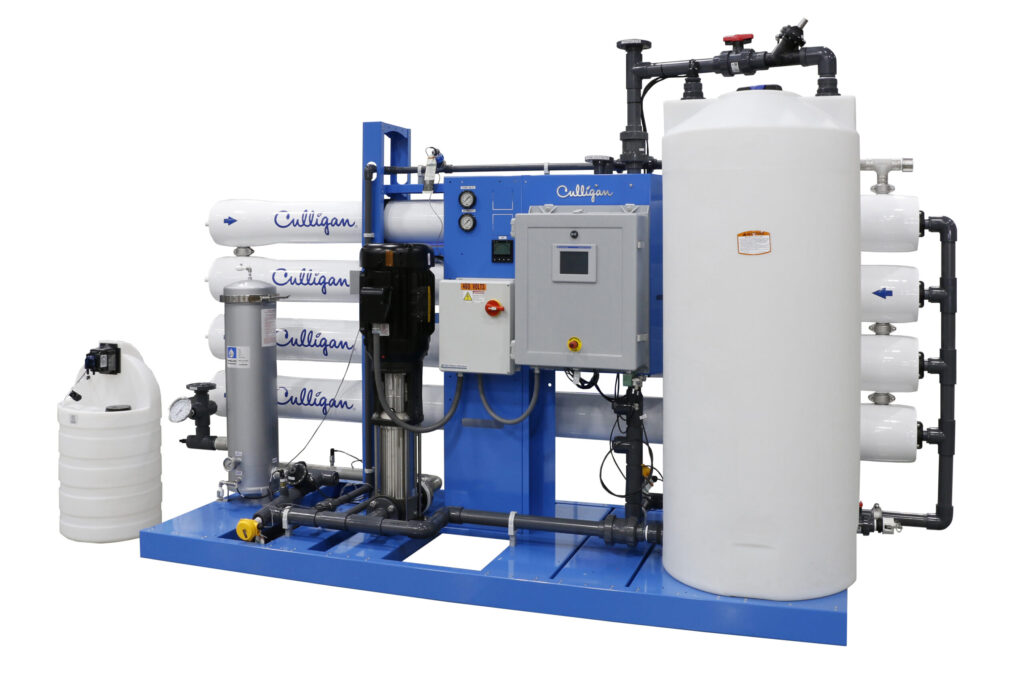 Commercial & Industrial Water Treatment | Culligan Houston
True story: A friend tried to DIY his system. He ended up with a puddle on his floor and a call to a plumber at 2 AM. Don’t be that guy. Hire someone who installs these for a living.
What About the Salt and Waste Water? (The Elephant in the Room)
Okay, let’s address the elephant: reverse osmosis systems produce waste water. For every gallon of pure water, you might send 2-3 gallons down the drain. Sound wasteful? It can be, but newer models—especially commercial units—recycle that water for rinsing or cleaning tasks.
In Houston, where water is cheap compared to other cities, the waste is usually a non-issue for businesses. Still, look for a system with a high recovery rate (75% or better). Your wallet and the environment will thank you.
And no, you don’t need to add salt to your drinking water. That’s a different system—water softeners. RO membranes do the heavy lifting without turning your coffee into a saline solution.
The Bottom Line: Is It Worth It for Your Houston Home or Biz?
Greg’s diner now has a sign that says “Our coffee is made with filtered water” and sales of iced tea doubled in two months. People notice the difference. They even bring their own bottles to fill up—a weird but flattering compliment.
If you’re a homeowner, a compact commercial-grade unit under your sink can give you crisp water for drinking and cooking. No more buying plastic jugs. For businesses, it’s a no-brainer: better taste, less scale, fewer repair calls.
So, next time you take a sip of Houston tap and grimace like my buddy Greg, remember: you have options. And they start with a system that actually works, from a local installer who understands Texas water—not some generic manual written in Ohio.
And hey, if your water tastes like a swimming pool, maybe it’s time to dive into an RO system instead. (I know, I know—that pun was terrible. But you’re still reading, so I’ll take it.)
