Is Pool Salt The Same As Water Softener Salt

You know that moment when you’re standing in the home improvement aisle, holding a bag of salt, and your brain does a little backflip? You’re not sure if it’s for the pool fil...

You know that moment when you’re standing in the home improvement aisle, holding a bag of salt, and your brain does a little backflip? You’re not sure if it’s for the pool filter, the water softener, or maybe even the dinner table. Trust me, I’ve been there, staring at two giant bags like they’re alien artifacts.
The short answer is no, pool salt and water softener salt are not the same thing. It’s like asking if a Labrador and a golden retriever are identical—they’re both good boys, but they do different jobs. One keeps your water from ruining your pipes, and the other keeps your pool from turning into a swamp.
How Did We Get Here?
Let’s rewind to the weekend when I decided to be a “responsible adult” and handle my pool chemistry. I grabbed a bag labeled “pool salt,” feeling smug. Then my neighbor yelled over the fence, “Hey, is that the same stuff I use for my water softener?”
Must Read
I froze. My brain started flickering like a bad lightbulb. I had visions of my pool turning into a giant, salty pretzel, or my shower water suddenly tasting like ocean spray. Spoiler: neither happened, but only because I did my homework first.
The Difference Is All About Purity
Pool salt is typically pure, solar-evaporated sea salt with no additives. It’s like the plain bagel of the salt world—nothing fancy, just salt. Your pool’s salt chlorine generator needs this purity to avoid clogging up the machine.
Water softener salt, on the other hand, is often processed with additives like rust inhibitors or binding agents to keep it from clumping. Imagine putting a processed cheese slice on a bagel instead of plain cream cheese—it works, but it tastes wrong. In this case, “wrong” means those additives can mess up your pool’s chemistry and leave stains.
But Can You Swap Them?
Here’s where the joke gets real. If you throw water softener salt into your pool, you’re asking for trouble. Those additives can turn your sparkling water into a cloudy, metal-flavored nightmare. It’s like using dish soap in a washing machine—technically soap, but you’ll be dealing with bubbles for a month.
Conversely, using pool salt in your water softener is usually safe, but it’s a waste of money. Pool salt isn’t designed to prevent clumping, so it might cake up in your brine tank. You’ll end up with a salty brick that laughs at your softener’s regeneration cycle.
What About Taste?
Do not—I repeat, do not—try to taste-test pool salt. I made that mistake once, and let’s just say it’s not like a potato chip. Pool salt has a slightly bitter, chemical edge from trace minerals, while water softener salt is typically cleaner tasting (not that you should eat it either).
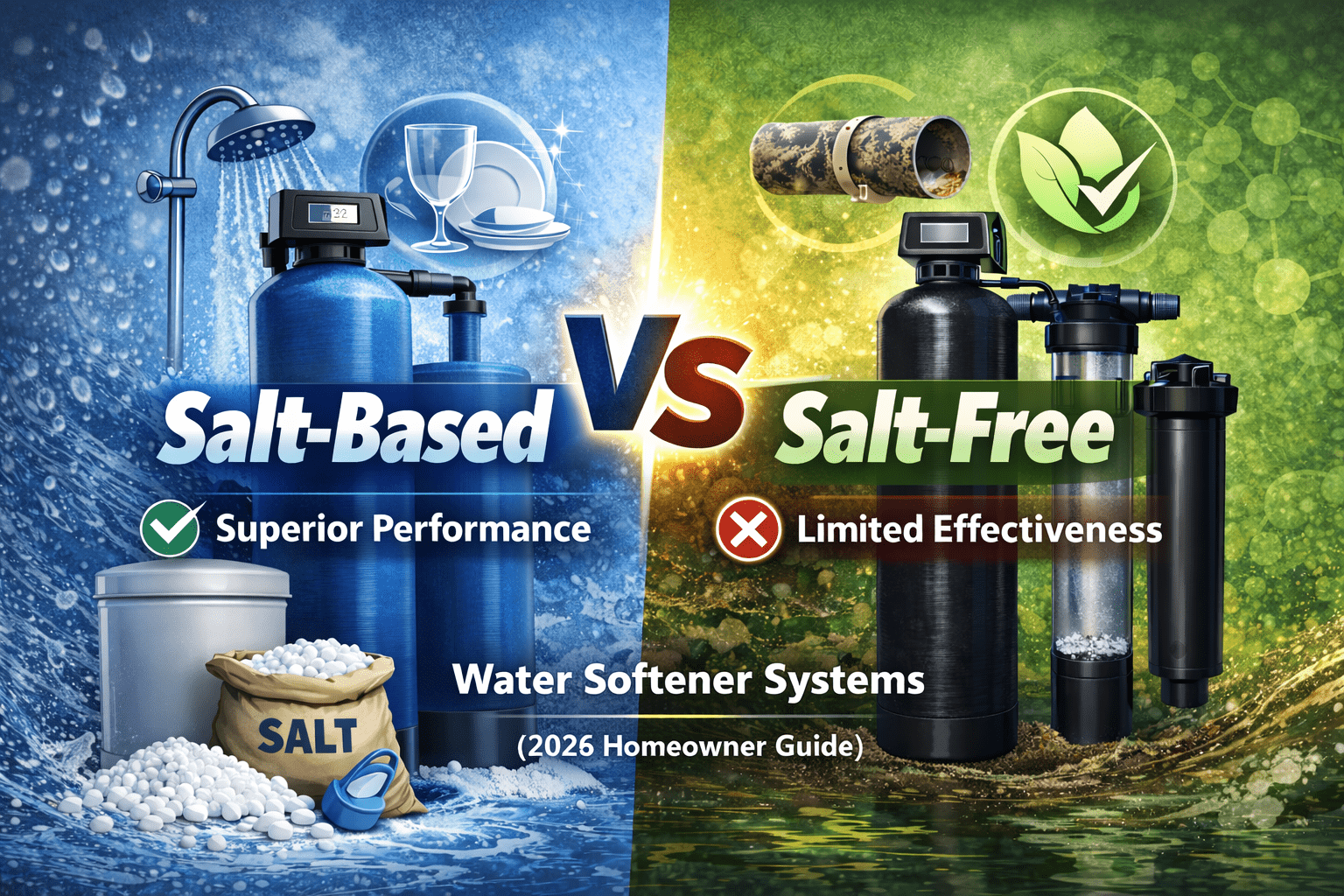 Salt-Based vs Salt-Free Water Softener Systems (2026 Homeowner Guide
Think of it this way: you wouldn’t use Epsom salt in your pasta water, right? Same logic applies here. Each type of salt has its own special purpose, and mixing them up is like using a wrench to hammer a nail—possible, but you’ll break something.
The Anecdote That Stuck With Me
A buddy of mine once bought “bargain” water softener salt for his pool because it was half the price. “It’s all salt, right?” he said. Three days later, his pool water turned a lovely shade of green, and his salt cell looked like it had been in a bar fight. He spent more on chemicals fixing it than he saved on the salt.
We still joke about that at BBQs. I bring a bag of the right salt, and he brings a story about “the time he invented algae.” Lesson learned: always read the bag.
How To Avoid The Confusion
First, look at the label. Pool salt will say “for saltwater chlorinators” or “pure evaporated salt.” Water softener salt will say “for water softeners” and might mention “with rust remover.” If it’s a tie, just buy two different bags and label them with Sharpie.
Second, check the granule size. Pool salt is usually coarser, like beach sand, while softener salt is finer or pellet-shaped. If it looks like it came from a snow globe, it’s probably for the softener.
Final Nod And A Smile
So next time you’re in that aisle, just remember: pool salt is for making your pool feel like a vacation, and water softener salt is for making your shower feel like a spa. They’re both salt, but they’re not the same. It’s like the difference between a rubber duck and a bath bomb—both are for water, but one is for fun, and the other is for luxury.
You can nod now, because you’ve been there. And if you ever forget, just picture me standing in the aisle, holding a bag in each hand, looking like a confused penguin. We’ve all been the penguin. The key is knowing which bag to grab before you turn your pool into the Dead Sea.
