What's The Difference Between Distilled Water

So there I was, standing in the grocery aisle like a confused puppy. My hand was hovering between a jug of "Spring Water" and a bottle labeled "Distilled Water." I mean, it’s...
So there I was, standing in the grocery aisle like a confused puppy. My hand was hovering between a jug of "Spring Water" and a bottle labeled "Distilled Water." I mean, it’s all just clear, wet stuff, right? Wrong. I felt like I needed a science degree just to hydrate properly.
I almost grabbed the distilled one because it sounded fancy. You know, like something a mad scientist would drink. But then I thought, “What’s actually in this stuff?” Turns out, the answer is nothing, and that’s exactly the point.
The Boiling Truth
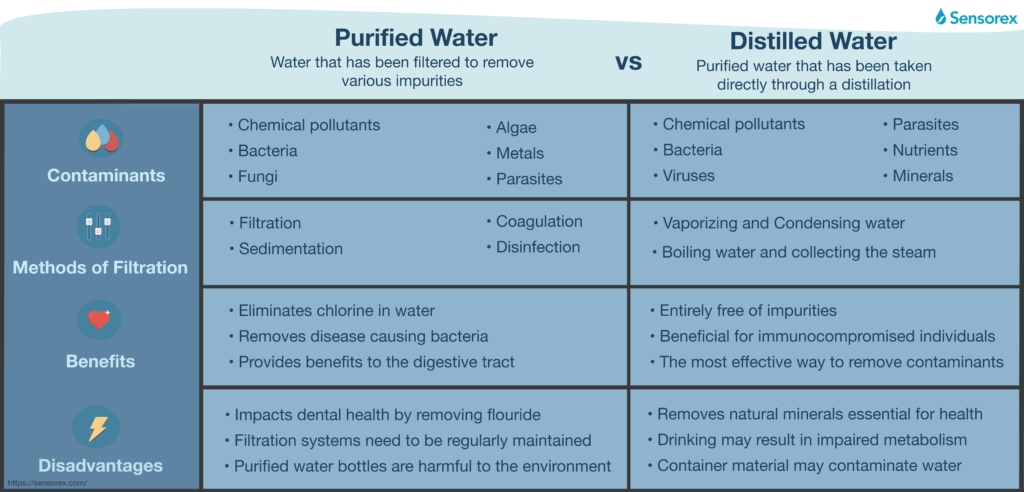
Here’s the quick and dirty version: Distilled water is water that’s been boiled into steam and then cooled back into liquid. That process leaves all the extra junk—minerals, chemicals, bacteria—behind. Think of it like cooking pasta and dumping the starchy water; you’re keeping the pure, naked H₂O.
Must Read
Pretty cool, right? But it also means this water is aggressively neutral. No calcium, no magnesium, no flavor, no memories. It’s the blank slate of the water world.
Why You Probably Don’t Want to Drink It Every Day
Yes, you can drink distilled water. No, it won’t kill you instantly. (Go ahead, relax.) But drinking it long-term? Not great. Your body actually craves those tiny minerals—like electrolytes—that normal water carries around.
When you chug distilled water, it’s a bit of a thief. It’s so “pure” that it actually tries to pull minerals out of your body to balance itself. Imagine a clingy friend who borrows your money and never pays it back—that’s distilled water to your cells.
Plus, it tastes weird. It’s flat and lifeless, like water that’s just given up on life. I swear, drinking it feels like licking a clean spoon.
Where Distilled Water Actually Shines
Okay, so maybe it’s not the best for your water bottle. But distilled water is a hero in other places. Have you ever seen a cloudy residue on your coffee maker? That’s mineral buildup from tap water, and it ruins everything.
Use distilled water in your steam iron, car battery, or CPAP machine, and suddenly life is easier. No scale, no gunk, no annoying white specks. It’s like the Marie Kondo of water—it sparks joy by leaving no trace.
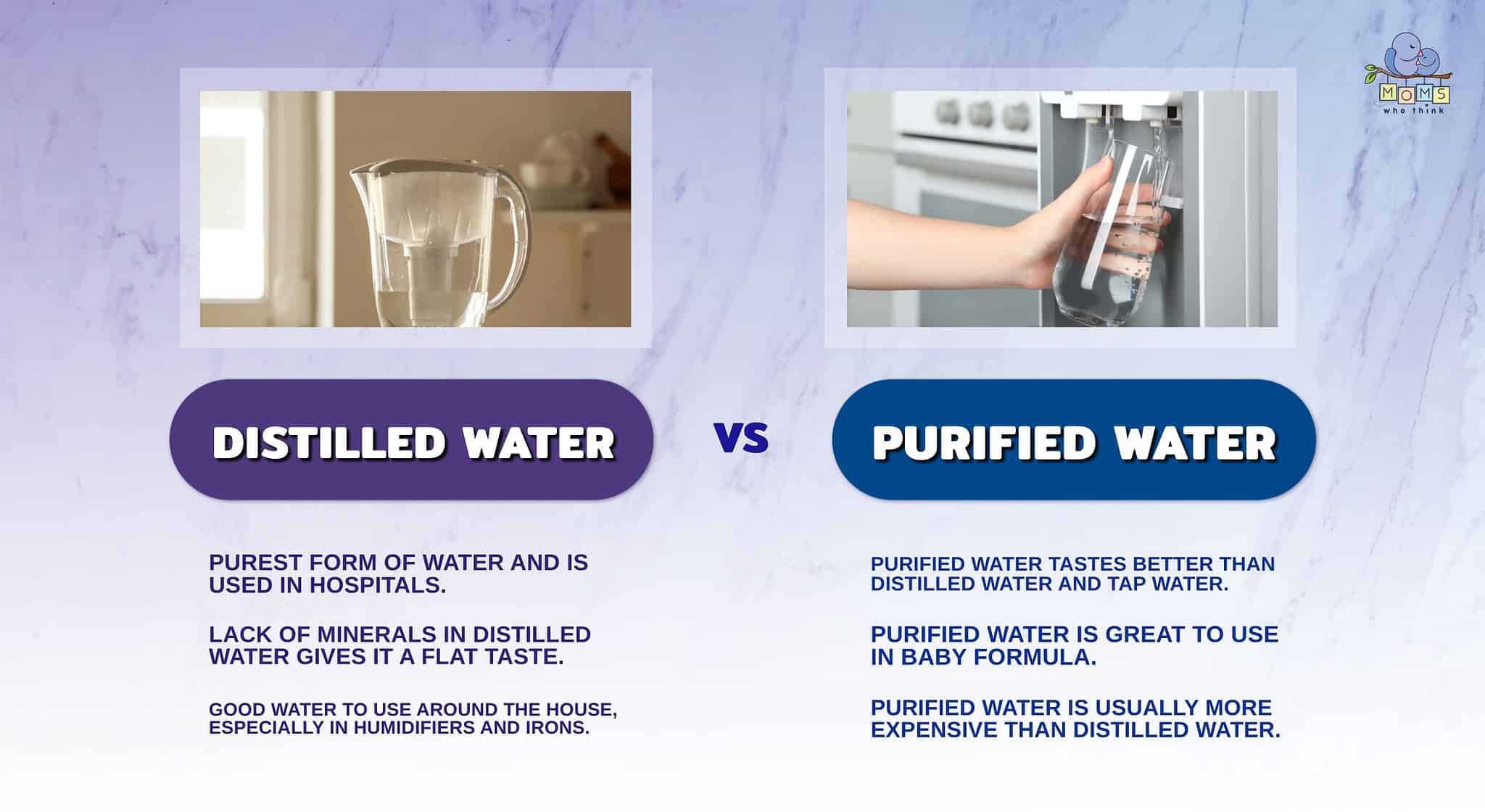 Distilled vs. Purified Water: 4 Differences & Health Benefits
Even your houseplants might thank you if they’re picky. Some delicate ferns hate the chlorine in tap water, but distilled is like a gentle spa day for them. Just don’t use it on your cactus, because that drama queen will whine about missing nutrients.
The Big Comparison: Tap vs. Spring vs. Distilled
Let’s be honest—tap water is the chaotic middle child. It’s fine, but it varies wildly. One city adds fluoride; another has a hint of swimming pool flavor. Spring water is basically tap water from a pretty source, with minerals left intact for taste.
Distilled is the anarchist of the group. It rejects all additives, all minerals, all history. It’s the water equivalent of a monk living in a white room—calm, pure, and utterly boring.
So next time you’re in that aisle, ask yourself: “Am I drinking this for hydration, or am I using it for my humidifier?” The answer dictates your choice. (But if you’re thirsty, just grab spring water and save yourself the existential crisis.)
The Final Sip
Look, I’m not saying you should never buy distilled water. It has its place—right next to your steam mop and your aquarium. But for drinking? Your body prefers a bit of personality in its water, those tiny mineral flavors that make it feel alive.
So go ahead, hydrate with tap or spring. Let the distilled water be the weird cousin who shows up to family dinners and only talks about vaporization. It’s useful, sure, but you don’t have to invite it to every picnic.
Now, if you’ll excuse me, I need to go change the water in my iron. My shirt needs ironing, and apparently, my tap water is a total diva about it.
